





Key Highlights
- Remitly charges go beyond headline fees and include exchange rate markups, transfer speed, and payment methods, all of which affect how much money actually reaches India.
- Exchange rates often have a bigger impact than visible fees, meaning zero-fee transfers can still cost more due to rate margins.
- The amount sent changes cost sensitivity, with smaller transfers feeling expensive due to fixed fees and larger transfers amplifying exchange rate differences.
- Economy and Express transfer options affect both pricing and delivery time, with faster transfers usually costing more overall.
- Indian banks generally do not deduct fees on Remitly transfers, though rare exceptions depend on individual bank policies.
- Transfer limits, verification requirements, and holidays can influence whether transfers are delayed or processed smoothly.
- Understanding all cost components together helps NRIs avoid surprises and plan USA to India transfers with greater confidence.
You see “zero fees,” approve the transfer, and move on. When the money reaches India, the INR credited is lower than expected. There is no extra charge shown, yet the numbers do not line up. This gap between what you expect and what your family receives is where confusion around international transfers usually starts.
What causes this gap is rarely obvious fees. In most cases, the exchange rate is the real driver. Even a small rate markup can quietly reduce the final amount, especially on larger transfers. Choices like transfer speed, payment method, and limits can influence timing and cost, but the exchange rate often has the biggest impact on value.
This guide explains how Remitly works for USA to India transfers, breaking down fees, exchange rates, timelines, and limits. The aim is to help NRIs spot hidden costs early, compare options clearly, and send money home with fewer surprises.
Why Do NRIs Need to Understand Remitly Charges Before Sending Money?
The credited amount is lower than expected. You approved the transfer, the fee looked minimal, and yet the final INR received does not match what you had in mind. This usually happens because not all costs are visible at first glance. Exchange rate markups, transfer speed selections, and payment methods can quietly change the final amount, even when a service advertises low or zero fees.
This matters because those small differences shape real decisions. When you send money regularly from the USA to India, unclear pricing makes it harder to budget, compare options fairly, or predict what your family will receive. Knowing where these hidden adjustments come from helps you look beyond headline fees, choose the right transfer setup, and avoid repeat surprises that add up over time.
How Does Remitly Work for USA to India Money Transfers?
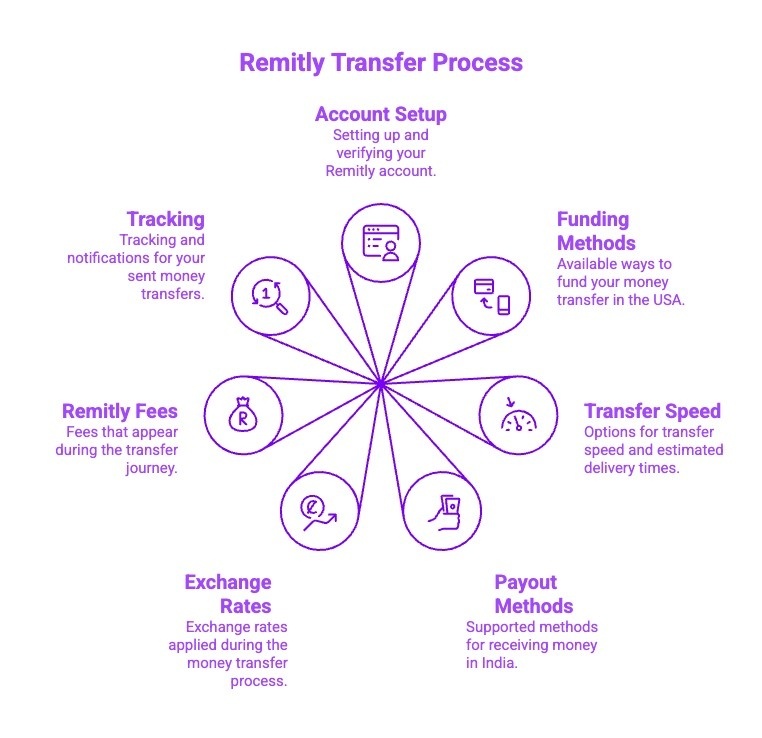
Remitly charges from USA to India vary based on fees, exchange rates, and transfer speed. Sending money through Remitly involves multiple steps that affect the total cost and delivery time.
Below are the key stages that explain how Remitly works for US to India money transfers:
1) Account Setup and Verification Process
To begin using Remitly, users create an account with basic personal details such as name, email address, and mobile number. Identity verification is required to comply with financial regulations and prevent fraud. This usually involves submitting government-issued identification. Completing verification helps avoid transfer delays and allows access to higher transfer limits over time.
2) Funding Methods Available in the USA
Remitly supports multiple funding options for users in the USA, including bank accounts, debit cards, and credit cards. Remitly fees to India can vary by payment method, with bank transfers typically costing less but taking longer, while card-based payments are faster but often involve higher processing or transfer charges.
3) Transfer Speed Options and Delivery Timelines
Users can choose between economy and express transfer options when sending money to India. Economy transfers are more cost-effective but take longer to reach the recipient. Express transfers prioritize speed for an additional fee. Actual delivery time can vary depending on banking hours, compliance checks, weekends, and public holidays in either country.
4) Supported Payout Methods in India
Remitly delivers funds to India through several payout options, including direct bank deposits, UPI transfers, and cash pickup at selected partner locations. Availability depends on the recipient’s location and chosen delivery method. Bank deposits are the most commonly used option, offering convenience and direct access to funds without requiring recipient action.
5) Exchange Rates Applied During the Transfer
Remitly applies its own exchange rate to each transfer, which may include a margin over the mid-market rate. The exchange rate shown before confirmation determines the final amount the recipient receives. Rates can vary depending on transfer speed, funding method, and market conditions at the time the transfer is processed.
6) Remitly Fees Appear in the Transfer Journey
Remitly transfer fees to India are shown before you confirm a transaction. Fees may appear as a fixed charge or be reflected through the exchange rate. Even when transfers are promoted as zero fee, exchange rate markups can still reduce the final amount received in India.
Also read: Want to explore options that minimize extra costs? How to transfer money to India from USA without fees.
7) Tracking and Notifications for Sent Transfers
Once a transfer is initiated, users can track its status through the Remitly mobile app or website. Notifications are sent at key stages, such as when the transfer is processing, delivered, or completed. This transparency also answers a common question: does Remitly charge fees? Users can review costs and exchange rates during the transfer process.
By understanding how Remitly works at each stage, NRIs can better anticipate fees, timelines, and exchange rate impacts, making it easier to plan transfers and compare alternatives for sending money from the USA to India.
How Much Does Remitly Charge to Send Money to India by Transfer Amount?
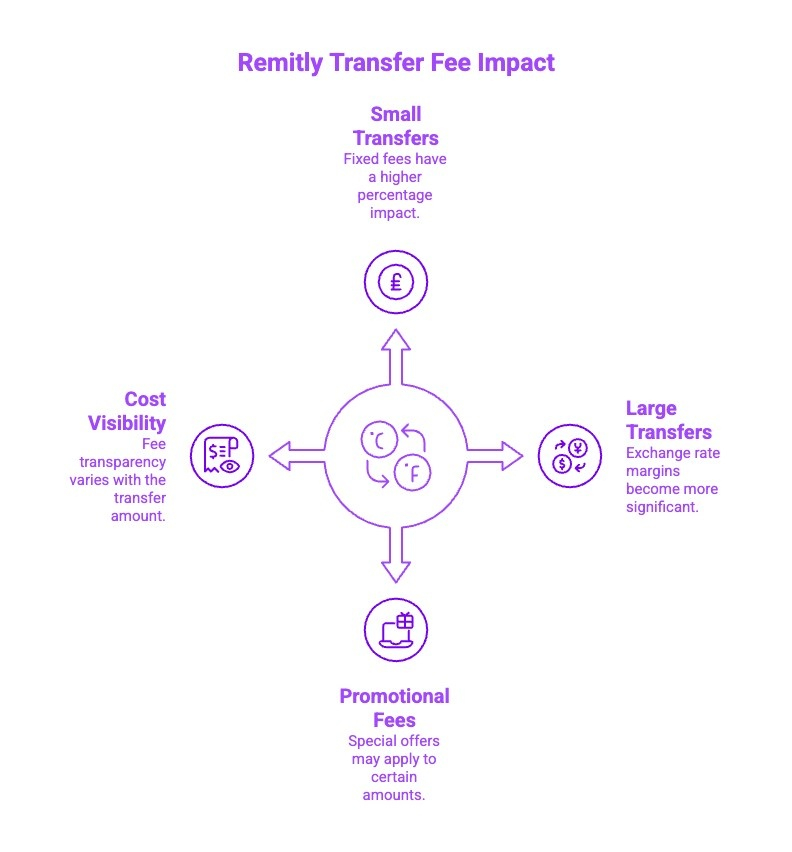
The amount you send to India plays a quiet but important role in how much a Remitly transfer actually costs. Fees, exchange rates, and promotions behave differently at different transfer sizes, which means the same service can feel cheap for one amount and expensive for another.
Below are the key ways transfer size influences Remitly charges for India transfers:
- Fixed fees hit smaller transfers harder: When you send a smaller amount, any flat fee takes up a larger share of the transfer. This reduces the value received in India, even if the fee itself looks low.
- Exchange rate margins matter more on larger amounts: As the transfer amount increases, exchange rate markups become more impactful. Even a small difference in rate can translate into a noticeable gap in INR received.
- Promotional pricing applies only within limits: Zero-fee or discounted offers are usually capped by amount or limited to first-time users. Once you cross those thresholds, standard fees and rates apply.
- Cost visibility shifts as amounts grow: For higher transfers, the exchange rate often affects the final amount more than the visible fee, making it harder to judge cost at a glance.
Example: If you send $200 to India with a $3.99 fee, nearly 2 percent of your transfer goes to fees alone. But if you send $2,000, that same fee becomes almost negligible. At that level, a slightly weaker exchange rate can cost you far more than the fixed fee ever would.
| Transfer Amount (USD) | Typical Fee Impact | Exchange Rate Impact | Overall Cost Sensitivity |
|---|---|---|---|
| $100 to $300 | High | Low | Fee driven |
| $500 to $1,000 | Moderate | Moderate | Mixed |
| $2,000 and above | Low | High | Rate driven |
Note: Fees and exchange rates vary based on funding method, transfer speed, and active promotions.
Understanding how transfer size shifts the balance between fees and exchange rates helps NRIs estimate the true cost of sending money to India, rather than relying on headline pricing alone.
What Are Remitly’s Exchange Rates Compared to the Mid Market Rate?
Exchange rates significantly affect how much money reaches India, often more than transfer fees themselves.
Below are the key ways Remitly sets exchange rates and how they differ based on service type and promotions:
1) Promotional Exchange Rate
At times, Remitly offers promotional exchange rates, often to attract new users or encourage first-time transfers. These rates may be closer to the mid-market rate but are typically limited by transfer amount, duration, or eligibility. Once the promotion ends, standard exchange rate margins usually apply.
2) Exchange Rates for Economy Service
Economy service generally offers more competitive exchange rates because transfers are processed more slowly. This allows Remitly to manage costs more efficiently and apply smaller margins. For NRIs who are not time sensitive, economy transfers often provide better overall value despite longer delivery timelines.
3) Exchange Rates for Express Service
Express service prioritizes speed, and this convenience often comes with wider exchange rate margins. Even if the upfront fee looks similar, the exchange rate applied may be less favorable. For larger transfers, this difference can noticeably reduce the amount received in India.
| Service Type | Rate vs Mid Market | Typical Margin Level | Cost Impact |
|---|---|---|---|
| Promotional | Closest | Very low | Minimal |
| Economy | Slightly lower | Low | Moderate |
| Express | Lower | Higher | High |
Note: Exchange rates vary based on market conditions and timing.
Understanding how Remitly’s exchange rates vary by service type helps NRIs identify hidden costs and choose the most suitable option when sending money to India.
Also read: Looking to maximize value on every transfer? Best exchange rate to transfer money from USA to India in 2026.
Are There Any Indian Bank Charges to Receive Money From Remitly?
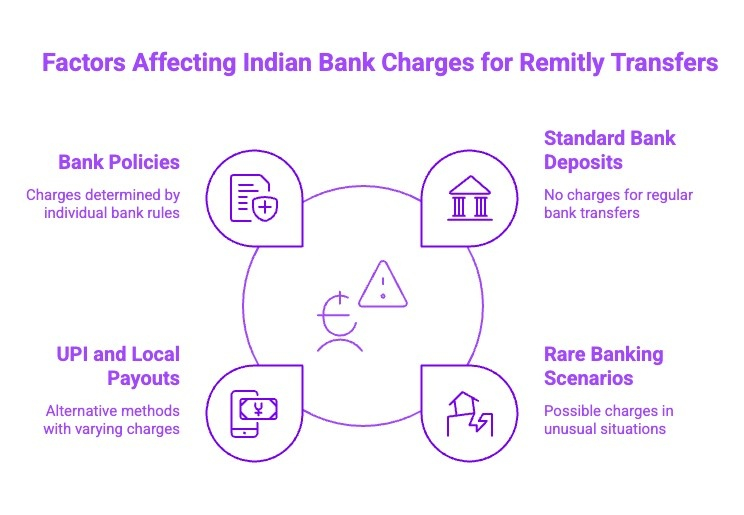
Many NRIs worry that fees may be deducted after the money reaches India, reducing the final amount received.
Below are the key points explaining whether Indian banks apply charges when receiving money from Remitly:
- No charges for standard bank deposits: Most Indian banks do not charge recipients for inward remittances credited directly to savings or current accounts through Remitly.
- Possible charges in rare banking scenarios: In uncommon cases, intermediary banks or specific account types may apply minor processing fees, though this is not typical for standard Remitly transfers.
- UPI and local payout methods: Remitly transfers received via UPI are usually treated as domestic credits and do not attract additional bank charges.
- Charges depend on bank policies, not Remitly: Any deductions are determined by the recipient bank’s internal policies rather than fees imposed by Remitly itself.
Knowing whether banks deduct fees helps NRIs estimate the final amount their family will receive in India with greater confidence.
What Should NRIs Check Before Using Remitly for India Transfers?
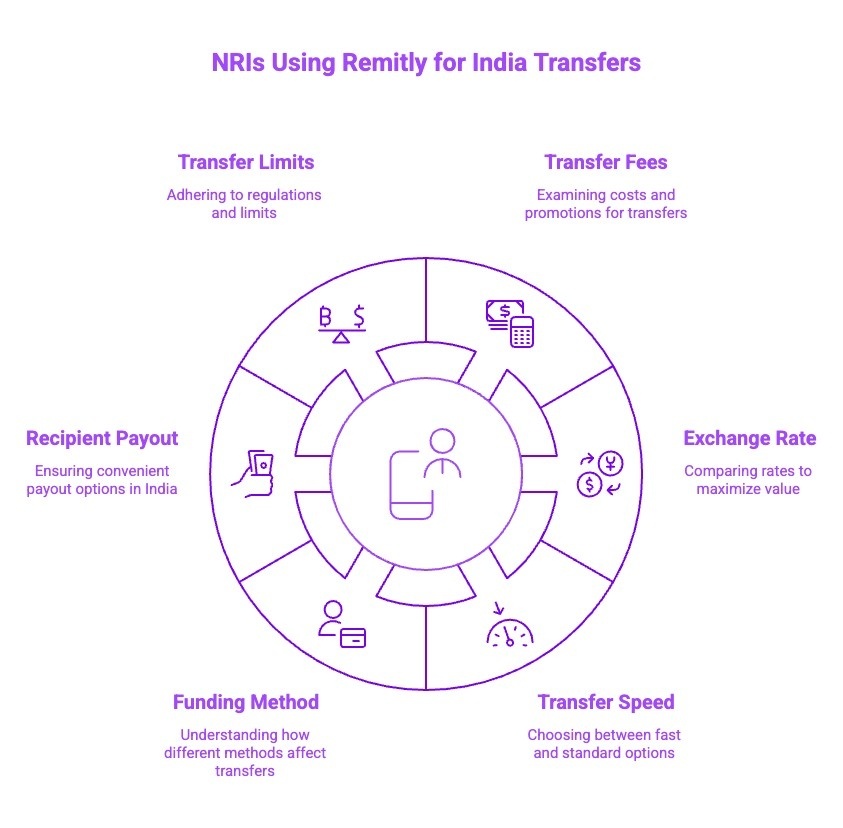
Before sending money to India, NRIs should look beyond advertised fees to avoid hidden costs or delays.
Below are the key checks to make before using Remitly for USA to India money transfers:
1) Transfer Fees and Promotional Offers
Remitly may display low or zero transfer fees during promotions, especially for first-time users. NRIs should check whether these offers apply only once or have limits on transfer amounts. Understanding standard fees after promotions end helps avoid surprises when planning regular transfers to India over the long term.
2) Exchange Rate Being Offered
The exchange rate plays a major role in the total cost of a transfer. NRIs should compare Remitly’s offered rate with the mid-market rate to identify any markup. Even small differences can significantly reduce the amount received in India, especially for higher-value transfers.
3) Transfer Speed Selection
Remitly offers Economy and Express transfer options, each priced differently. Economy transfers cost less but take longer, while express transfers prioritize speed at a higher cost. NRIs should evaluate whether faster delivery is necessary or if a lower-cost option better suits their needs.
4) Funding Method Impact
Funding a transfer through a bank account, debit card, or credit card can affect both fees and processing time. Bank transfers are usually cheaper, while card payments are faster but may involve higher charges. NRIs should choose the funding method that balances cost, speed, and convenience.
5) Recipient Payout Method in India
NRIs should confirm how the recipient will receive the money, whether through bank deposit, UPI, or cash pickup. Availability and convenience vary by location. Choosing the right payout method ensures smoother access to funds and reduces the risk of delays or failed deliveries.
6) Transfer Limits and Compliance Requirements
Account verification levels determine how much money can be sent through Remitly. NRIs should ensure their account supports the intended transfer amount. Incomplete verification can lead to delays, additional checks, or rejected transfers, especially for higher-value remittances.
Reviewing these factors helps NRIs estimate real costs accurately and decide whether Remitly suits their long-term money transfer needs to India.
How Long Does a Remitly Transfer Take to Reach India?
Transfer speed matters when sending money to India, especially for urgent or recurring needs.
Below are the key factors that influence how quickly Remitly transfers typically reach recipients in India:
- Economy transfer delivery time: Economy transfers usually take one to three business days, depending on bank processing cycles and settlement timelines.
- Express transfer delivery time: Express transfers are often completed within minutes or a few hours, but delays may still occur due to checks or banking hours.
- Bank processing and local holidays: Indian bank processing times, weekends, and public holidays can extend delivery timelines beyond Remitly’s control.
- Verification and compliance checks: First-time users or high-value transfers may require additional verification, which can temporarily delay processing.
Knowing what affects transfer speed helps NRIs choose the right Remitly option and avoid unexpected delivery delays.
What Are Remitly’s Transfer Limits for USA to India Transfers?
Transfer limits are an important consideration for NRIs planning regular or high-value remittances to India. It is also helpful to understand the maximum limit for money transfer from USA to India, as limits can vary by provider and regulatory requirements.
Below are the key points to understand about Remitly transfer limits for USA to India transfers:
- Limits vary by account verification level: New or partially verified users usually face lower transfer limits, while fully verified accounts can send higher amounts.
- Limits differ by transfer method: Bank-funded transfers often allow higher limits compared to debit- or credit-card-funded transfers.
- Daily and monthly caps may apply: Remitly may impose daily or rolling limits to comply with regulatory and risk controls.
- Higher limits require additional checks: Large transfers may trigger extra verification or compliance reviews, which can temporarily delay processing.
Understanding Remitly’s transfer limits helps NRIs plan transfers more smoothly and avoid delays when sending money from the USA to India.
Looking for a Simpler Alternative to Remitly? Try Frex!
If you want more transparency, better exchange rates, and fewer surprises, Frex is built for NRIs who send money from the USA to India regularly. Frex focuses on clear pricing, competitive rates, and fast settlements, so you always know how much your family will receive before you send.
With secure compliance checks and an easy-to-use platform, Frex removes the guesswork often associated with international remittances and helps you transfer money with confidence.
Get started with Frex today:
- Contact Us: Speak with our team to understand pricing, limits, and the best transfer option for your needs.
- Download the App: Download the Frex app on iOS to start sending money quickly, with Android also available if you prefer.
Frex makes sending money to India straightforward, transparent, and stress-free.
Conclusion
Understanding the true cost of sending money from the USA to India goes beyond checking a headline fee. As this guide shows, Remitly charges are shaped by transfer fees, exchange rate markups, service speed, and transfer limits, all of which affect how much money actually reaches India and answer a common question: does Remitly charge a fee to send money?
For NRIs who send money regularly, paying attention to these details helps avoid surprises and plan transfers more confidently. Reviewing fees alongside exchange rates, delivery timelines, and limits allows you to make better-informed decisions and choose a transfer option that aligns with your priorities, whether that is cost, speed, or overall transparency.
Frequently Asked Questions
Have Remitly’s transfer fees increased recently?
Remitly has not announced a universal increase in transfer fees recently. Fees can vary based on delivery option, payment options, promotional rate availability, and date pricing. Users should always check current fee information inside their Remitly account.
What is the minimum and maximum fee Remitly can charge per transfer?
Remitly charges to India typically range from a low flat fee to higher costs based on payment method, transfer speed, and delivery option. Credit card transfers and faster delivery usually cost more, while bank transfers tend to be cheaper.
Are there any additional charges on top of Remitly’s transfer fees?
Beyond visible fees, additional costs may come from exchange rate margins, credit card payments, or the recipient’s bank account policies. These are not always labeled as hidden fees, but they still affect the final amount received.
Are Remitly’s exchange rates part of the total cost when sending money?
Yes, exchange rates are a major part of the total cost. Remitly applies a regular rate or promotional rate that converts US dollars to Indian rupees, and any markup directly reduces the final payout from international transfers.
Does Remitly offer any fee discounts for first-time users or during promotions?
Remitly often offers discounted fees or promotional rate benefits for new customers making their first transfer. These offers are usually limited by date pricing, transfer size, and terms of use, and may not apply to future transfers.
Will Remitly show all charges upfront before I send money?
Yes. Remitly usually shows the transfer fee, exchange rate, and credited amount before confirmation. However, how much Remitly charge for sending amount to India is often reflected in the exchange rate markup, which can vary by payment method and transfer speed.
What are the standard fees Remitly charges to send money abroad?
Standard Remitly fees vary by different countries, delivery options, and payment methods. International transfers from the United States often include a flat fee, while international wire transfers or mobile money payouts may cost more.
How do Remitly’s fees compare with other money transfer services?
Compared to services like Wise Payments Limited, Remitly may offer faster delivery options but sometimes higher overall costs due to exchange rate margins. Wise fees are often lower for foreign currencies, especially with a free Wise account.




Leave a Reply