





Key Highlights
- Western Union has no minimum transfer amount, allowing users to send as little as $2, while fully verified accounts may support transfers up to around $50,000, depending on method and eligibility.
- Transfer limits vary by verification level, payment method, payout option, and transaction frequency.
- Daily and cumulative caps can require large India transfers to be split, increasing total fees and administrative effort.
- Limits are best checked directly on the transfer setup screen or inside the account dashboard, as they are not always displayed upfront.
- Hitting a limit can block transactions, trigger verification checks, or delay urgent payments.
- Raising limits may require additional compliance steps, but it does not reduce fees or improve exchange rates.
- Modern remittance platforms such as Frex provide clearer transfer flexibility, transparent pricing, and the best exchange rates for India transfers.
Sending money to India is rarely just about convenience. For NRIs, it often supports parents, pays tuition, meets property commitments, or handles urgent needs. When transfers fail or get delayed, the impact is personal and immediate.
The challenge is that transfer limits, fees, exchange rates, and processing timelines are not always clear upfront. Western Union applies different caps based on verification, payment method, and transfer patterns, which can lead to split payments, higher costs, or unexpected declines if you are unprepared.
This blog explains how Western Union transfer limits work for sending money to India, how those limits affect fees and reliability, and when modern bank-to-bank remittance options may offer a more predictable alternative.
What Is the Western Union Transfer Limit?
The Western Union transfer limit refers to the maximum amount of money a sender can transfer in a single transaction, within a day, or over a monthly period. These limits determine how much can be sent through a Western Union account at any given time.
Transfer caps may differ depending on how the transaction is initiated, such as online transfers or in-person transactions, and whether the money is received as cash pickup or bank deposit. For international transfers like sending money from the United States to India, limits apply at different stages of the transaction process.
Because of these caps, Western Union limits can feel restrictive for users who need to send larger or frequent transfers. As a result, many senders explore alternative remittance options that offer higher transfer thresholds and fewer split transactions.
What Affects Your Limit?
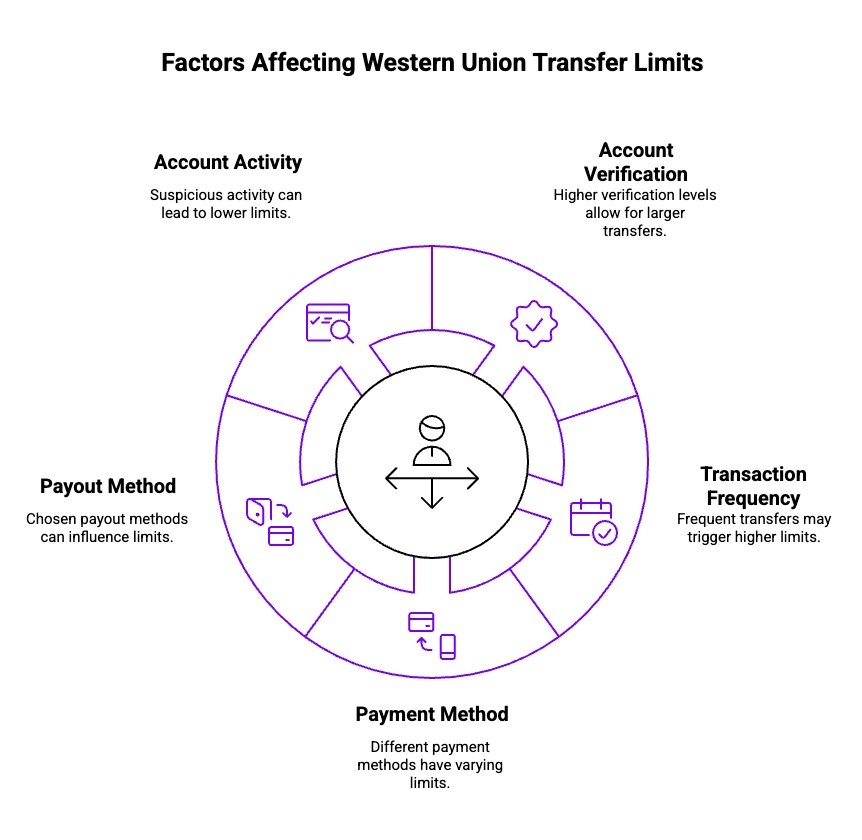
The Western Union money transfer limit from USA to India is not fixed. Your allowed sending amount can change based on specific account and transaction conditions. Understanding what influences your limit helps you avoid unexpected restrictions during urgent transfers.
Here are the main factors that affect your Western Union sending limit:
- Your Account Verification Level: The more complete your identity verification, the higher your potential transfer ceiling. Basic accounts typically operate with lower caps, while fully verified users may qualify for significantly higher limits.
- Transaction Frequency and Cumulative Sending: Limits are not always applied per transfer alone. Western Union may also track how much you send daily or within a rolling period. Multiple transfers in a short time can trigger cumulative caps.
- Selected Payment Method: How you fund your transfer can influence your allowed amount. Bank funded transfers often support higher limits compared to debit or credit card payments.
- Payout Method Chosen: Sending to a bank account versus arranging cash pickup can affect the maximum transferable amount, as different payout types may carry separate internal caps.
- Account Activity and Risk Monitoring: Sudden changes in transfer size, frequency, or destination may prompt additional review, which can temporarily restrict your sending capacity.
When planning larger transfers to India, understanding these influencing factors allows NRIs to anticipate possible caps and decide whether Western Union meets their required transfer size.
What Are the Standard Western Union Transfer Limits?
Western Union transfer limits generally increase based on account verification status and the method used to send money. Below is a simplified breakdown of how standard limits are typically structured.
1. Unverified Accounts
Unverified accounts usually start with lower sending caps. These are suitable for smaller or occasional transfers.
- Common starting range: Around $3,000 per transaction
- Intended for basic account usage
2. Verified Accounts
Verified accounts unlock higher transfer ceilings after completing identity verification.
- Higher limits: Up to $50,000 or local currency equivalent
- Designed for larger or recurring transfers
3. Limits by Method
Transfer caps can also vary depending on how the transaction is initiated.
- Online and mobile app transfers
- Phone transfers
- In person transfers at agent locations
To make this easier to compare at a glance, here is a simplified summary of how these limits are typically structured:
| Account Type / Method | Typical Limit Range | General Use Case |
|---|---|---|
| Unverified Account | Around $3,000 | Smaller or first time transfers |
| Verified Account | Up to $50,000 | Higher value or repeat transfers |
| Online / App | Profile dependent | Most common digital method |
| Phone Transfer | May vary | Support assisted transfers |
| In Person Agent | Location dependent | Cash based transfers |
While these ranges provide a general benchmark, actual limits may vary depending on the specific transaction and account setup. Understanding these caps upfront helps senders plan transfers more efficiently and avoid splitting payments across multiple days.
Why Do Transfer Limits Matter When Sending Money From the USA to India?
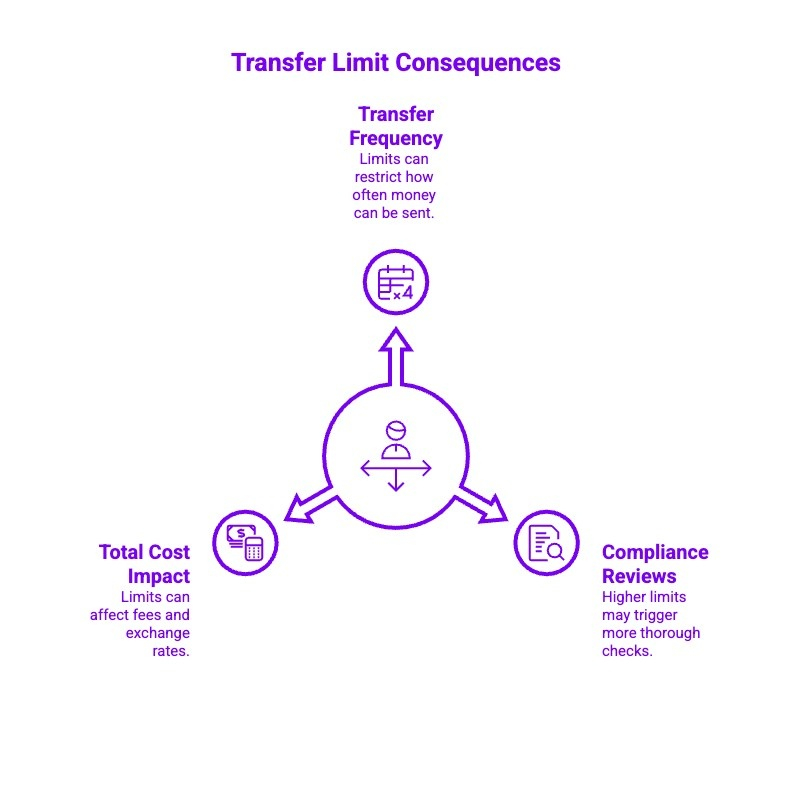
Transfer limits play a critical role when sending money from the USA to India, as they influence cost, speed, and reliability. The Western Union maximum limit, in particular, can shape how easily you manage larger or recurring transfers.
Here are the key reasons these limits matter:
- Transfer Frequency: Lower limits often force you to split payments into multiple transactions, increasing delays and administrative friction.
- Compliance Reviews: Repeated transfers or higher value amounts are more likely to trigger additional verification checks and manual reviews.
- Total Cost Impact: Splitting transfers can lead to higher cumulative fees and exchange rate losses over time.
Understanding these factors helps you choose a transfer method that fits your needs more predictably.
How Can You Check Your Western Union Transfer Limits Before Sending Money to India?
Checking your transfer limit before initiating payment helps prevent declined transactions and unnecessary delays. Western Union typically displays your allowed limit inside your account interface during the transfer process.
Here are the exact places where you can view your sending limits:
1) On the Transfer Setup Screen (Website or App)
The most immediate way to check your limit is during the transfer setup process.
- Log in to your Western Union account
- Enter India as the destination
- Input your intended transfer amount
If your amount exceeds your permitted limit, the system will automatically prompt you with the maximum allowed amount. This appears directly on the transfer screen before payment confirmation.
2) Inside Your Account Profile or Dashboard
After logging in, some account tiers display limit information within:
- Account settings
- Profile or verification section
- Transaction history area
This section may indicate whether your account is verified and whether higher limits are available. If additional verification is required, prompts usually appear here.
3) During Payment Method Selection
Limits may also become visible when you choose your payment option.
For example:
- Selecting bank transfer
- Choosing debit or credit card
- Opting for cash at agent location
If the selected method has a lower cap, the system typically adjusts the allowable amount in real time before you proceed.
Checking your limit directly inside the transfer flow is the most reliable method. Since caps can update dynamically, reviewing them at the moment you plan to send money ensures you avoid split transfers or last minute changes.
What Is the Western Union Limit Per Day and Why Does It Matter for NRIs?
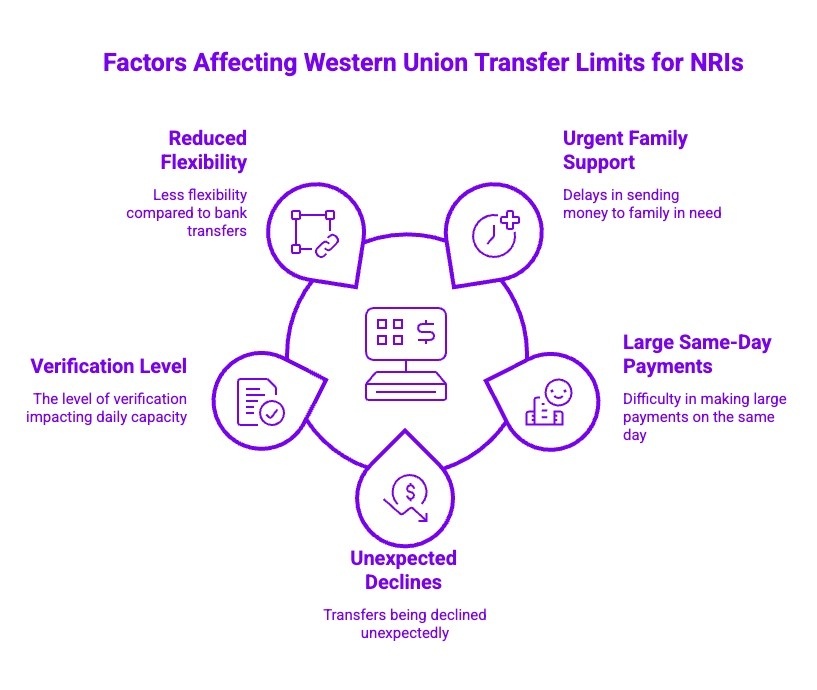
The Western Union daily transfer limit for international transactions can typically range from around $3,000 per day for basic or unverified accounts to up to $50,000 per day for fully verified users, depending on account status and transfer method.
This daily cap determines how much NRIs can send to India within a single day. When larger amounts are required urgently, these limits can directly affect timing and flexibility.
Here are the key reasons the Western Union limit per day matters for NRIs:
- Urgent Family Support Can Be Delayed: If the required amount exceeds the daily cap, funds for medical or emergency expenses may need to be split across multiple days.
- Large Same Day Payments Become Difficult: Tuition fees or property related payments often exceed basic daily thresholds, requiring staged transfers.
- Unexpected Transfer Declines: Once the daily limit is reached, additional transfers may be automatically restricted until the next day.
- Verification Level Directly Impacts Daily Capacity: Fully verified accounts generally receive higher daily allowances, while basic accounts operate under lower caps.
- Reduced Flexibility Compared With Bank to Bank Transfers: Daily limits often highlight why many NRIs compare traditional money transfer services with direct bank remittance options that support higher same day amounts.
Understanding the Western Union limit per day allows NRIs to plan transfers more accurately, especially when timing and larger amounts are involved.
How Do Western Union Transfer Limits Affect Fees and Exchange Rates?
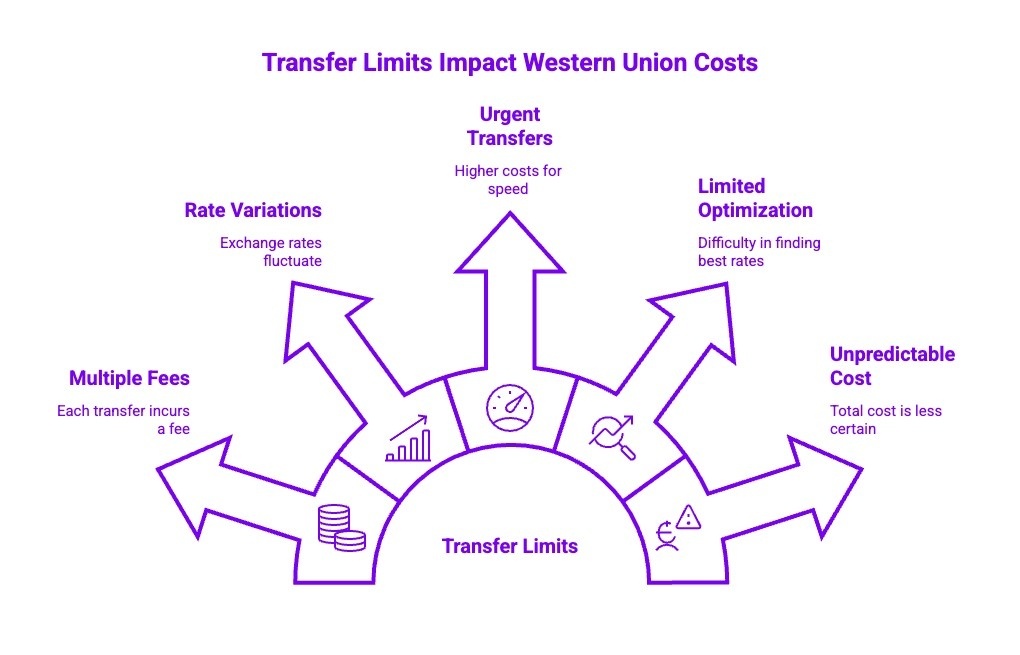
Western Union transfer limits do more than restrict amounts. They directly influence fees, exchange rates, and the final amount received in India. When the limit on Western Union money transfer to India forces transfers to be split, overall costs can increase quickly.
Here are the key ways Western Union transfer limits affect fees and exchange rates:
- Multiple Transfers Mean Multiple Fees: Western Union transfer limits may require splitting one large transfer into several smaller ones. Each transaction can attract its own service fee, increasing the total cost compared to a single higher-value transfer.
- Exchange Rate Variations Across Transactions: When transfers are split due to limits, each transaction may use a different exchange rate. Even small rate changes can reduce the final amount received in India, especially for larger totals.
- Higher Costs for Urgent Transfers: If limits force last-minute or repeated transfers, users may choose faster delivery options. These often come with higher fees or wider exchange rate margins.
- Limited Ability to Optimize Rates: Western Union transfer limits reduce flexibility to wait for favorable exchange rates. Digital platforms often allow larger transfers when rates are better, improving value.
- Less Predictable Total Cost: Because fees and rates apply per transaction, Western Union transfer limits make it harder to estimate the true cost upfront for larger remittances.
Understanding how Western Union transfer limits influence fees and exchange rates helps NRIs avoid hidden costs and plan transfers more efficiently.
Want a clearer breakdown of what you actually pay beyond limits? Explore Western Union money transfer charges, including fees, exchange rate markups, and how your total cost adds up for India transfers.
What Happens If You Hit a Limit?
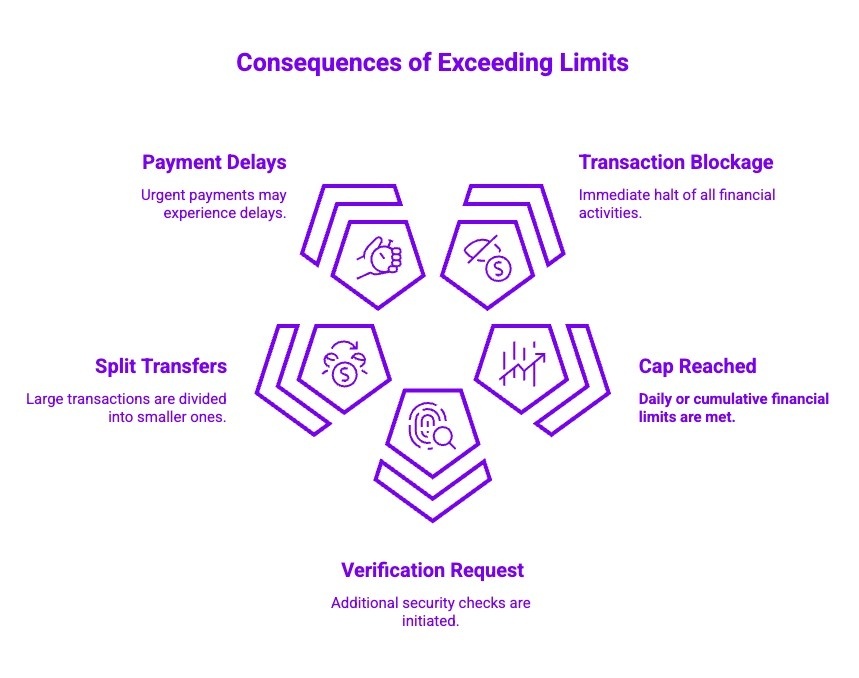
If you hit a Western Union transfer limit while sending money to India, the system typically prevents the transaction from being completed. What happens next depends on the type of limit reached.
Here’s what you can expect:
- Transaction Is Blocked Immediately: If your transfer exceeds the per transaction cap, the system will prompt you to lower the amount before proceeding.
- Daily or Cumulative Cap Reached: If you have already sent funds earlier in the day or within a rolling period, additional transfers may be restricted until the limit resets.
- Request for Additional Verification: Larger or repeated transfers may trigger identity checks or compliance reviews before allowing further transactions.
- Split Transfers May Be Required: You may need to divide a large payment into multiple smaller transfers across different days.
- Potential Delays for Urgent Payments: If funds are needed immediately, hitting a limit can disrupt tuition payments, property commitments, or family support.
Understanding what happens when you reach a limit helps you plan transfers more effectively and avoid last minute interruptions.
Can You Increase Western Union Transfer Limits, and Is It Worth It for India Transfers?
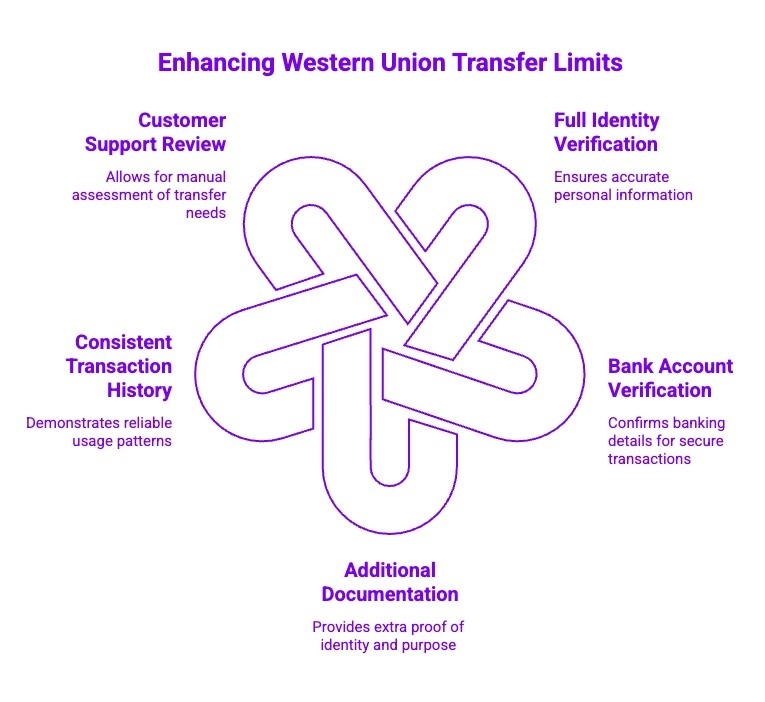
Increasing Western Union transfer limits is sometimes possible, but it is not always straightforward or worthwhile for India transfers.
Here are the main ways users may be able to request or qualify for higher limits:
- Complete Full Identity Verification: Submitting government issued ID, Social Security details, or additional KYC documents can unlock higher sending caps.
- Verify Your Bank Account: Linking and confirming your bank account may allow higher limits compared to card funded transfers.
- Provide Additional Documentation on Request: For larger transfers, Western Union may ask for proof of source of funds, income details, or transaction purpose.
- Maintain Consistent Transaction History: A stable pattern of legitimate transfers over time may reduce internal risk flags and support higher limits.
- Contact Customer Support for Manual Review: In some cases, users can request a limit review, though approval depends on compliance checks.
Even after approval, increases may be modest and still subject to daily or cumulative caps. Importantly, raising your transfer limit does not reduce fees or improve exchange rates. Larger transfers may still need to be split, increasing total costs.
For NRIs sending larger or recurring amounts to India, modern bank to bank remittance options often provide clearer limits, faster processing, and better overall predictability, making them a more practical choice.
What Is the Western Union Transaction Limit Vs. Digital Remittance Platforms?
Understanding the Western Union transaction limit is important when sending money to India, especially for higher-value needs. Transaction caps can affect how much you send in one go, how often transfers must be split, and the total cost involved.
Below is a comparison of the Western Union transaction limit versus digital remittance platforms:
| Provider | Typical Transfer Limits | Notes |
|---|---|---|
| Western Union | • Unverified accounts: ~$3,000 per transfer • Verified accounts: up to ~$50,000 per transfer | Limits vary by country and method (cash pickup vs bank deposit). Higher limits usually require ID verification. |
| Frex | • No stated maximum cap • No minimum transfer amount (as low as ~$2) | In practice limit may depend on KYC and compliance levels (users can send any amount, typically subject to verification). |
| Wise | • Up to ~$1,000,000+ per transfer (varies by currency & payment method) | Wise offers very high limits, especially for bank or SWIFT transfers, often far higher than most other remittance platforms. |
| Remitly | • Up to ~$100,000 per transfer (US example) | Remitly limits vary by country and delivery method; higher limits often require more verification. For some users, tiered caps apply. |
| WorldRemit | • ~$9,000 per day • ~$5,000 per transfer (card example) | Limits depend significantly on payment method and destination, and can be lower than other services |
Comparing transaction limits helps NRIs choose a more predictable and cost-effective way to send money to India, especially when transferring larger amounts.
Looking for a More Flexible Way to Send Money to India?
If daily caps, split transactions, or unclear pricing feel restrictive, Frex offers a simpler alternative. Designed for modern India remittances, Frex focuses on higher flexibility, transparent pricing, and the best exchange rates. With regulated bank-to-bank transfers and upfront rates, you can send money with clarity and control.
Ready to move funds confidently? Download the Frex app to get started in minutes.
Conclusion
Sending money to India often involves responsibility, urgency, and larger financial commitments. Western Union offers flexibility with no minimum transfer amount and the ability to send higher sums after verification. However, limits vary by account status, payment method, and transaction activity, and daily or cumulative caps can require transfers to be split.
Because limits can influence fees, exchange rates, and timing, understanding them before sending is essential. For NRIs managing tuition payments, property transactions, or recurring family support, choosing a remittance option with clear limits, transparent pricing, and predictable processing helps avoid delays and unexpected costs.
Frequently Asked Questions
Is there a difference in transfer limits when sending money to an inmate using Western Union?
Yes. Transfers to inmates usually have much lower limits than standard online money transfer services. Limits depend on the correctional facility, account status, and payment method and are designed for controlled, small-value transfers rather than large or recurring amounts.
How many times can I send money through Western Union in a day?
Western Union does not set a fixed daily transfer count. However, multiple transfers in one day may trigger limits based on account status, payment method, and source of funds. Repeated same-day transfers can lead to reviews or temporary restrictions.
What is the maximum amount I can send through Western Union in a single transfer?
The maximum amount per transfer depends on verification level, destination, and payment method. Online transfers generally allow higher amounts than agent-based transactions, while credit card payments often have lower caps compared to bank-funded transfers.
Are there different Western Union transfer limits for domestic and international transfers?
Yes. International transfers usually have stricter limits than domestic ones due to currency exchange rules and compliance checks. Limits also vary by destination country and whether the transfer is sent online or through a Western Union agent location.
Do Western Union transfer limits vary depending on the country I’m sending money to?
Yes. Transfer limits vary by destination country based on local regulations and anti–money laundering controls. Sending to countries such as the United Kingdom or Hong Kong may involve different caps, even when using the same Western Union account.
How many transfers can you make each year with Western Union?
Western Union does not publish a fixed annual transfer limit. However, frequent transfers involving large amounts may be monitored. Account status, transaction patterns, and declared source of funds influence whether additional checks or restrictions apply.
What are the daily, weekly, or monthly limits for sending money through Western Union?
Western Union does not disclose fixed daily, weekly, or monthly limits. Caps vary based on verification level, payment method, destination, and transaction history. International transfers typically have lower limits unless full identity verification is completed.
Are there specific transfer limits when sending money to India via Western Union?
Yes. Transfers to India are subject to country-specific limits, compliance checks, and payment method restrictions. Limits may apply per transaction, per day, or cumulatively, and higher amounts often require stronger verification or alternative remittance options.
What fees apply when I send the maximum allowed amount through Western Union?
Sending the maximum allowed amount can increase total costs. Western Union typically applies service fees per transaction, and exchange rate margins may widen for higher values. If limits force split transfers, fees can apply multiple times, raising overall costs.




Leave a Reply