





Key Highlights
- Emergency remittance services platforms are designed to deliver funds within minutes or hours
- The quickest way to send money depends on the payout method, not just the platform’s claims
- Debit card and credit card payments are faster than standard online banking transfers
- Hidden fees in exchange rates often reduce the final amount more than fees upfront
- Delivery speed depends on how funds reach the recipient’s bank account
- Mobile wallets and online transfers are faster than traditional wire transfer companies
- Frex enables real-time transfers from the United States to India with predictable delivery
When money needs to move urgently, the decision is no longer about convenience. It becomes about certainty. You need to know the funds will reach the recipient exactly when required, not hours later or after a couple of business days.
In real situations, urgency comes with pressure. A family member may need immediate support, a hospital may require upfront payment, or a critical transaction may depend on timely funds. This is more common than it seems. According to the World Bank, global remittance flows to low and middle-income countries reached $669 billion in 2023.
This is where emergency remittance services platforms come in. These are digital money transfer services designed to move funds internationally within minutes or hours, ensuring recipients can access money immediately. However, not all platforms deliver the same speed or reliability.
This guide explains what affects transfer speed, how platforms differ, and how to choose the right option when timing matters most.
How Emergency International Transfers Actually Work?
Emergency transfers follow a clear sequence, but the final speed depends on how efficiently each stage is executed.
At a high level, the process moves from initiation to delivery, with multiple checkpoints in between. Understanding these stages helps you identify where time is saved and where delays can occur.
1. Transfer Initiation
The sender starts the transaction using an online banking platform or an international money transfer service. This includes entering the amount, selecting the destination, and choosing how the recipient will receive the funds.
2. Funding the Transfer
The payment is completed using a debit card, credit card, or bank account. This step directly affects how quickly the transfer moves forward, as some methods are processed instantly while others require verification.
3. Processing and Conversion
The platform verifies the transaction, applies the exchange rate, and prepares the funds for transfer. This stage ensures compliance and accuracy before the money is moved across borders.
4. Routing the Fund
The platform sends the funds through its network to the destination country. The efficiency of this step depends on how well the platform is integrated with local financial systems.
5. Final Payout
The money is delivered to the recipient through the selected method, such as a bank account, mobile wallets, or cash pickup options. This is the stage where actual access to funds is determined.
In simple terms, speed is not defined by how fast the transfer starts, but by how quickly the recipient can access the funds at the final payout stage.
Curious about how transfers are received in India? Our inward remittance guide breaks it down in simple terms.
Which Emergency Remittance Services Platforms Are the Fastest?
Not all platforms deliver the same speed in urgent transfers. While many promise fast processing, actual delivery depends on payout method, payment type, and verification. The fastest option is the one that ensures immediate access for the recipient.
1. Frex
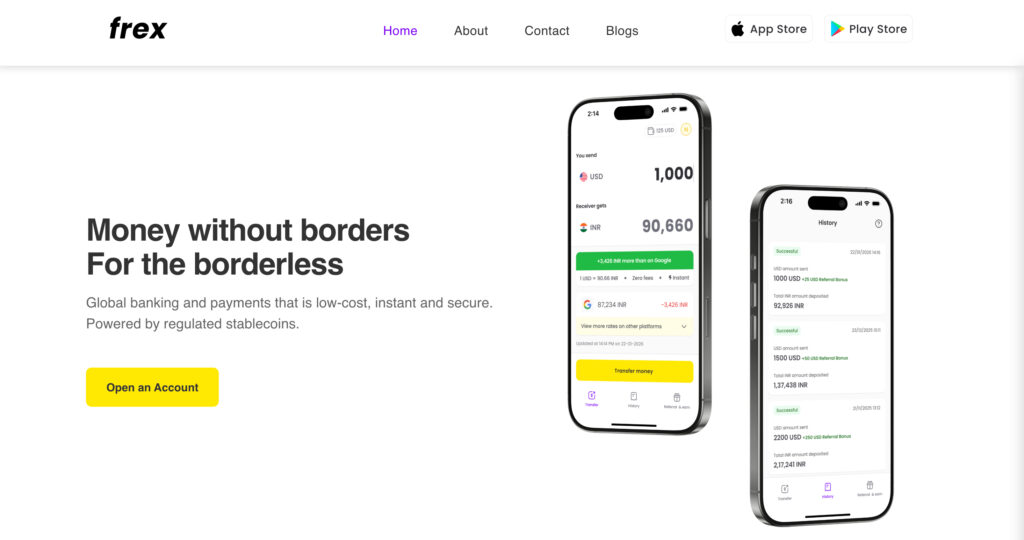
Frex is built to reduce the gap between sending and receiving, especially for transfers from the United States to India. Instead of focusing only on fast processing, it is designed to ensure that the recipient actually gets access to the money without delays.
In urgent situations, this difference matters. A transfer is only truly fast when the funds are available to use immediately. With Frex, transfers are typically completed within minutes or on the same day, depending on bank integration and verification. This helps remove uncertainty around when the money will arrive.
How Fast Are Transfers with Frex?
Frex is structured for speed across both processing and payout:
- Most transfers are completed within minutes in supported cases
- Same-day delivery is common for bank transfers to India
- Faster completion depends on verification and recipient bank integration
This makes it suitable for situations where timing directly affects the outcome.
Why Choose Frex for Emergency Transfers?
Frex focuses on making urgent transfers both fast and predictable:
- Pricing is shown upfront before confirming the transaction
- No hidden adjustments in exchange rates that reduce the final amount
- Direct bank transfers ensure immediate access to funds
- Minimal delays between processing and payout
The result is a transfer experience where both speed and clarity are aligned.
Where it fits best: Time-sensitive transfers where the recipient needs immediate access to funds and the sender wants full visibility on the final amount.
Don’t Take Our Word for It. Hear from Our Users
Real experiences often highlight what matters most in emergency transfers: speed, transparency, and reliability. When timing is critical, knowing that the money will arrive quickly and exactly as expected makes all the difference.
“Okay, that sounds dramatic, but when you are far from family, the least you can do is make sure the money transfer is smooth and not eat into what you are sending with fees. Frex does that. Rate is good, transfer is fast, family is happy.”
“Had a question about my first transfer taking slightly longer than expected. Messaged support and got a response in under 10 minutes with a real explanation, not a copy-paste answer. Transfer cleared shortly after. Rare to see this level of service.”
Ready to send money faster with full transparency? Download the app and check real-time rates before you transfer.
2. Western Union
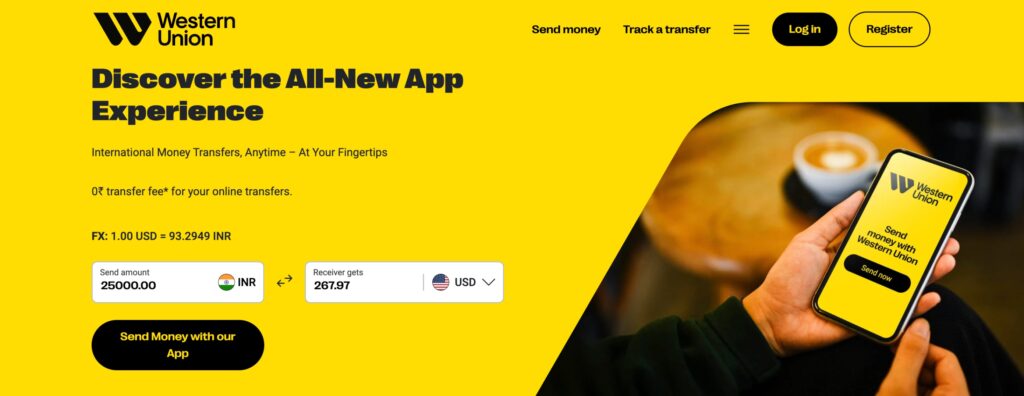
Western Union is a widely used global transfer service known for its extensive network and cash pickup options. It is often chosen for urgent transfers where recipients need immediate access to physical cash, especially in regions with limited digital banking access.
How Fast Are Transfers with Western Union?
- Cash pickup is often available within minutes
- Bank transfers can take a few hours to 1–2 business days
- Speed depends on payout method and location
Where It Loses Value
- Higher fees, especially for faster transfers
- Exchange rates often include hidden margins
- Costs vary widely based on method
When Is Western Union the Right Choice?
Western Union is best when the recipient needs cash pickup or does not have access to a bank account or mobile wallet.
To compare platforms more effectively, it is important to understand how Western Union’s transfer limits change based on verification levels and payment methods.
3. Wise
Wise focuses on transparency and cost efficiency, offering mid-market exchange rates with clearly displayed fees. While it provides reliable delivery, it is not primarily designed for urgent transfers and typically prioritises value over immediate speed.
How Fast Are Transfers with Wise?
- Instant in some cases, but typically 1–2 business days
- Slower compared to speed-focused platforms
- Depends on the funding method and route
Where It Loses Value
- Not built for urgent transfers
- Instant options are limited
- Speed varies across corridors
When Is Wise the Right Choice?
Wise is ideal when cost and transparency matter more than immediate delivery.
Want a deeper breakdown of Wise fees? This guide explains exactly what you pay when sending money from the US to India.
4. Remitly
Remitly is a popular transfer service that offers flexibility through Express and Economy options. It allows users to choose between faster delivery and lower cost, making it suitable for both urgent and non-urgent transfers depending on the selected option.
How Fast Are Transfers with Remitly?
- Express transfers can arrive within minutes to a few hours
- Economy transfers take 3–5 business days
- Speed depends on payout and verification
Where It Loses Value
- Express transfers cost more
- The economy option is slower
- Exchange rates may include a margin
When Is Remitly the Right Choice?
Remitly is suitable when you want flexibility between speed and cost for different transfer needs.
Considering Remitly? Here’s a detailed breakdown of how much Remitly actually charges when sending money to India.
5. Xoom
Xoom, a PayPal service, offers multiple payout methods, including bank deposits, mobile wallets, and cash pickup. It is designed for convenience, though actual delivery speed depends heavily on how the transfer is funded and received.
How Fast Are Transfers with Xoom?
- Card-funded transfers can be completed within minutes
- Bank-funded transfers take 1–3 business days
- Speed varies by destination and payout method
Where It Loses Value
- Fees vary significantly by method
- Exchange rate markups may apply
- Speed is not always consistent
When Is Xoom the Right Choice?
Xoom is best for users who want convenience and multiple payout options in one platform.
6. MoneyGram
MoneyGram is a global remittance provider known for fast transfers and strong cash pickup availability. It is commonly used for smaller transfers where speed matters, especially when recipients rely on local agent networks instead of bank-based access.
How Fast Are Transfers with MoneyGram?
- Cash pickup is often available within minutes
- Bank transfers can take a few hours to 1–2 business days
- Speed depends on local banking systems
Where It Loses Value
- Lower transfer limits compared to digital platforms
- Higher fees for faster delivery
- Exchange rate margins may apply
When Is MoneyGram the Right Choice?
MoneyGram is ideal for smaller transfers where the recipient needs quick access to cash.
Quick Comparison: Speed, Cost, and Best Use
| Platform | Speed (Estimated Delivery Time) | Fees & Pricing | Best For |
|---|---|---|---|
| Frex | Minutes to the same day | Transparent upfront | Fast US to India bank transfers |
| Western Union | Minutes to a few days | Varies | Cash pickup and global coverage |
| Wise | Instant to 1–2 days | Transparent, low | Cost-efficient transfers |
| Remitly | Minutes to 3–5 days | Tier-based | Flexible speed vs cost |
| Xoom | Minutes to 1–3 days | Varies | Multiple payout options |
| MoneyGram | Minutes to a few days | Varies | Cash pickup and global reach |
Note: Delivery times, fees, and limits vary based on payment method, destination, and verification. Always check the platform for the latest details before confirming a transfer.
How Do You Choose the Fastest Platform in an Emergency?
The fastest option depends on how the recipient can access the funds, not just how quickly the transfer is processed.
- Bank access available: choose platforms with instant or same-day bank transfers
- No digital access: use cash pickup options for immediate availability
- Urgent transfer: fund with a debit or credit card for faster processing
- Cost-sensitive: compare fees upfront and exchange rates together
- Need certainty: pick services that show a clear estimated delivery time
The right choice is the one that ensures the recipient can use the money immediately after delivery.
What Determines the Speed of Emergency Transfers?
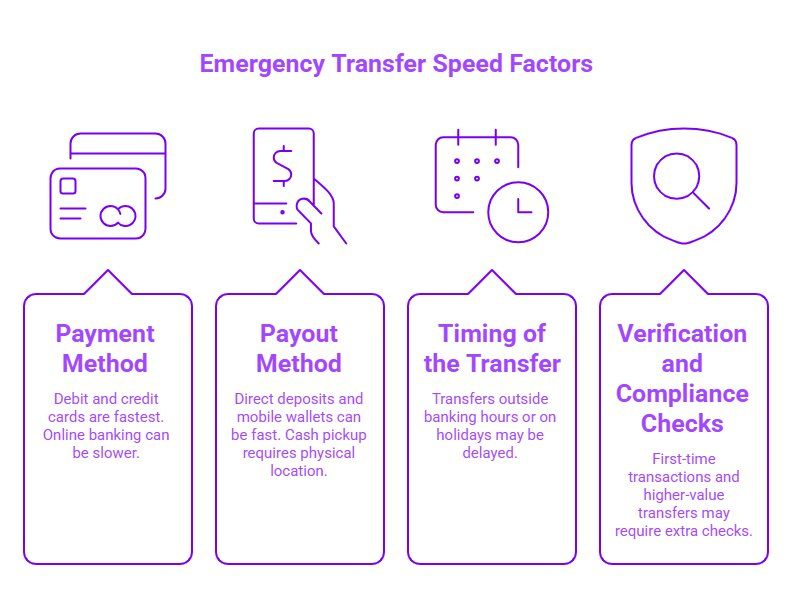
The speed of an emergency transfer is not defined by a single step. It depends on how quickly funds move from initiation to final delivery, and more importantly, where delays are introduced along the way.
In most cases, the difference between a transfer that takes minutes and one that takes a couple of business days comes down to four key factors.
1. Payment Method
The transfer speed is influenced right from the moment you fund it.
- Debit card and credit card payments are typically processed instantly or within minutes, making them the quickest way to initiate a transfer
- Online banking transfers can take longer due to bank clearing processes and additional verification layers
If urgency is high, choosing a faster funding method helps eliminate the first potential delay.
2. Payout Method
Once the transfer is processed, the next variable is how the money reaches the recipient.
- Direct deposits to a recipient’s bank account can be fast, but actual speed depends on the receiving bank’s processing system
- Mobile wallets often provide quicker access, especially when integrated with local real-time payment networks
- Cash pickup options, such as those offered by providers like Western Union, may be fast in availability but require the recipient to visit a physical location
In practice, delivery is only as fast as the recipient’s ability to access the funds immediately after they arrive.
3. Timing of the Transfer
Even the fastest international money transfer service operates within certain timing constraints.
- Transfers initiated outside banking hours, weekends, or public holidays may not be processed immediately
- Some payout systems only operate during specific settlement windows, which can extend delivery time
This means that when a transfer is initiated can be just as important as how it is sent.
4. Verification and Compliance Checks
Security and regulatory requirements are built into every international transfer.
- First-time transactions may require identity verification before processing
- Higher-value transfers are more likely to trigger additional checks
- Certain transactions may be flagged for manual review, which can introduce delays
While these checks are essential for safety, they can slow down transfers at critical moments.
When all four factors align, such as instant funding, fast payout infrastructure, favourable timing, and minimal verification friction, transfers can be completed within minutes. When one or more of these factors introduce friction, delays become more likely, regardless of the platform used.
What Does an Emergency Transfer Actually Cost?
Cost in emergency transfers is often misunderstood because it is not always visible upfront. Many users focus on fees, but the real impact usually comes from how the exchange rate is applied.
Most international money transfer services structure pricing in two ways:
- Fees Upfront: This is the visible charge shown before you confirm the transfer. It may appear low or even zero in some cases.
- Hidden Fees Through Exchange Rates: Instead of charging a fee, some platforms apply a markup on the exchange rate. This reduces the final amount received without clearly showing the difference.
Why this matters:
- A platform with zero fees but poor exchange rates may deliver less overall
- A platform with slightly higher fees upfront, but real exchange rates can deliver more value
For example, a $1,000 transfer might look cheaper on one platform, but after exchange rate adjustments, the recipient could receive significantly less compared to another service.
In emergencies, the goal is not just to send money fast, but to ensure the maximum amount reaches the recipient.
Platforms like Frex focus on transparent pricing by showing the exchange rate upfront, without hidden markups. This helps you clearly understand what your recipient will receive before you send, so there are no surprises during urgent transfers.
What Problems Can Occur During Emergency Transfers?
Even when using fast platforms, certain issues can affect delivery. These problems are not always obvious, but they can delay access or reduce the final amount received.
Here are the most common challenges:
- Processing vs Delivery Gap
A transfer may be processed instantly, but the payout can still take time depending on the receiving system. This creates a mismatch between expectation and reality. - Hidden Cost Impact
Exchange rate markups can quietly reduce the amount delivered, especially in urgent transfers where users do not compare options. - Transfer Limits
Some platforms restrict how much can be sent instantly. Larger transfers may require additional steps or longer processing. - Customer Support Delays
In urgent situations, delays in reaching customer service via phone number or email address can increase stress and uncertainty, especially if something goes wrong.
The key is to anticipate these issues and choose a service that offers clear timelines, transparent pricing, and responsive support.
Conclusion
Emergency transfers leave little room for guesswork. The fastest option is not always the platform with the boldest speed claim, but the one that combines quick funding, reliable payout access, transparent pricing, and clear delivery timelines.
Before sending, compare fees upfront, exchange rates, payout methods, and estimated delivery time. Focusing on the final amount received and delivery reliability helps ensure that urgent funds reach the recipient quickly and without unnecessary loss.
Frequently Asked Questions
What are the fastest platforms for emergency remittance services?
The fastest platforms are those that support real-time processing and instant payout methods like direct bank transfers or mobile wallets. Speed depends on how quickly funds reach and can be accessed by the recipient, not just how fast the transfer is initiated.
What is the fastest way to send emergency money abroad?
The fastest way is to fund the transfer using a debit or credit card and choose an instant payout method like a bank transfer or mobile wallet. This reduces delays in both processing and delivery, ensuring quicker access to funds.
How can I transfer money internationally instantly?
You can transfer money instantly by using platforms that support real-time payment systems and local banking integrations. Choosing faster funding methods like cards and selecting instant payout options increases the chances of immediate or same-day delivery.
Are Western Union and Wise suitable for urgent international transfers?
Western Union is useful for quick cash pickup, especially when the recipient needs physical cash. Wise offers transparent pricing and real exchange rates but may take longer, making it more suitable for non-urgent or regular international transfers.
How reliable are emergency remittance services platforms?
Most platforms are reliable, but actual performance depends on payment method, verification, and payout system. Choosing services with clear delivery timelines, transparent pricing, and strong customer support improves reliability during urgent international money transfers.
How do I choose the right transfer method during an emergency?
Choose based on urgency and recipient access. Use debit or credit cards for faster processing, select instant payout methods like bank transfers or mobile wallets, and consider cash pickup only if the recipient cannot access digital payment systems.
What options are available for U.S. citizens needing emergency financial assistance abroad?
U.S. citizens can use international money transfer services, embassy assistance programs, or bank wire transfers. The quickest option is usually online money transfer services using debit card or credit card payments, which allow funds to reach a recipient’s bank account or mobile wallet faster.
Can I send money to an inmate quickly using emergency remittance services?
Yes, but the process depends on the correctional facility’s approved providers. Most prisons use specific money transfer services that support online transfers or mobile apps. Delivery speed varies, as funds must pass through institutional verification before being credited to the inmate’s account.




Leave a Reply