





Key Highlights
- Exchange rates change constantly, so the same USD amount can deliver different INR within hours.
- Small rate shifts can reduce your transfer by ₹1,000 to ₹3,000, especially on frequent transfers.
- Currency movements are driven by inflation, interest rates, trade, and global events.
- Waiting for a better rate is risky since markets move unpredictably.
- Hidden margins in exchange rates can reduce the amount received without being obvious.
- Locking the rate removes uncertainty and gives you a fixed INR outcome.
- Frex lets you lock real-time rates with no hidden fees, so you know exactly what gets delivered.
Send $1,000 to India today, and you might get a different INR amount tomorrow. That is the reality of a fluctuating exchange rate. Even a small change in the USD to INR rate can mean losing ₹1,000 to ₹3,000 on a single transfer, which adds up quickly with regular transfers.
The frustrating part is that you cannot really predict it. Many people wait for a better rate, but fluctuations in currency exchange rates happen constantly due to global factors. Add hidden margins from providers, and foreign exchange rate fluctuations end up costing more than you expect.
This blog keeps it simple. You will learn why exchange rates fluctuate, how exchange rate fluctuation in India affects your money, and how to avoid losing out by locking in the right rate at the right time.
What Is a Fluctuating Exchange Rate?
A fluctuating exchange rate means the value of one currency keeps changing against another. The USD to INR rate you see is not fixed. It moves up or down throughout the day.
This movement is known as exchange rate fluctuation. It happens because currencies are traded in global markets, where demand and supply constantly shift. That is why the rate you see in the morning can be different just a few hours later.
In practical terms, this shows up when you send money. The rate at the time of your transfer directly decides how much INR is received, which is why even small changes can make a noticeable difference.
Even a small rate shift can change how much your recipient gets. Frex helps you lock in your USD-to-INR rate before the market moves.
Why Do Exchange Rates Fluctuate?
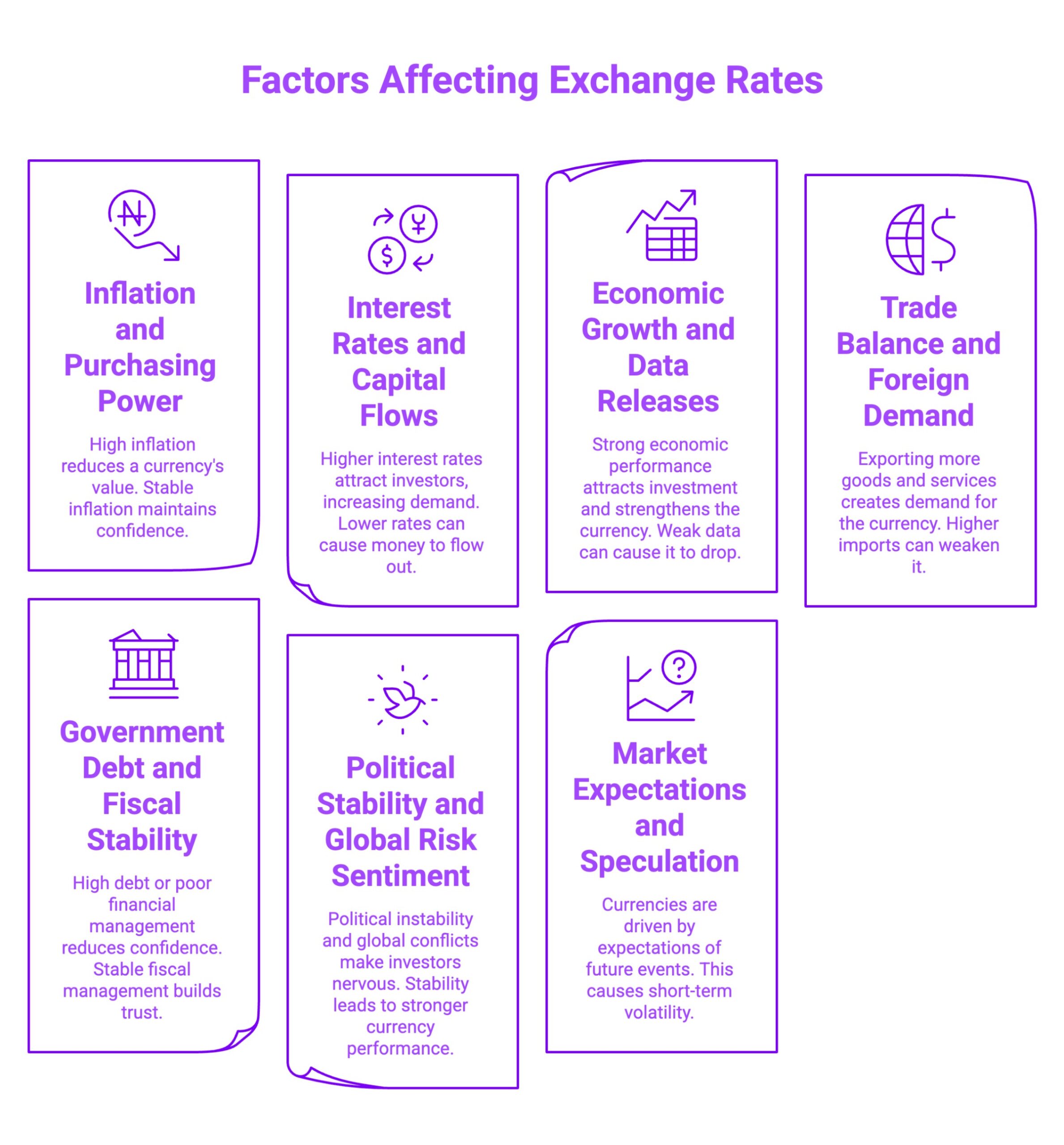
If you are wondering why exchange rates fluctuate, it is because currencies are constantly reacting to how strong or weak an economy looks in real time. Money moves globally every second, and even small changes in economic signals can shift currency values.
These are the key factors:
1. Inflation and Purchasing Power
Inflation measures how fast prices are rising. When inflation is high, the same amount of money buys fewer goods, which reduces the currency’s value.
For example, if prices rise faster in India than in the U.S., the rupee may weaken against the dollar. On the other hand, stable and low inflation helps maintain confidence in a currency, keeping it stronger over time.
2. Interest Rates and Capital Flows
Interest rates influence where investors put their money. When a country offers higher interest rates, it becomes more attractive for global investors because they can earn better returns.
To invest, they need that country’s currency, which increases demand and pushes its value up. If rates fall, investors may pull money out, reducing demand and weakening the currency.
3. Economic Growth and Data Releases
Currencies respond quickly to economic performance. Strong growth, rising employment, and increased business activity signal a healthy economy, which attracts investment and strengthens the currency.
On the flip side, weak data like slowing growth or job losses can reduce confidence and cause the currency to drop.
4. Trade Balance and Foreign Demand
A country that exports more goods and services than it imports creates natural demand for its currency.
For example, when foreign buyers purchase Indian goods, they need rupees, which supports its value. If imports are higher than exports, more local currency is sold to buy foreign currency, which can weaken it.
5. Government Debt and Fiscal Stability
If a country has high debt or struggles to manage its finances, investors may see it as risky. This reduces confidence and can lead to money flowing out of that country. As demand falls, the currency weakens.
Stable fiscal management, on the other hand, builds trust and supports currency strength.
6. Political Stability and Global Risk Sentiment
Currencies are highly sensitive to uncertainty. Political instability, policy changes, or global conflicts can make investors nervous. In such situations, money often moves to safer economies, causing weaker currencies to drop.
Stability usually leads to stronger and more predictable currency performance.
7. Market Expectations and Speculation
Currencies are not just driven by current conditions, but also by expectations of the future. Traders constantly make bets based on what they think will happen next.
If markets expect interest rates to rise or the economy to improve, the currency may strengthen even before anything actually changes. This is a big reason behind short-term volatility.
All these factors together lead to fluctuations in currency exchange rates, which is why the USD to INR rate keeps changing throughout the day.
Exchange rate drops aren’t the only problem. Hidden fees can cost just as much. Learn how to avoid currency exchange fees.
How Do Dollar Indian Rupee Exchange Rate Fluctuations Affect Your Transfers?
Let’s make this real with a simple example.
Say you send $1,000 to India. At a rate of ₹83 per dollar, your recipient gets ₹83,000. Now, if the rate drops to ₹82.2, the same transfer gives ₹82,200. That is ₹800 less, just because the rate changed.
You can break this down with a simple formula: Loss due to fluctuation = (Initial exchange rate − Final exchange rate) × Amount sent
So in this case:
(83 − 82.2) × 1,000 = ₹800 loss
This is how dollar Indian rupee exchange rate fluctuations impact your transfers. The rate keeps moving throughout the day, and even small changes can affect the final amount received.
If you send money occasionally, it might not feel like a big deal. But for regular transfers, these small differences start adding up. Over time, you could be losing a significant amount without even realizing it.
That is why paying attention to the rate and when you transfer matters more than most people think.
Why leave your transfer amount to market swings? Download the Frex app and lock your USD-to-INR rate in real time.
Why Does Exchange Rate Fluctuation in India Matter So Much?
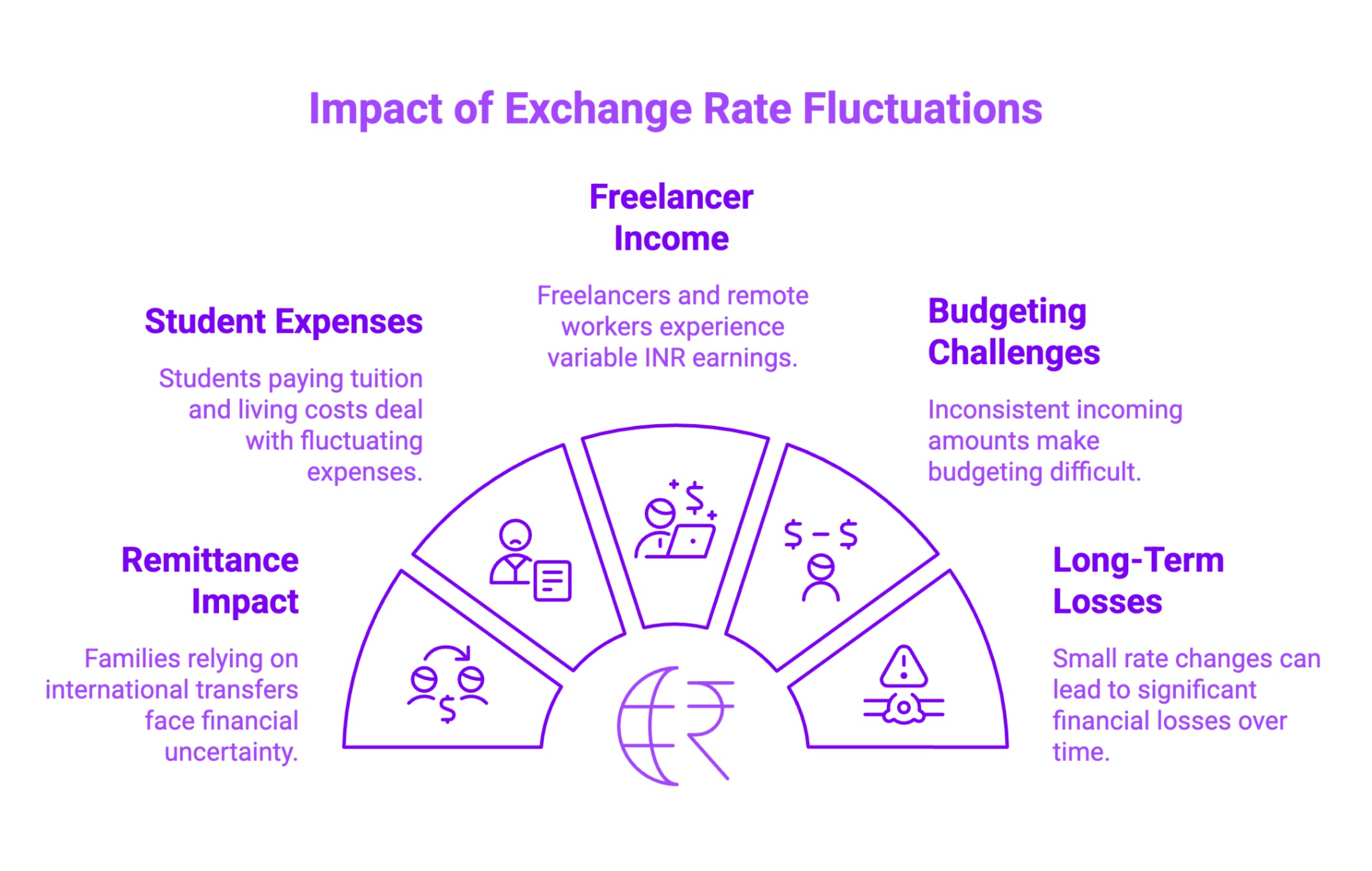
India receives one of the highest volumes of international remittances in the world. This means exchange rate movements directly influence how much money people can actually use for daily expenses. When the USD-to-INR rate shifts, the impact is immediately reflected in real-life financial decisions.
Here’s where it matters most:
- Families relying on monthly transfers may receive less than expected
- Students paying tuition or living expenses deal with changing costs
- Freelancers and remote workers earn income that varies in INR
- Budgeting becomes difficult when incoming amounts are not consistent
- Small rate changes can build into noticeable losses over time.
For people who depend on regular transfers, even small fluctuations can affect planning, spending, and overall financial stability.
If you are considering waiting for a better rate, this guide on whether the USD INR exchange rate will increase can help you decide.
What Is the Hidden Cost Behind Exchange Rate Changes?
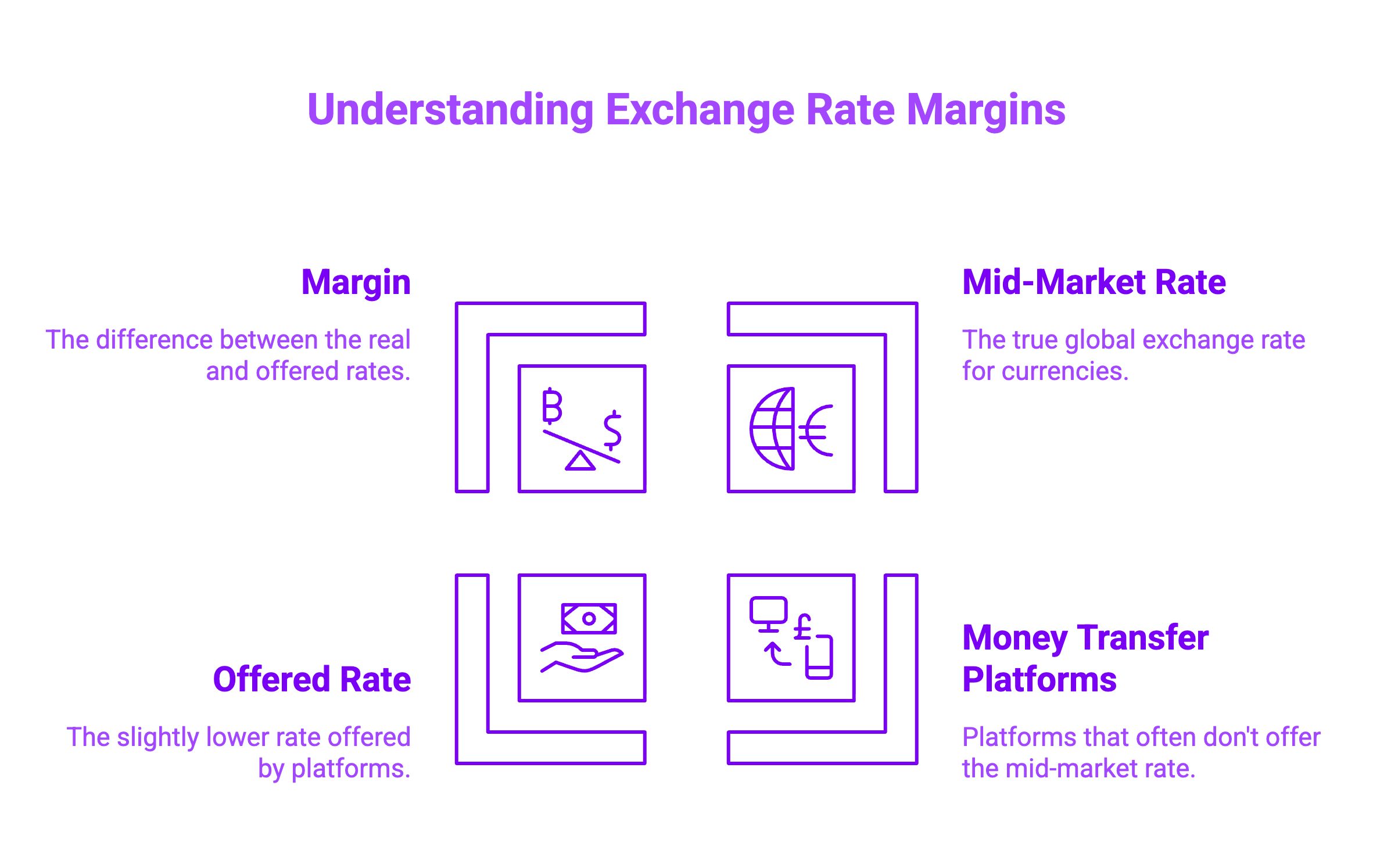
Most people assume the only risk is the rate going up or down. But in reality, there is a second layer of cost that often goes unnoticed; the rate you are shown is usually not the real market rate.
Here is how it actually works:
- The mid-market rate is the true exchange rate at which currencies are traded globally
- Most money transfer platforms do not offer this exact rate
- Instead, they apply a slightly lower rate when converting USD to INR
- The difference between the real rate and the offered rate is the margin
For example, if the real rate is ₹83 but you are offered ₹82.2, you are already losing ₹0.8 per dollar. On a $1,000 transfer, that is ₹800 lost, even before considering any fees.
Now add exchange rate movement into the mix:
- If the market rate drops, your transfer value decreases
- If the platform adds a margin, you lose additional value
- These two factors combined can significantly reduce the final amount received
The key issue is that this loss is not always obvious. There is no separate line item showing it. It is built into the rate itself, which is why many users underestimate how much they are actually paying.
Can You Predict Exchange Rate Fluctuation?
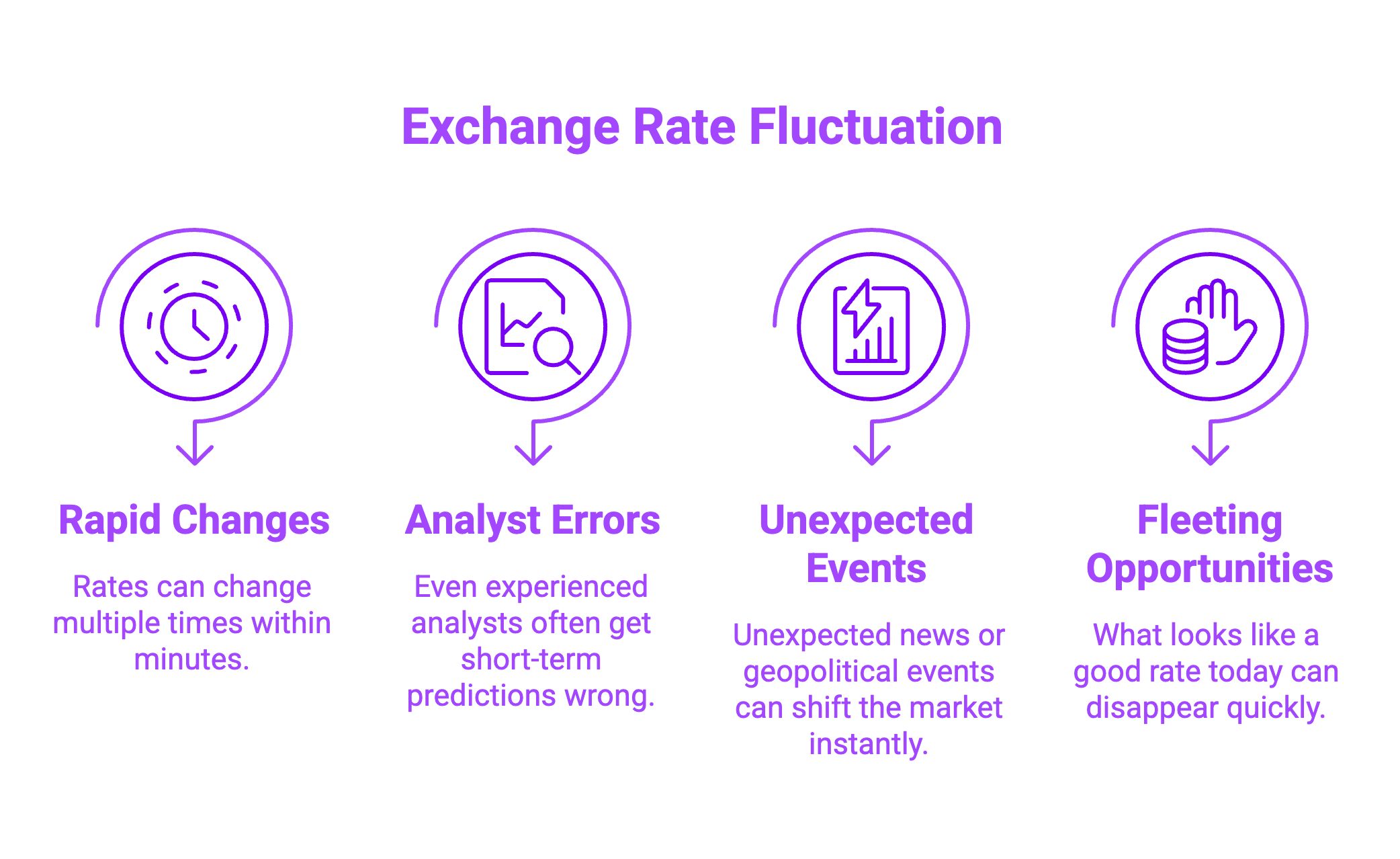
Short answer, not reliably.
Exchange rates move based on multiple factors like interest rates, inflation, global events, and market expectations. While trends can be analyzed, predicting the exact direction or timing of a rate change is extremely difficult.
Here is the reality:
- Rates can change multiple times within minutes
- Even experienced analysts and institutional traders often get short-term predictions wrong
- Unexpected news or geopolitical events can shift the market instantly
- What looks like a good rate today can disappear quickly.
Even professional forex traders, including those at major banks and hedge funds, do not consistently predict short-term exchange rate movements.
Instead of relying on perfect timing, they focus on managing risk, using hedging strategies, and locking in favorable rates when available. This is because short-term currency movements are highly volatile and influenced by unpredictable factors.
This is why trying to time the market often does not work. You might wait for a better rate, only to see it drop instead.
A smarter approach is not to predict the rate, but to control when and how you lock it in.
Instead of constantly tracking exchange rates, download the Frex app and secure your rate when it works for you.
How Can You Protect Yourself from Exchange Rate Fluctuation?
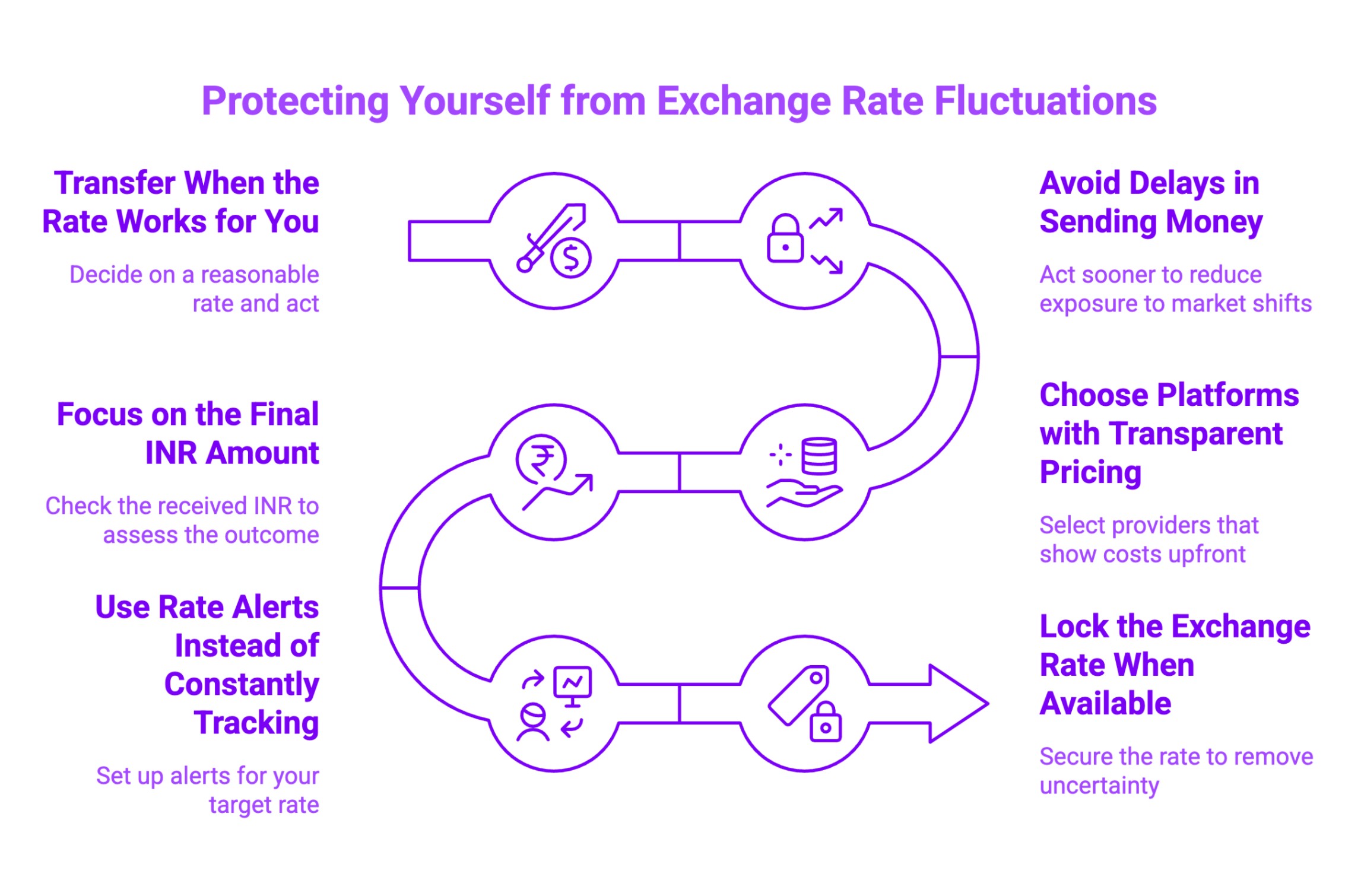
Since you cannot reliably predict rate movements, the focus should be on reducing your risk and staying in control of the outcome. Here are practical ways to do that:
1. Transfer When the Rate Works for You
Instead of waiting endlessly for the “perfect” rate, decide what rate works for your needs and act on it. Exchange rates can move against you quickly, so locking in a reasonable rate is often better than chasing a slightly better one and risking a drop.
2. Avoid Delays in Sending Money
Time increases uncertainty. The longer you wait, the more exposed you are to sudden market shifts caused by economic updates or global events. Acting sooner reduces the window where the rate can move unfavorably.
3. Choose Platforms with Transparent Pricing
Not all providers show the real cost clearly. Some build their profit into the exchange rate itself. Choosing a platform that shows you the actual rate and fees upfront helps you avoid hidden losses and understand exactly what you are getting.
4. Focus on the Final INR Amount
Do not just look at how much USD you are sending. Always check how much INR will be received. This gives you a clearer picture of the outcome and helps you compare different platforms more accurately.
5. Use Rate Alerts Instead of Constantly Tracking
Instead of checking exchange rates multiple times a day, set up rate alerts on your transfer platform. You will get notified when your target rate is reached, which helps you act quickly without constantly monitoring the market.
6. Lock the Exchange Rate When Available
The most effective way to protect yourself is to lock in the rate at the time you choose. This removes uncertainty and ensures that even if the market moves later, your transfer value stays fixed. It gives you control instead of leaving the outcome to market fluctuations.
Even if a platform claims zero fees, it is worth understanding how to transfer money to India from the USA without fees and what to watch out for.
Why Frex Is Built for Fluctuating Exchange Rates?
If exchange rates keep changing and most platforms quietly reduce the value you get, the real challenge is staying in control. Instead of guessing the right time to transfer or worrying about sudden drops, you need a way to lock in certainty.
At Frex, we focus on giving you clarity, control, and better value for every transfer.
Here’s how we help:
- Real-time exchange rates with no hidden markup, so you get closer to the actual USD to INR value
- Instant rate locking so you can secure the rate you see and avoid last-minute drops
- Faster transfers, which reduce your exposure to ongoing market changes
- Zero transfer fees, so you are not losing money through added charges
- Built for USD to INR transfers with a simple, transparent experience designed specifically for this corridor
This means you do not have to keep watching the market or worry about sudden changes. You can lock the rate when it works for you and send money with clarity on exactly how much will be delivered.
With Frex, you stay in control from start to finish. Download the app and lock in your USD-to-INR rate when it suits you.
Final Words
Exchange rates will always move. That is something you cannot control. What you can control is how you deal with that movement.
Instead of trying to chase the perfect rate or second-guess the market, the smarter approach is to focus on certainty. Knowing exactly how much your recipient will get removes the biggest risk from international transfers.
A fluctuating exchange rate only becomes a problem when you are exposed to it. Once you can lock in your rate and avoid hidden losses, the uncertainty disappears.
In the end, it is not about predicting the market. It is about making sure the market does not work against you.
Frequently Asked Questions
What is the difference between a fixed and a fluctuating exchange rate?
A fixed exchange rate is set by a central bank against a particular currency, like the US Dollar, while a fluctuating rate moves in the foreign exchange market based on economic data, foreign investors, and global demand.
What will happen if the exchange rate fluctuates?
When exchange rates fluctuate, the value of a country’s currency changes against world currencies. This impacts foreign trade, export prices, and your bank account value, while affecting imports, inflation, and overall economic health.
What causes currency exchange rates to fluctuate?
Currency fluctuations are driven by interest rates set by a central bank, monetary policy, economic data, balance of payments, foreign investors, and political stability, all of which affect exchange rates in the global foreign exchange market.
Why do some currencies fluctuate more than others?
Currencies fluctuate more when a country’s economy is less stable, with high inflation, weak balance of payments, or political uncertainty. Lower interest rates and volatile economic data also reduce foreign investor confidence, increasing currency fluctuations in global markets.
How do investors respond to fluctuating exchange rates in the market?
Investors react to currency fluctuations by shifting funds between world currencies based on economic data, interest rates, and policy decisions. They move toward stable countries, hedge risks, or trade actively in the foreign exchange market to protect returns.
Are there any tools or websites to track fluctuating exchange rates in real-time?
Yes, platforms like Google Finance, XE Currency, and TradingView provide real-time exchange rates, charts, and alerts, helping users track the dollar exchange rate and monitor currency movements across global markets.
Is a fluctuating exchange rate good or bad?
It depends on your situation. A stronger USD benefits senders, while a stronger INR benefits recipients. Fluctuations create uncertainty, making planning harder. For frequent transfers, volatility is usually unfavorable because it reduces predictability.
How does inflation affect exchange rates?
Higher inflation in a country typically weakens its currency over time. If India’s inflation rises faster than the US, INR may depreciate against USD. This reduces purchasing power and affects how much value recipients get from transfers.
What is the best time to convert USD to INR?
There is no perfect time. Rates change constantly and are hard to predict. A practical approach is to convert when the rate meets your target, use alerts, and avoid delays rather than trying to time the market precisely.




Leave a Reply