





Key Highlights
- Compare platforms based on total cost, not just visible fees, since exchange rate margins often impact the final INR received
- Digital remittance platforms generally offer better rates, faster delivery, and lower transaction fees than traditional banks
- Transfer speed varies by method, instant options cost more while bank transfers are slower but cheaper
- Limits, payout options, and payment methods (bank, card, UPI) affect both cost and delivery time
- Always check real exchange rates and avoid services that hide charges in currency conversion
- Choose platforms that balance pricing, speed, transparency, and security based on your transfer needs
- Frex stands out with zero fees, real-time rates, and instant transfers, helping you maximize the INR you receive.
Sending money from the U.S. to India is at an all-time high, with India receiving about $125 billion in remittances in 2023. Yet many users still lose money due to hidden fees and poor exchange rates. If your goal is to maximize the INR you receive, choosing the top digital remittance service USD to INR becomes critical.
The challenge is that not all platforms are transparent. Some appear low-cost but add margins, while others are fast but expensive. Even small differences in rates and fees can add up significantly over time.
This guide helps you compare your options clearly. You will learn what impacts your transfer value and how to choose the right platform based on cost, speed, and reliability.
What Are Digital Remittance Services?
Digital remittance services are online platforms that let you send money internationally quickly and affordably, without visiting a bank.
Unlike traditional methods, these platforms use technology to simplify the process and reduce costs.
Why people prefer them:
- Send money anytime via apps or websites
- Lower fees and better exchange rates
- Faster transfers (often same-day)
- Real-time tracking and a simple experience
They’ve become the go-to option for USD to INR transfers due to their speed, transparency, and ease of use. It’s what we set out to build with Frex, a platform that actually feels like it’s working for the person sending, not just processing a transaction.
Curious about how transfers are received in India? Our inward remittance guide breaks it down in simple terms.
Why Choosing the Right Remittance Platform Matters?
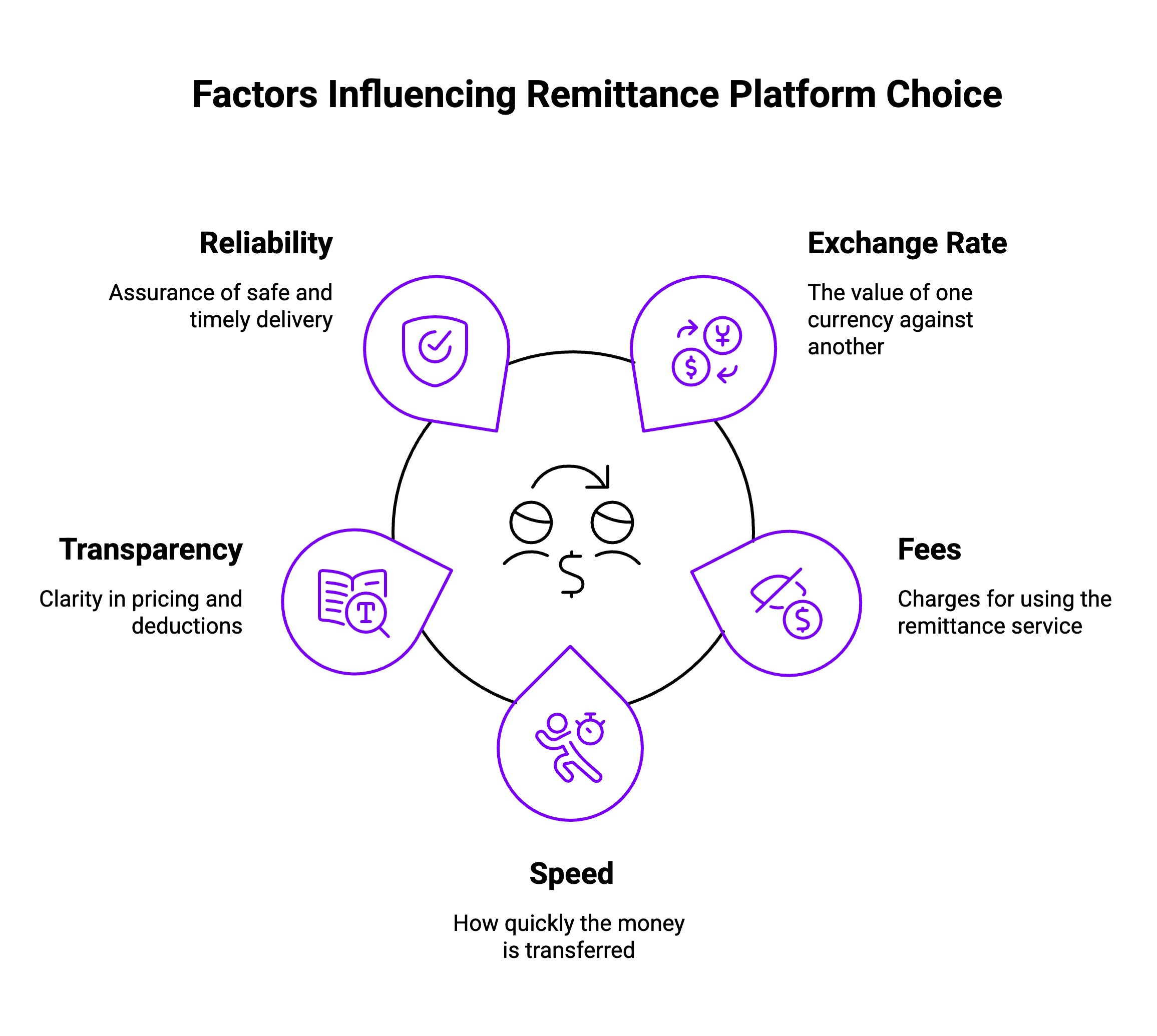
The platform you choose directly affects how much money your recipient receives. The difference may seem small at first, but even slight changes in exchange rates or fees can reduce the final amount in a meaningful way.
Let’s look at a simple example:
You send $1,000 to India.
- Platform A
- Exchange rate: ₹83
- Transfer fee: $0
- Recipient gets: ₹83,000
- Platform B
- Exchange rate: ₹81.5
- Transfer fee: $10
- Amount after fee: $990
- ₹990 × 81.5 = ₹80,685
Difference: ₹2,315 less received
This difference comes from two factors. A slightly lower exchange rate and a small fee. On their own, they seem minor. Together, they reduce the final amount significantly.
What actually matters when choosing a platform:
- Exchange rate: Even a ₹1 to ₹2 difference can impact thousands of rupees
- Fees: Flat fees or hidden margins reduce the amount sent
- Speed: Faster transfers may cost more
- Transparency: Clear pricing helps avoid unexpected deductions
- Reliability: Ensures the money reaches safely and on time
It’s exactly why we built Frex the way we did: real-time rates, no hidden margins. What you see is what your recipient gets.
What Are the Different Ways to Send Money Overseas from the US?
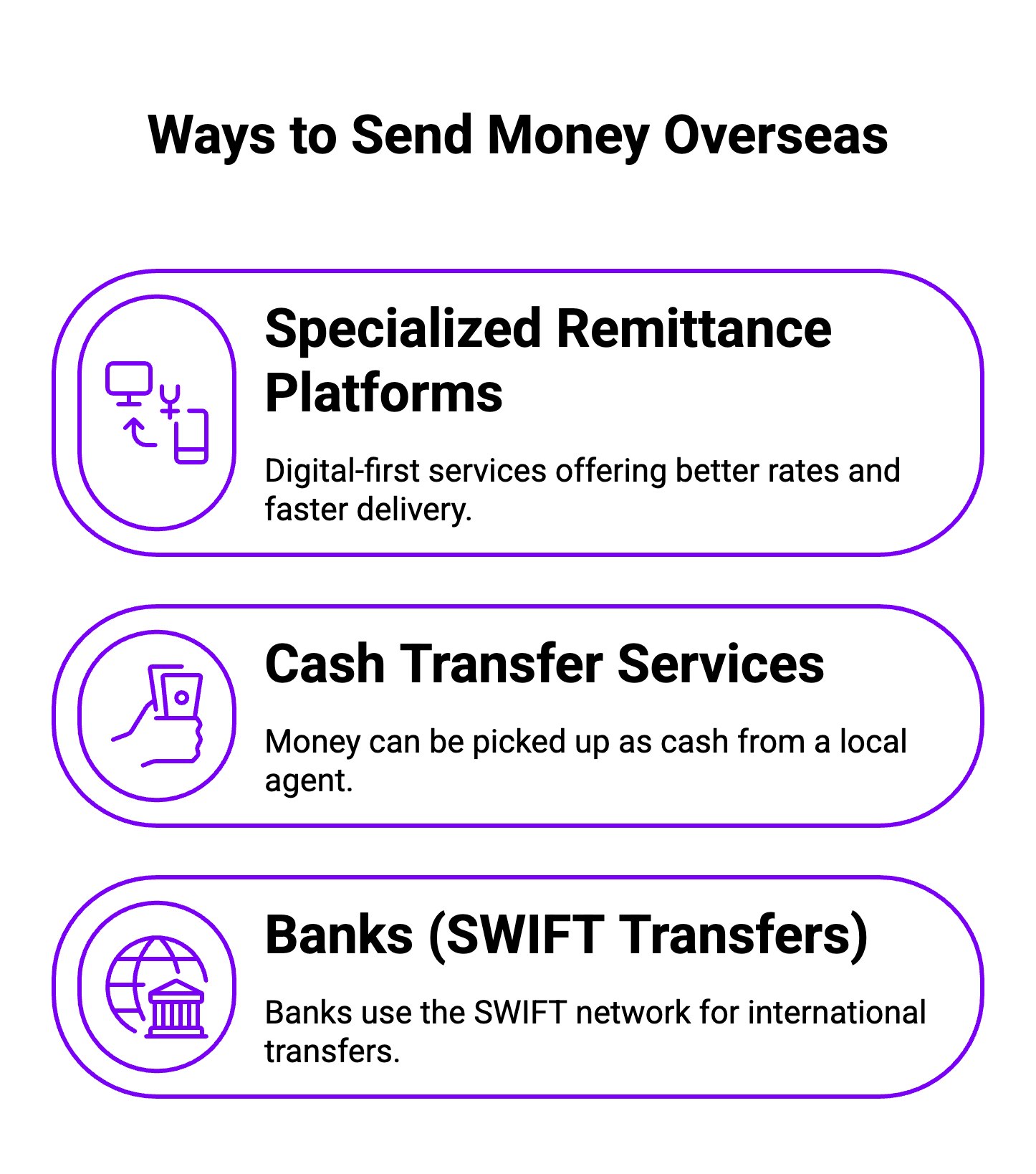
1. Specialized Remittance Platforms
These are digital-first services designed for international transfers. They usually offer better exchange rates, lower fees, and faster delivery than traditional options.
When to use this:
- You want the best value for USD to INR transfers
- The recipient has a bank account or digital wallet
- You prefer fast, low-cost transfers with clear pricing
This is the category Frex sits in, and why we obsess over rates and speed rather than building out cash pickup networks.
2. Cash Transfer Services
These services let you send money that can be picked up as cash from a local agent. Useful when banking access is limited.
When to use this:
- The recipient does not have a bank account
- You need cash pickup in remote or rural areas
- Convenience matters more than cost
3. Banks (SWIFT Transfers)
Banks use the SWIFT network for international transfers. They are reliable but often slower and more expensive.
When to use this:
- You are sending large amounts and prefer a familiar system
- Both sender and recipient rely on bank-to-bank transfers
- Speed is not urgent, and cost is less of a concern
Each method serves a different need. The right choice depends on whether you prioritize cost, convenience, or familiarity.
Before you send money, it’s important to understand the tax side. Here’s a simple guide to NRI remittance tax you should know.
What Should You Compare Before Sending Money to India?
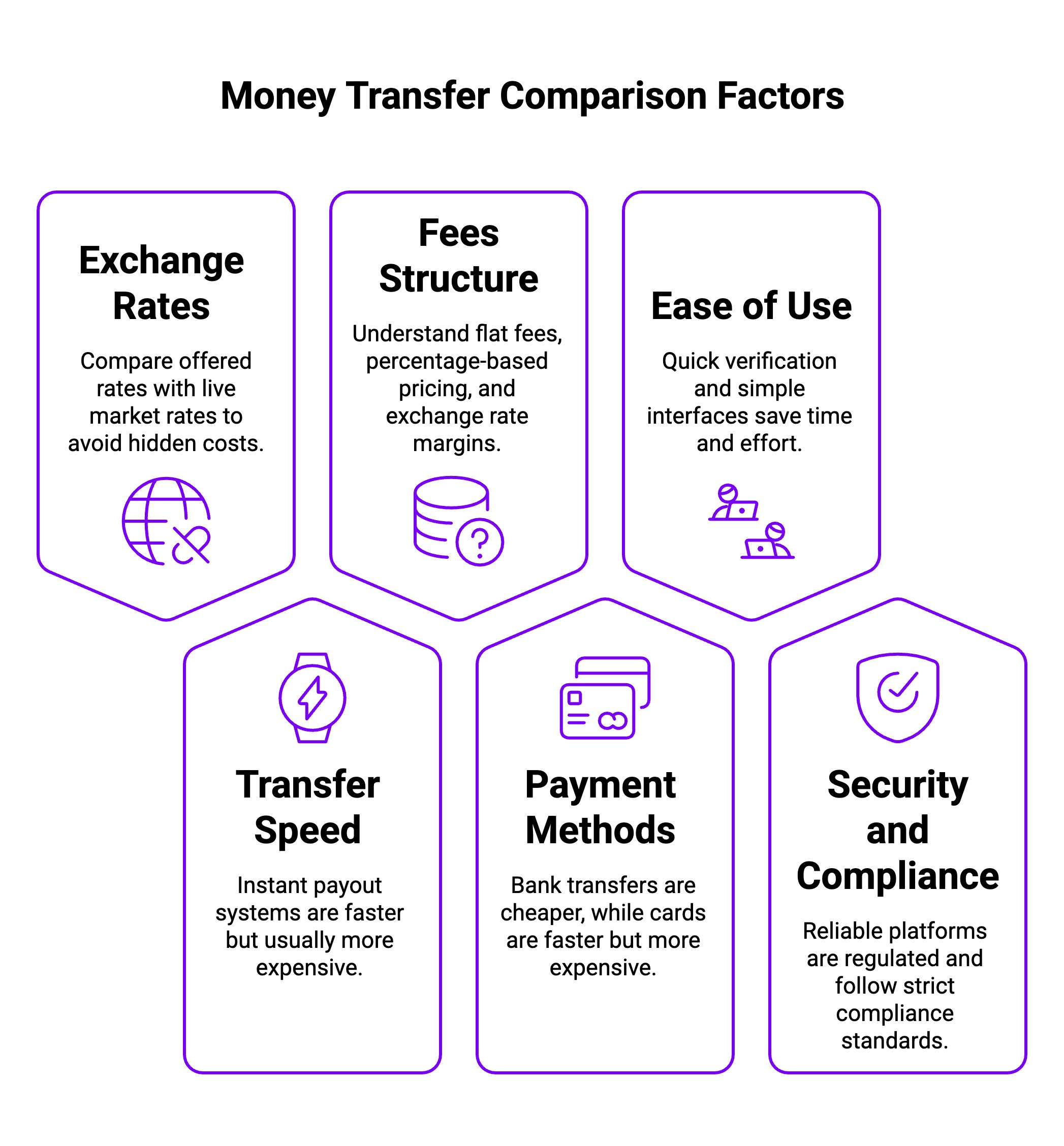
A quick comparison is not enough when it comes to international transfers. The real difference lies in how platforms structure their pricing, speed, and overall experience. Looking deeper into these factors helps you avoid hidden costs and make smarter decisions.
Here’s what you should evaluate closely:
1. Exchange Rates
Most platforms do not offer the true mid-market rate. Instead, they add a markup, which becomes the highest hidden cost. Even a small 1–2% difference on a $1,000 transfer can lead to a noticeable loss in INR. Always compare the offered rate with the live market rate before proceeding. For what it’s worth, this is something we prioritize at Frex, showing you the real rate upfront, so there’s nothing to calculate or second-guess before you hit send.
2. Transfer Speed
The fastest digital remittance service often uses instant payout systems such as UPI or local bank rails. While speed is convenient, it usually comes at a higher cost. Slower options like bank transfers can take 1–3 business days but are typically more economical. At Frex, we’ve built for instant, without the premium pricing that usually comes with it.
3. Fees Structure
Fees are not always as simple as they appear. Some platforms charge a flat fee, while others use percentage-based pricing. Many also promote zero fees but compensate through exchange rate margins. What matters is the total cost, not just the visible charge. It’s a dynamic we deliberately avoid. When we say zero fees at Frex, we mean the rate isn’t padded either.
4. Payment and Delivery Methods
The way you fund and deliver the transfer impacts both cost and speed. Bank transfers are usually cheaper, while cards are faster but more expensive. On the receiving end, options like direct bank deposit, UPI, or wallets can influence how quickly the money is accessed.
5. Ease of Use and Onboarding
A well-designed platform saves time and effort. Quick verification, simple interfaces, and fewer steps make a big difference, especially if you send money frequently. A complicated process can lead to delays and frustration. Simplicity was a core design decision for us at Frex: quick verification, fewer steps, so you’re not spending 20 minutes setting up before your first transfer.
6. Security and Compliance
Security is non-negotiable when transferring money internationally. Reliable platforms are regulated and follow strict compliance standards. This ensures your funds are protected and reduces the chances of delays or failed transactions. Frex is regulated and built on a compliant infrastructure; it’s not optional for us, it’s the foundation everything else runs on.
Confused about taxes when sending money from the U.S.? This guide explains the US remittance tax and who actually needs to pay it.
Which Are the Top Platforms to Send Money from USD to INR?
Now that you know what to look for, let’s explore some of the most widely used platforms for USD to INR transfers. Each service differs in cost, speed, and overall experience, so choosing the best remittance service to India ultimately depends on your specific needs and priorities.
1. Frex
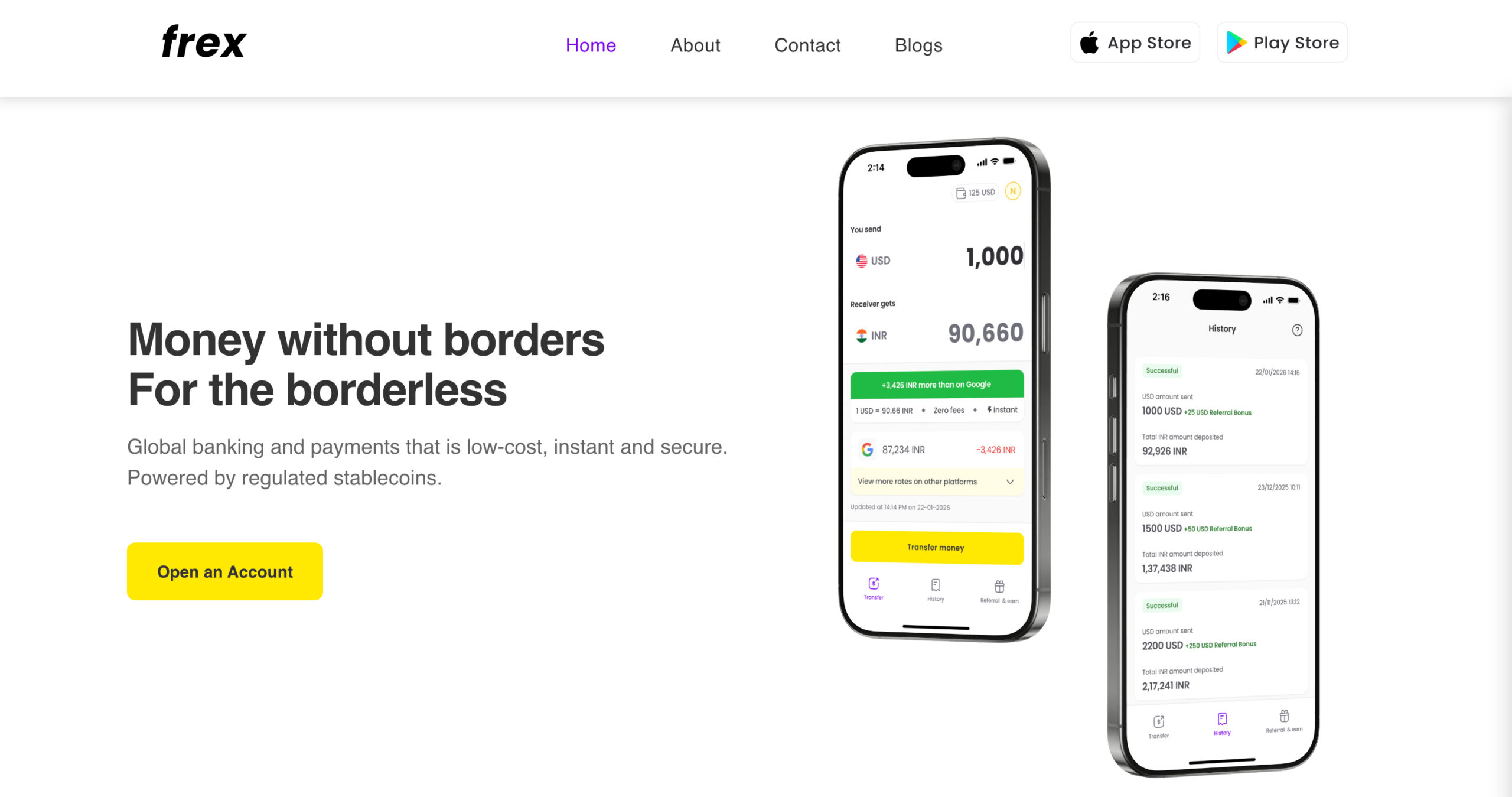
Frex is built to increase the amount your recipient actually receives. We use real-time exchange rates with zero fees, so there are no hidden deductions. For example, on a $1,000 transfer, even a ₹1 lower rate can reduce the final amount by ₹1,000. Frex avoids that by showing you the exact rate.
You can also lock the rate before sending, so the INR amount stays fixed, with instant transfers and full tracking.
How Much Can You Send with Frex?
Frex is designed to be flexible for both small and frequent transfers:
- Send amounts starting from just $2 with no minimum restriction
- No strict upper cap publicly enforced for typical transfers (limits may depend on compliance and verification)
- Supports transfers to all major Indian bank accounts
This makes it ideal whether you are sending small amounts regularly or larger sums when needed.
Why Choose Frex Over Other Platforms?
We are built for users who want maximum value, speed, and clarity in every transfer:
- Zero fees with no hidden charges
- Rates at or better than mid-market, so you get more INR per USD
- Instant or same-day transfers to Indian bank accounts
- No minimum transfer amount, making it easy for frequent sends
- Full transparency, what you see is exactly what is delivered
Frex is the right choice if you want a smarter, faster, and truly cost-efficient way to send money from USD to INR without compromises.
Don’t Take Our Word for It. Hear from Our Users
“I have been using Frex for to transfer money from US to India. I was dazzled with the exchange rates provided and the transfer time to my Bank account in India. I was a little sceptical at the start. But when I used it, the amount got reflected in my India account within seconds. This is now my GoTo global payment app. Highly recommend !!”
“I used the Frex app to transfer money to India and had a great experience. The exchange rate was one of the best I found, and the entire transaction was smooth and hassle-free. The transfer was quick, transparent, and easy to track. Highly recommend this app for reliable and cost-effective international money transfers.”
Get More INR for Every Dollar. Download the Frex App Now
2. Wise
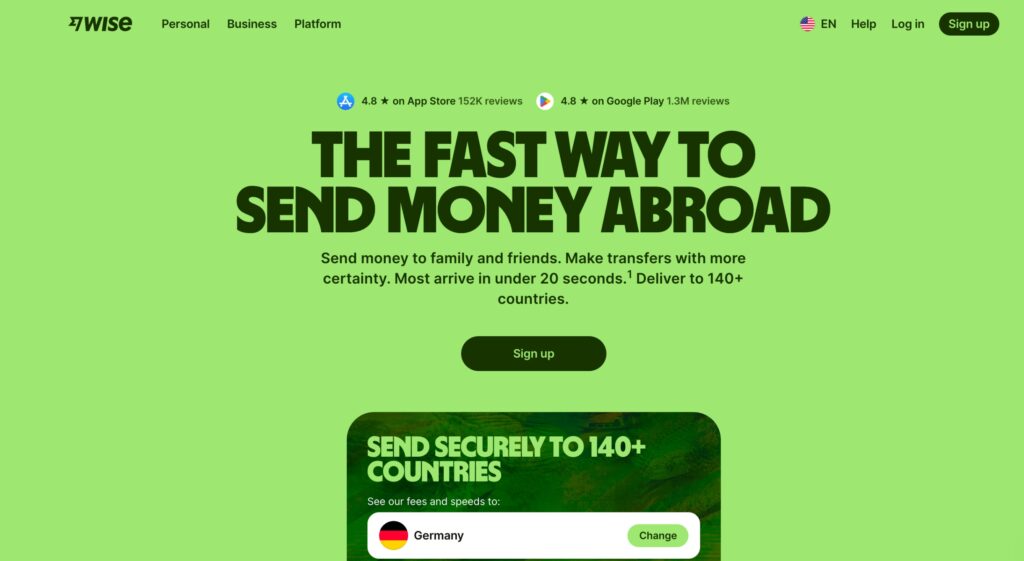
Wise is a widely trusted digital transfer platform known for offering mid-market exchange rates with transparent fees. Instead of hiding charges in the exchange rate, it shows you the exact cost upfront, making it a strong choice for users who prioritize clarity and value.
How Much Can You Send with Wise?
Wise transfer limits depend on how you fund the transfer and how the money is received:
- Up to $1,000,000 per wire transfer
- Around $50,000 per transfer via ACH in the U.S.
- Up to ₹100 million (₹10 crore) per transfer to individuals in India
- Instant transfers via UPI are typically capped at ₹200,000
This makes Wise suitable for both small and very high-value transfers, depending on the method you choose.
Where it Loses Value
- Fees are separate, so the total cost can still add up
- Not the fastest option for urgent transfers
- Instant options are limited compared to speed-focused platforms
When Is Wise the Right Choice?
Wise is ideal if you want low-cost transfers with full transparency, especially when exchange rates matter more than speed.
Want a deeper breakdown of Wise fees? This guide explains exactly what you pay when sending money from the US to India.
3. Remitly
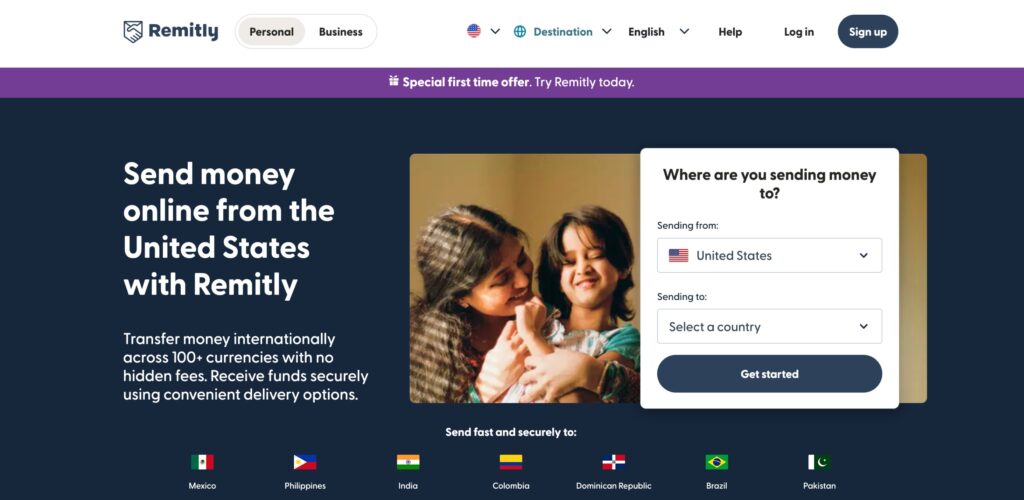
Remitly is a popular choice for USD to INR transfers, especially known for its speed-focused options. It offers both Express (fast delivery) and Economy (lower cost) transfers, giving users flexibility based on urgency. It is widely used for sending money quickly to India with multiple payout options like bank deposit and UPI.
How Much Can You Send with Remitly?
Remitly limits depend on verification level and transfer type:
- Up to $100,000 per transfer from the U.S.
- Around $30,000 within 24 hours for many users and regions
- Lower limits may apply for new or unverified accounts (can increase with verification)
These limits make Remitly suitable for small to moderately large transfers, but less ideal for very high-value transactions compared to some alternatives.
Where it Loses Value
- Express transfers cost more
- The economy option is cheaper but slower
- Exchange rates may include a margin
When Is Remitly the Right Choice?
Remitly is ideal if you want fast transfers with flexible delivery options, especially for urgent or time-sensitive payments to India.
Considering Remitly? Here’s a detailed breakdown of how much Remitly actually charges when sending money to India.
4. Western Union
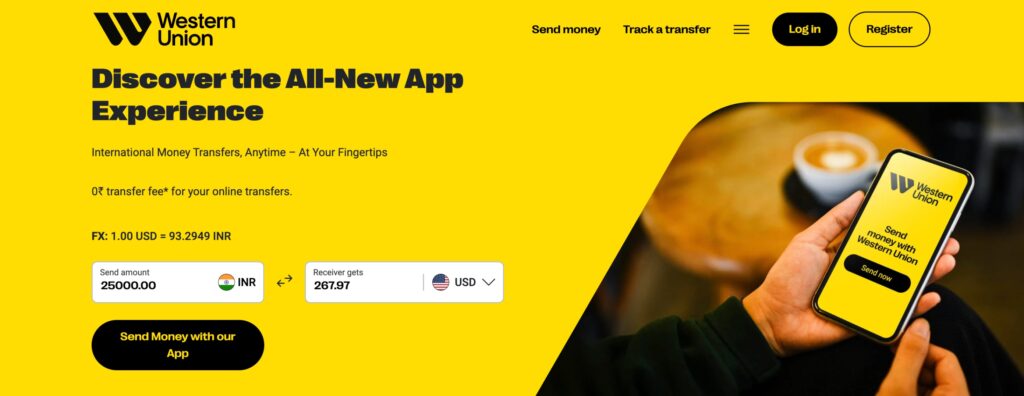
Western Union is one of the oldest and most widely recognized names in international money transfers. It offers extensive global coverage and multiple payout options, including bank deposits and cash pickup, making it a convenient choice for users who need flexibility.
How Much Can You Send with Western Union?
Western Union transfer limits vary based on location, payment method, and verification:
- Typically up to $50,000 per online transfer from the U.S.
- Lower limits may apply for card payments compared to bank transfers
- Limits can increase with identity verification and transfer history
- Cash pickup transactions may have different caps depending on the destination
These limits are sufficient for most personal transfers, but may vary depending on how you send and deliver the money.
Where it Loses Value
- Higher fees, especially for fast transfers
- Exchange rates often include hidden margins
- Costs vary widely based on the method
When Is Western Union the Right Choice?
Western Union is best if you need a wide global reach and cash pickup options, especially when the recipient does not have easy access to a bank account.
To better compare platforms, it helps to understand Western Union’s transfer limits and how they vary by verification and payment method.
5. PayPal
PayPal is a well-known digital payments platform that offers international transfers through its global network. It is widely used for its convenience and ease of use, especially if both sender and receiver already have PayPal accounts. However, this convenience often comes with higher fees and exchange rate markups.
How Much Can You Send with PayPal?
PayPal transfer limits depend on account verification and transaction type:
- Up to $60,000 per transaction (may be limited to $10,000 per single transfer in some cases)
- No strict daily limit, but internal checks may apply
- Higher limits available for fully verified accounts
These limits are generally sufficient for personal transfers but can vary based on account status and region.
Where it Loses Value
- High fees compared to remittance platforms
- Significant exchange rate markups
- Less cost-efficient for international transfers
When Is PayPal the Right Choice?
PayPal is best if you value convenience and quick transfers within the same ecosystem, especially for smaller amounts.
6. Instarem
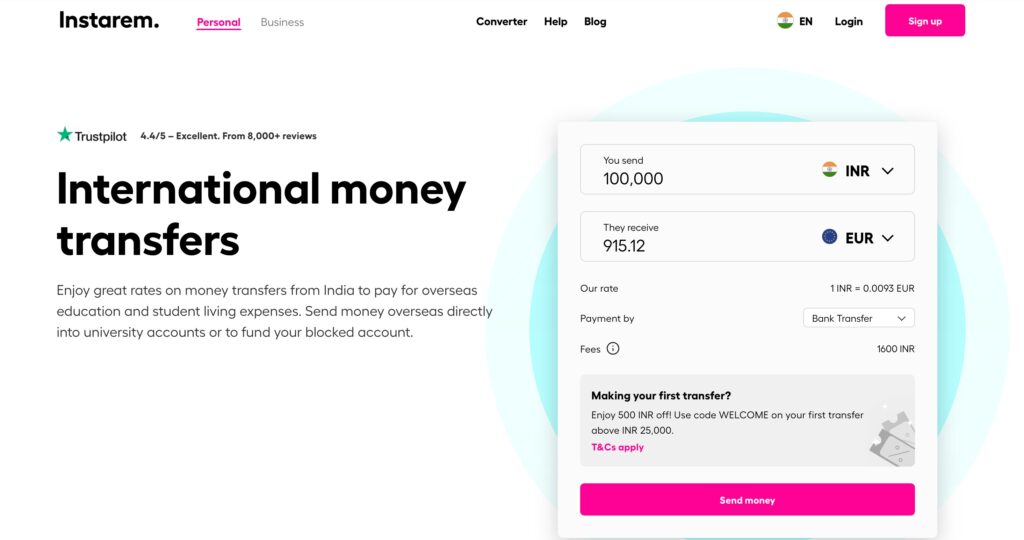
Instarem is a digital remittance platform known for offering competitive exchange rates with low fees, along with reward-based benefits in some regions. It focuses on providing a balance between cost and speed, making it a solid alternative to more mainstream providers.
How Much Can You Send with Instarem?
Instarem limits depend on your location, verification level, and payment method:
- Up to $50,000 per transaction from the U.S.
- Daily and monthly limits may apply based on account verification
- Higher limits available for fully verified users
- Limits can vary depending on whether you use a bank transfer or a card
These limits make Instarem suitable for small to moderately large transfers.
If you’re trying to avoid hidden costs, this Instarem fee breakdown will help you see what you’re really paying.
Where it Loses Value
- Rates are good, but not always the best
- Transfer speed is not consistently instant
- Benefits like rewards may not apply to every transfer
When Is Instarem the Right Choice?
Instarem is best if you want a balance between low cost and decent transfer speed, along with added perks like rewards or fee discounts.
7. XE Money Transfer
XE is a well-known global platform offering competitive exchange rates and no upfront transfer fees on many transactions. It is often preferred for larger transfers due to its strong FX rates and dedicated support for high-value transactions.
How Much Can You Send with XE?
XE supports relatively high transfer limits:
- Up to $500,000 per transfer for users in the U.S.
- Can go up to $535,000 per transfer to India via its platform
- No strict maximum if arranged via support for large transfers
- Card payments have lower daily caps (around $3,000/day)
This makes XE a strong option for large-value transfers.
Where it Loses Value
- Transfers are not instant
- Limited options for urgent delivery
- Card payments have low limits and added costs
When Is XE the Right Choice?
XE is best if you want high transfer limits with competitive exchange rates, especially for large transactions.
8. MoneyGram
MoneyGram is a global remittance provider known for its cash pickup network and fast transfers. It is widely used for sending smaller amounts quickly, especially when the recipient may not have a bank account.
How Much Can You Send with MoneyGram?
MoneyGram has more restrictive limits compared to digital-first platforms:
- Typically up to $10,000 per transfer
- Maximum of $10,000 within a 30-day period
- Limits vary based on country, payment method, and delivery option
These limits make it more suitable for smaller transfers.
Where it Loses Value
- Lower transfer limits
- Higher fees for speed
- Exchange rates may include margins
When Is MoneyGram the Right Choice?
MoneyGram is best if you need cash pickup or quick transfers for smaller amounts.
9. Ria Money Transfer
Ria is a digital remittance service offering competitive pricing and wide payout coverage, including bank deposits and cash pickup. It is often used as a lower-cost alternative to traditional providers.
How Much Can You Send with Ria?
Ria limits depend on the funding method and verification:
- Up to $49,999 per day or per transfer to India
- Around $14,999 within 30 days for standard online transfers without full verification
- Cash-funded transfers are limited to $495 per transaction
These limits make Ria suitable for moderate transfers with flexibility.
Where it Loses Value
- Limits can be restrictive without verification
- Speeds vary by method
- Exchange rate margins may apply
When Is Ria the Right Choice?
Ria is best if you want a cost-effective option with flexible payout methods, especially for mid-sized transfers.
10. OFX
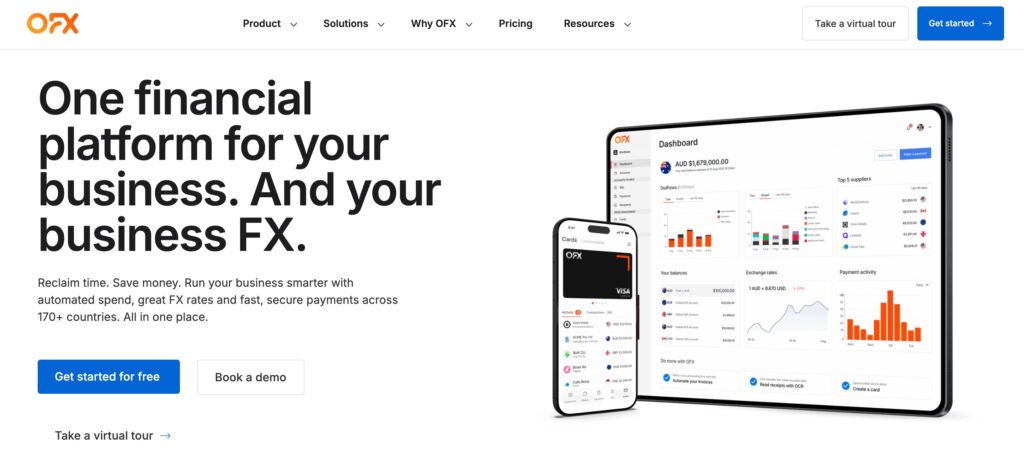
OFX is a global money transfer platform designed primarily for high-value transfers with competitive exchange rates. It does not charge transfer fees in most cases and offers dedicated support, making it a preferred option for users sending larger amounts.
How Much Can You Send with OFX?
OFX is built for large transfers and offers flexible limits:
- No maximum transfer limit for most transactions
- Minimum transfer typically starts at $1,000
- Higher amounts may require additional verification
- Large transfers can be supported with dedicated assistance
This makes OFX especially suitable for high-value transactions rather than small, frequent transfers.
Where it Loses Value
- Minimum transfer requirement (not ideal for small amounts)
- Transfers are not instant
- Setup and verification can take longer
When Is OFX the Right Choice?
OFX is best if you are sending large amounts and want competitive exchange rates with personalized support.
How Do These Platforms Compare at a Glance?
After looking at each option individually, a side-by-side comparison makes it easier to spot what actually matters. Instead of focusing on features alone, this view helps you quickly understand where each platform stands in terms of cost, speed, and usability.
| Platform | Fees | Exchange Rates | Speed | Transfer Limits | Best For |
|---|---|---|---|---|---|
| Frex | Zero fees | Real-time / near mid-market | Instant or same day | Flexible | Best overall INR value, zero fees |
| Wise | Low, transparent | Mid-market | 1–2 days (instant options available) | Very high (up to ₹10 crore) | Cost + transparency |
| Remitly | Varies by speed | Slight markup | Instant to 3 days | Up to ~$100K | Fast transfers |
| Western Union | Higher | Markup applied | Minutes to days | ~$50K | Cash pickup |
| PayPal | High | Higher markup | Instant to 1 day | ~$60K | Convenience |
| Instarem | Low | Competitive | Same day to 2 days | ~$50K | Balanced value |
| XE | Low/none upfront | Competitive | 1–3 days | Very high | Large transfers |
| MoneyGram | Medium | Markup applied | Minutes to hours | ~$10K | Small transfers + cash |
| Ria | Low to medium | Competitive | Same day to 2 days | ~$50K | Mid-sized transfers |
| OFX | No fees (mostly) | Strong rates | 1–3 days | No max | High-value transfers |
Disclaimer: Fees, exchange rates, speeds, and limits vary by location, payment method, and verification. Always check the platform for the latest details before transferring.
Final Words
Sending money from USD to INR is easier than ever, but getting the best value still takes a bit of attention. Small differences in fees and exchange rates can add up quickly, especially if you send money often.
The key is simple. Know what matters to you, compare your options, and don’t settle for hidden costs.
Because at the end of the day, it’s not about how much you send. It’s about how much actually reaches.
Frequently Asked Questions
Which is the best money transfer service to India?
The best way depends on your needs. Fintech companies and remittance companies like Frex offer better INR exchange rate, lower transaction fees, and faster delivery speed than traditional banks, making them strong service providers for sending US dollars to Indian rupees.
What is the best exchange rate for USD to INR?
The best INR exchange rate is the real exchange rate from global currency markets. Many currency exchange services add an extra fee through markups, but fintech platforms like Frex aim to offer rates closer to the real exchange rate.
Which transfer takes 24 hours?
Transfers via fintech platforms using debit card or mobile app often complete within 24 hours. Services like Frex use faster payment processing and local rails to improve delivery speed compared to traditional banks and financial institutions.
What exchange rate Remitly uses to send USD to IN?
Remittance companies like Remitly use their own INR rate, which may differ from the real exchange rate. It typically includes a margin as an extra fee, so comparing with fintech platforms like Frex can help you make an informed decision.
How to choose a remittance provider?
Choose based on key features like delivery speed, transaction fees, customer support, and security measures. Compare fintech startups like Frex, traditional banks, and money transfer companies to find reliable financial services that offer peace of mind.
What can I focus on to ensure my transfer arrives quickly and safely?
Focus on delivery speed, secure payment processing, and accurate account number details. Using trusted fintech platforms like Frex with strong security measures, responsive customer support, and reliable mobile apps ensures safe transfers to the destination country.




Leave a Reply