





Key Highlights
- A cross-border money transfer service moves funds from the USA to India by collecting USD, converting it to INR, running compliance checks, and depositing it into an Indian bank account.
- Total cost depends more on exchange rate margins than on advertised transfer fees.
- Cross-border transfers rely on global payment networks such as SWIFT, local settlement systems, and foreign exchange providers.
- Delivery speed depends on payment rails, currency corridors, and settlement models.
- Common methods include bank wires, ACH transfers, card payments, and digital platforms.
- Secure platforms use encryption, fraud monitoring, and regulatory compliance to protect transactions.
- Frex offers a regulated, USA–India–focused digital transfer experience with upfront rate visibility and predictable delivery.
Sending money from the United States to India is a regular responsibility for many immigrants, students, and working professionals. Whether you are supporting family, paying tuition, or managing expenses back home, the right cross-border money transfer service determines how much of your money actually reaches the recipient.
Many people focus only on transfer fees and overlook exchange rate markups, compliance delays, or unclear processing times. A service that looks affordable upfront can reduce the final INR amount through hidden costs. Even small rate differences can make a noticeable impact, especially for recurring transfers.
This guide explains how cross-border money transfer works for USA to India transactions, outlines key regulations, breaks down real costs, and helps you choose secure cross-border money transfer services that are transparent and reliable.
What Is A Cross-border Money Transfer Service?
A cross-border money transfer service allows you to send money from one country to another through regulated financial systems. In the USA-to-India corridor, this means converting US dollars into Indian rupees and depositing the funds directly into an Indian bank account.
Unlike domestic transfers, cross-border money transfer transactions involve:
- Currency conversion from USD to INR
- Compliance checks in both countries
- International banking networks for settlement
- Verification under KYC and AML rules
These additional layers affect cost, speed, and security.
Cross-border money transfer companies include traditional banks and digital platforms. Banks often use intermediary networks, which can increase fees and processing time. Digital platforms focus on transparent pricing, faster delivery, and online tracking, making them a practical choice for many USA to India senders.
What Are the Different Types of Cross-Border Money Transfer Methods?

When sending money from the USA to India, the transfer method determines how funds move, how long they take to arrive, and how much they ultimately cost.
Here are the different types of cross-border money transfer methods commonly used for USA to India transfers:
1. Bank Wire Transfers
This is the traditional international transfer method. Your US bank sends funds through correspondent banking networks before the money reaches the recipient’s Indian bank.
While secure and widely accepted, wire transfers often involve higher upfront fees and possible intermediary bank charges, which can reduce the final INR amount received.
2. ACH-Based Bank Transfers
In this method, money is electronically debited from your US bank account and processed through automated clearing systems before being converted and deposited in India. ACH transfers are generally more cost-effective than wires, but they may take longer due to processing cycles and compliance checks.
3. Debit or Credit Card Transfers
This option allows you to fund a cross-border money transfer instantly using a card. It is convenient and quick to initiate, but card networks usually apply processing fees. These added costs can make card-funded transfers more expensive than bank-funded options.
4. Digital Transfer Platforms and Apps
Specialized cross-border money transfer companies offer app-based transfers designed specifically for international remittances. These platforms handle currency conversion, regulatory verification, and direct deposits in a streamlined process.
Many provide transparent exchange rates, clear fee breakdowns, and real-time tracking, making them a preferred choice for USA to India transfers.
5. Local Settlement Networks (Hybrid Transfers)
This method uses local banking systems in both countries instead of sending funds directly through international banking networks. The transfer provider collects the money in the United States and releases the equivalent amount in INR through its local banking partners in India.
Because the funds do not pass through multiple intermediary banks, this approach can reduce transfer fees and improve delivery speed. Many digital remittance platforms use this model to offer faster deposits and more transparent pricing for USA to India transfers.
Curious how NRIs can send money to India more efficiently and affordably? Check out our step-by-step guide on NRI remittances to India.
How Cross-Border Payments Differ from Domestic Transfers?
Cross-border payments and domestic transfers both move money between bank accounts, but they operate through different systems and processes. The table below highlights some of the key differences between the two transfer types.
| Factor | Cross-Border Payments | Domestic Transfers |
|---|---|---|
| Geographic Scope | Transfers money between two different countries | Transfers money within the same country |
| Currency Conversion | Usually involves foreign exchange conversion (e.g., USD to INR) | No currency conversion required |
| Transfer Networks | May use international systems such as SWIFT or cross-border remittance networks | Uses domestic banking systems such as ACH or local payment rails |
| Processing Time | Can take several hours to a few business days, depending on the method | Often completed within minutes or the same day |
| Regulatory Oversight | Subject to compliance rules in both the sending and receiving countries | Governed only by domestic banking regulations |
| Fees and Costs | May include transfer fees, exchange rate margins, and intermediary charges | Usually lower fees with simpler pricing |
| Transaction Complexity | Involves additional verification, compliance checks, and currency settlement | Typically straightforward with fewer processing steps |
What Are the Benefits of Cross-Border Money Transfer from the USA to India?
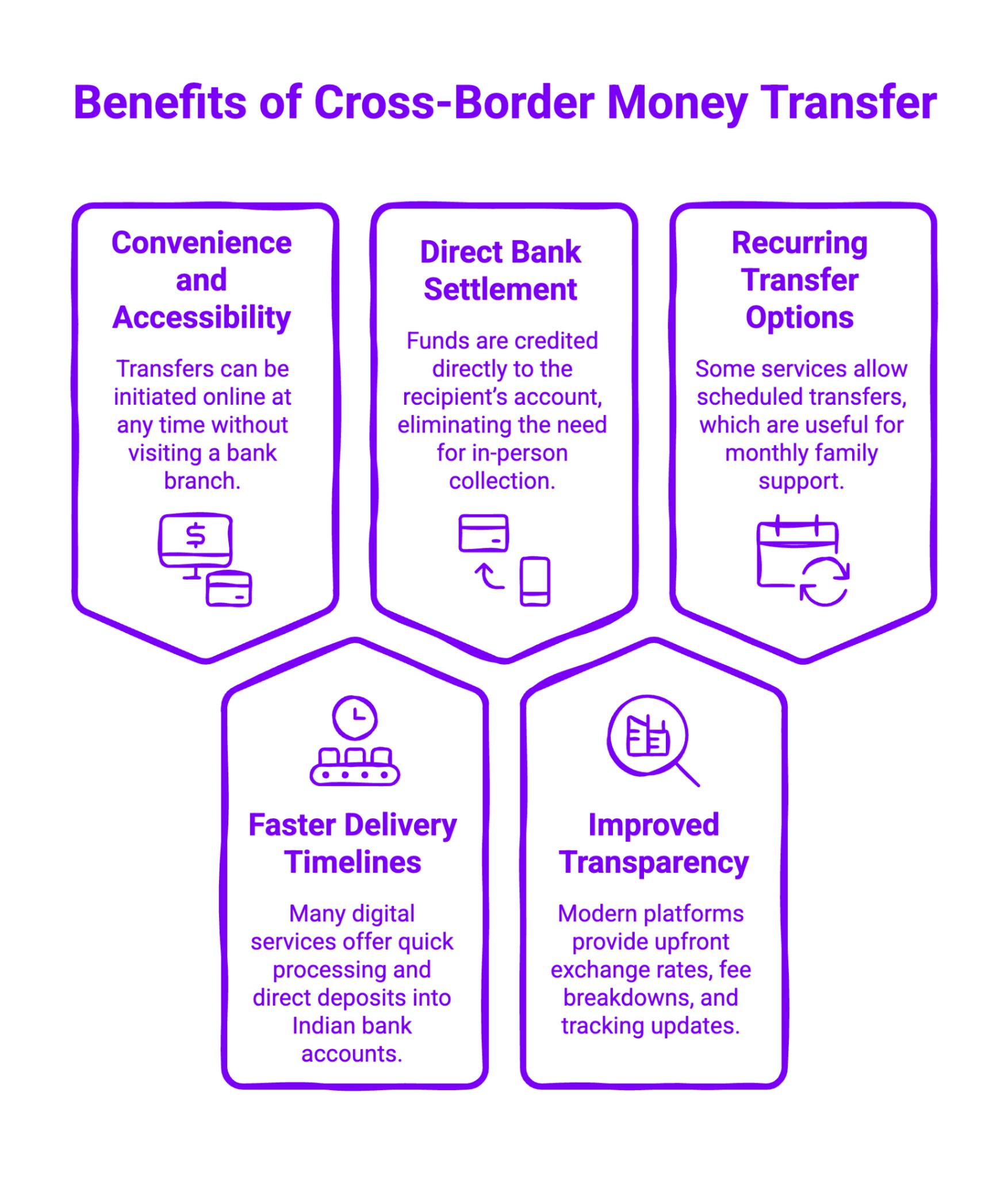
Using a reliable cross-border money transfer service makes it easier to move money efficiently while staying compliant with financial regulations. For individuals sending funds regularly from the USA to India, the right platform can improve speed, reduce friction, and provide better cost clarity.
Key benefits include:
- Convenience and accessibility: Transfers can be initiated online at any time without visiting a bank branch, making the process simple for working professionals and students.
- Faster delivery timelines: Many digital services offer quick processing and direct deposits into Indian bank accounts, reducing waiting periods.
- Direct bank settlement: Funds are credited directly to the recipient’s account, eliminating the need for in-person collection.
- Improved transparency: Modern platforms provide upfront exchange rates, fee breakdowns, and tracking updates so you know exactly where your money is.
- Recurring transfer options: Some services allow scheduled transfers, which are useful for monthly family support, rent, or tuition payments.
How Does Cross-Border Money Transfer Work from the USA to India?
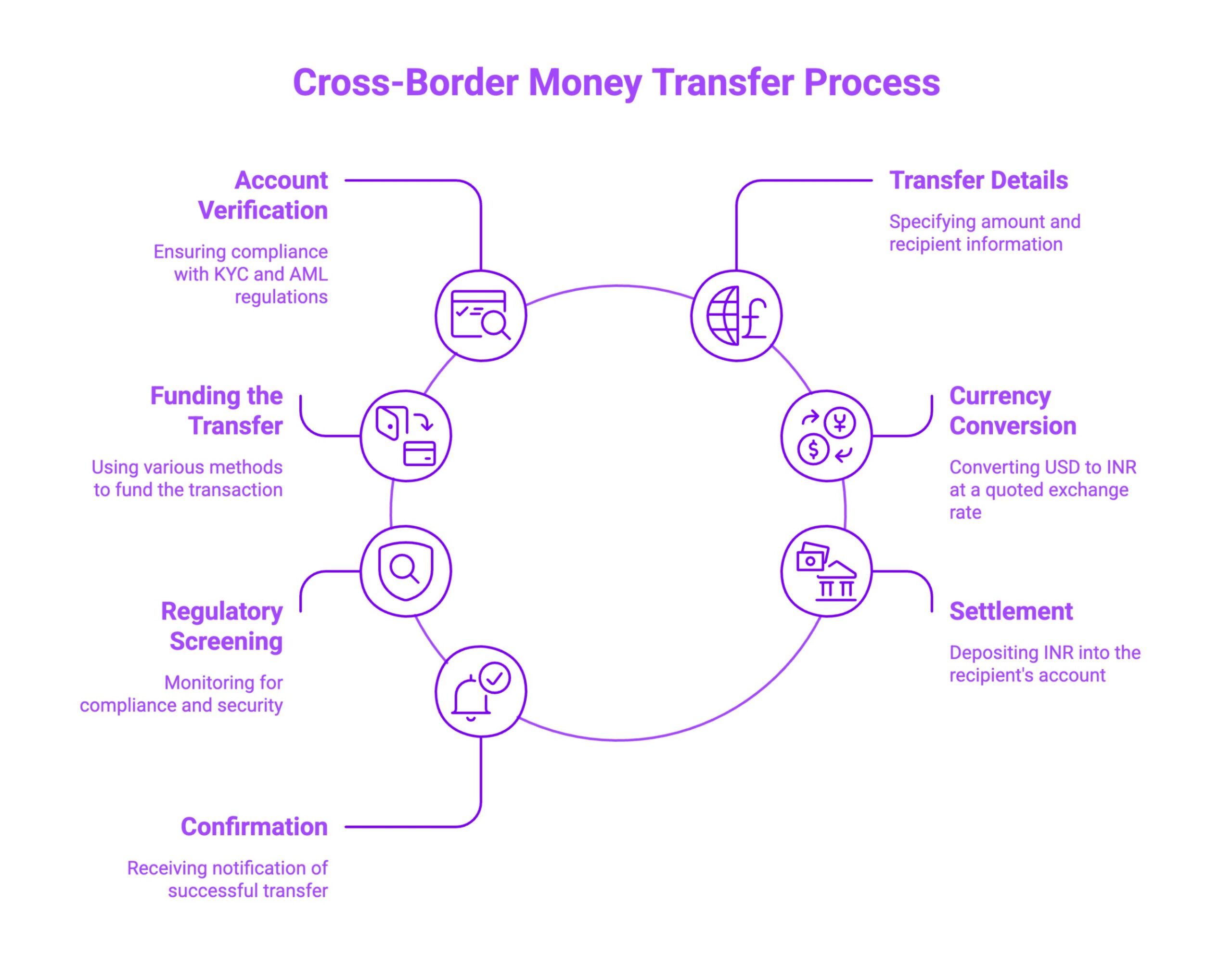
A cross-border money transfer from the USA to India involves more than just sending funds. It combines banking systems, currency exchange, and regulatory checks in both countries. Here is how the process typically works:
Step 1: Create and Verify Your Account
You register with a bank or digital transfer platform and complete identity verification. This includes submitting basic details and documents to meet Know Your Customer and anti-money laundering requirements. Verification ensures the transfer complies with US regulations.
Step 2: Enter Transfer and Recipient Details
You specify how much USD you want to send and provide the recipient’s Indian bank details, such as account number, IFSC code, and name. The platform shows the exchange rate, estimated delivery time, and the exact INR amount the recipient will receive.
Step 3: Fund the Transfer
You fund the transaction using a US bank account, ACH debit, wire, or debit card. The provider collects the USD amount before initiating currency conversion. Funding method impacts both cost and processing time.
Step 4: Currency Conversion from USD to INR
The provider converts USD into INR at the quoted exchange rate. This rate may include a margin above the mid-market rate, which forms part of the provider’s revenue. The exchange rate plays a major role in determining the final amount credited in India.
Step 5: Regulatory Screening and Processing
The transaction undergoes automated compliance checks in the US and India. This includes monitoring for unusual activity, verifying transaction limits, and ensuring adherence to cross-border money transfer regulations. These checks protect both sender and recipient.
Step 6: Settlement into the Indian Bank Account
Once approved, the INR amount is routed through banking networks and deposited into the recipient’s account. Delivery time can range from same-day credit to a few business days, depending on the provider and transfer method.
Step 7: Confirmation and Tracking
You receive confirmation once the funds are credited. Many digital platforms offer real-time status updates so you can track the transfer from initiation to completion.
Each step influences cost, speed, and security. Understanding this flow helps you compare providers more effectively when sending money from the USA to India.
Want to reduce transfer costs? Read our guide on how to transfer money to India from the USA without fees for practical cost-saving strategies.
What Are the Key Cross Border Money Transfer Regulations for the USA to India?
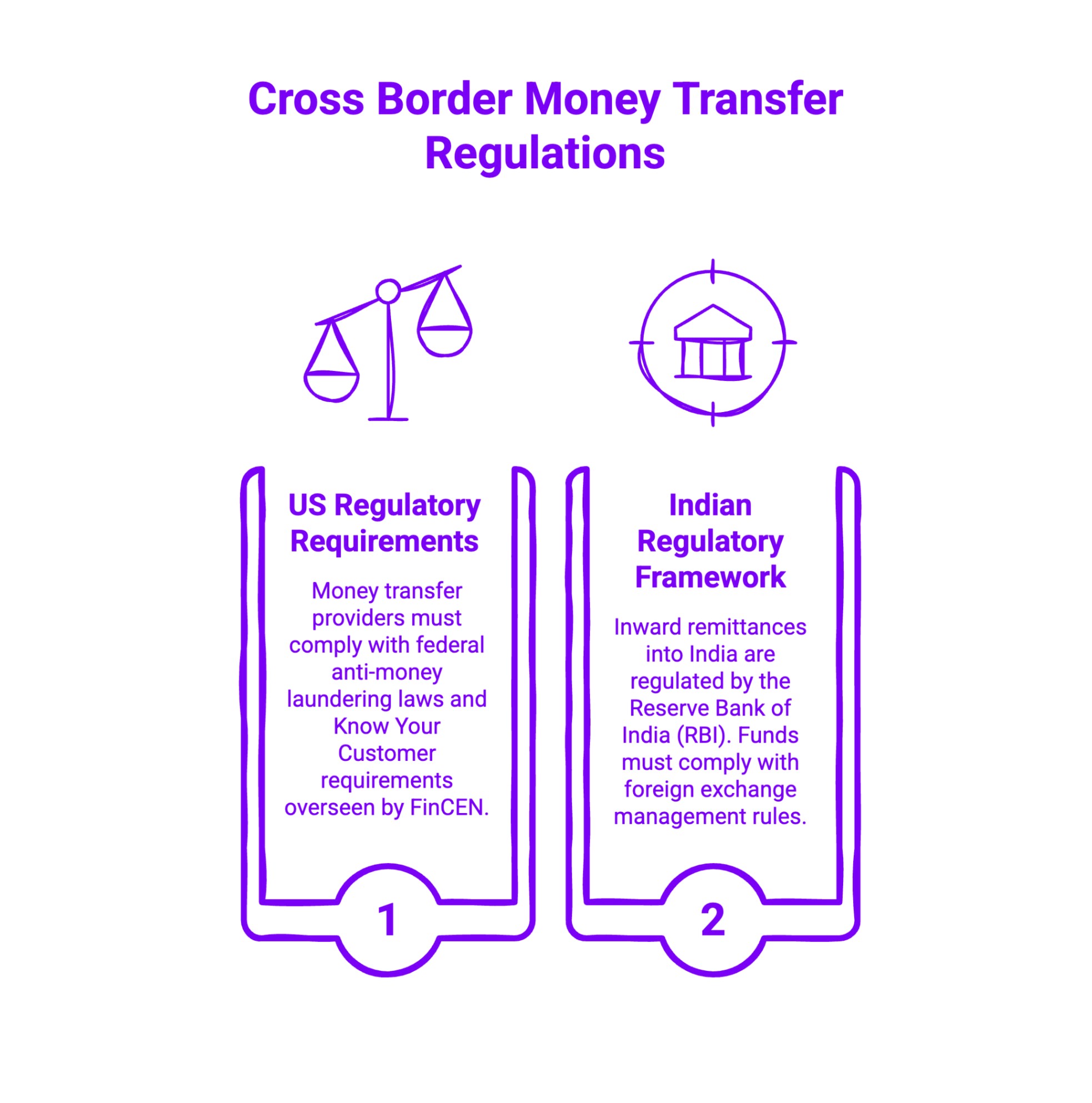
Cross-border money transfer transactions between the USA and India are governed by financial regulations in both countries. These rules are designed to prevent fraud, money laundering, and illegal transfers while protecting consumers.
1. US Regulatory Requirements
In the United States, money transfer providers must comply with federal anti-money laundering laws and Know Your Customer requirements overseen by the Financial Crimes Enforcement Network (FinCEN). Regulated providers are required to verify sender identity, monitor transactions for suspicious activity, and maintain reporting standards. This oversight helps ensure that funds are transferred securely and transparently.
2. Indian Regulatory Framework
On the receiving side, inward remittances into India are regulated by the Reserve Bank of India (RBI). Funds must comply with foreign exchange management rules, and banks may request documentation depending on the purpose or size of the transfer. Certain transaction limits and reporting requirements may also apply.
Why Compliance Matters?
Cross-border money transfer regulations protect both sender and recipient. Regulated providers follow strict security, reporting, and operational standards. Using an unregulated service increases the risk of delays, frozen funds, or loss of money.
When choosing a cross-border money transfer service for USA to India transfers, verifying regulatory compliance with authorities such as FinCEN in the United States and the RBI in India is just as important as comparing fees and exchange rates.
What Should Immigrants Look for in a Cross-Border Money Transfer Service?
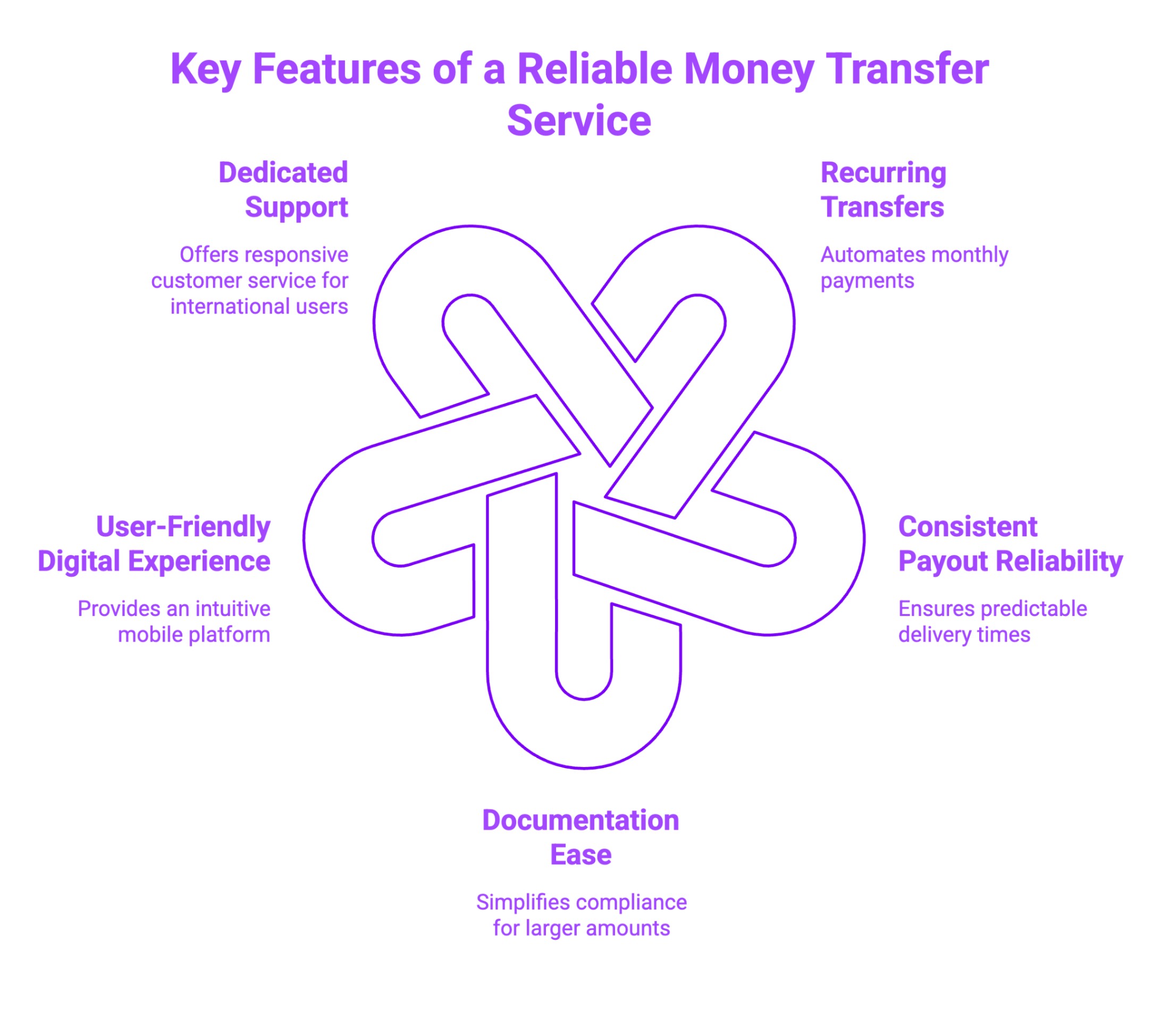
For immigrants in the United States, sending money to India is often structured and recurring. It may involve monthly family support, education expenses, property payments, or investment transfers. The right cross-border money transfer service should support long-term use, not just one-time transactions.
The most suitable platforms for cross-border money transfers typically provide:
- Recurring and scheduled transfers: Useful for monthly financial commitments without manually initiating each transaction.
- Consistent payout reliability: A predictable delivery timeline helps families plan expenses without uncertainty.
- Ease of documentation for larger transfers: Immigrants sending higher amounts may need smooth handling of compliance checks and documentation.
- User-friendly digital experience: Mobile-first platforms with simple dashboards make it easier to track past transfers and manage ongoing payments.
- Dedicated support for cross-border users: Access to responsive customer service becomes important when dealing with international transactions.
For regular USA to India transfers, the most reliable services are those designed for ongoing remittance needs rather than occasional international payments.
What Are the Challenges of Cross-Border Money Transfer from the USA to India?
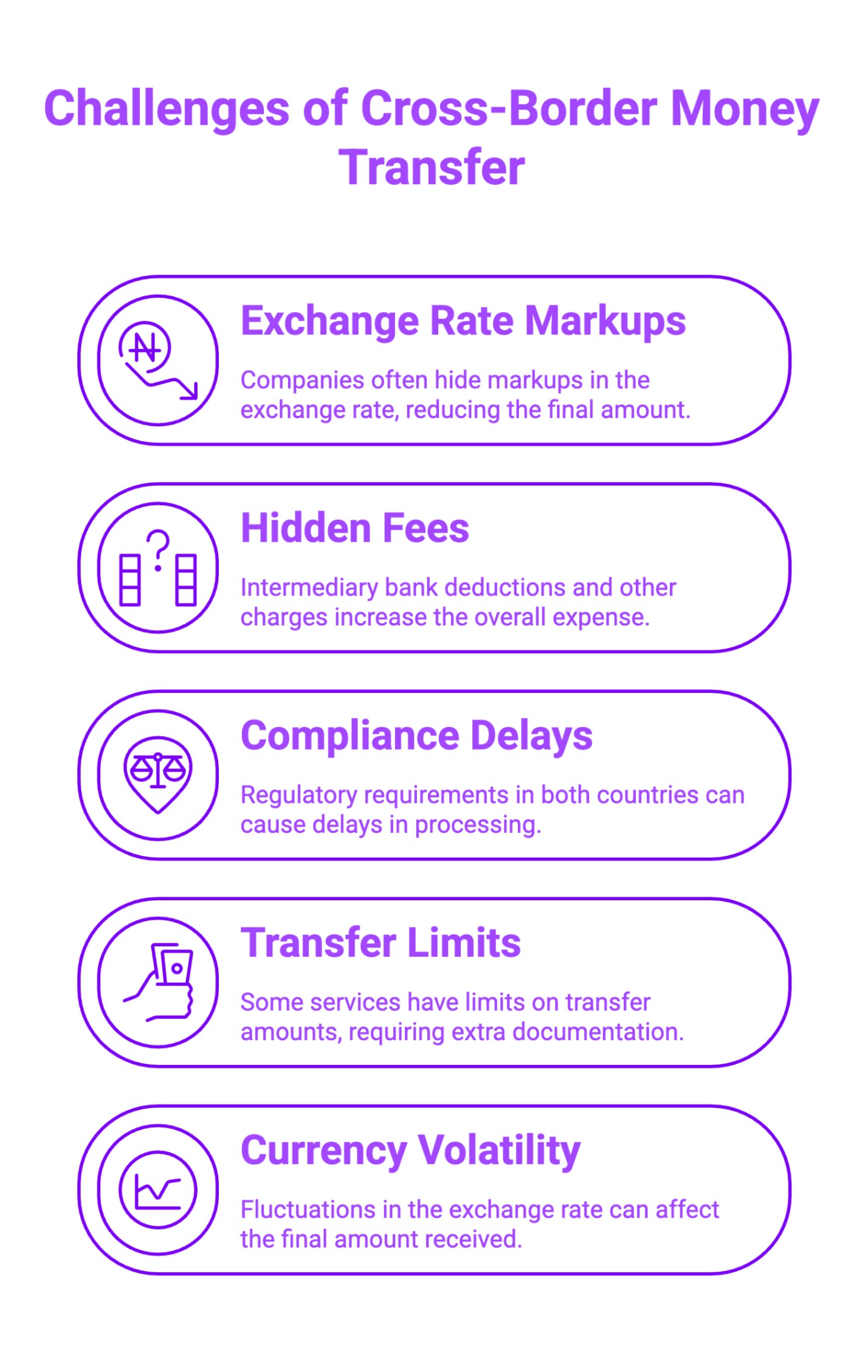
Even with digital platforms improving the process, cross-border money transfer transactions still involve cost, compliance, and currency considerations. Understanding these challenges helps you avoid unnecessary losses and delays.
1. Exchange Rate Markups
Many cross-border money transfer companies advertise low fees, but apply a margin to the USD to INR exchange rate. Even a small markup can significantly reduce the final INR amount, especially for larger or recurring transfers.
To protect your payout, compare the final INR amount shown before confirming the transfer and prioritize platforms that clearly display the exchange rate being applied.
2. Hidden or Layered Fees
Some providers may include intermediary bank deductions, card processing charges, or service fees that are not obvious at first glance. These layered costs increase the overall transfer expense.
Review the full pricing breakdown in advance and choose secure cross-border money transfer services that provide transparent, upfront cost disclosure.
3. Compliance and Verification Delays
USA-to-India transfers must meet regulatory requirements in both countries. Large, first-time, or unusual transactions may trigger additional verification, which can delay processing.
Completing identity verification early and ensuring recipient details are accurate can reduce the likelihood of transfer holds. Working with regulated providers also lowers compliance-related friction.
4. Transfer Limits and Documentation Requirements
Some services impose daily or monthly transfer limits. Higher-value transfers may require additional documentation regarding the source or purpose of funds.
Checking limits beforehand and selecting a provider that aligns with your transfer frequency and amount helps avoid unexpected restrictions.
5. Currency Volatility
The USD to INR exchange rate fluctuates throughout the day. If the rate changes before the conversion is finalized, the recipient may receive less than expected.
Monitoring exchange rate movements and using platforms that lock in the quoted rate at confirmation can help maintain predictability in the final payout.
Understanding these challenges allows you to evaluate cross-border money transfer companies more effectively and choose a provider that prioritizes transparency, compliance, and consistent delivery for USA to India transfers.
Looking to send funds with minimal cost? Check out our guide on how to send money from the USA to India without charges for effective tips and options.
What Impacts the Cost of a Cross-Border Money Transfer Service?
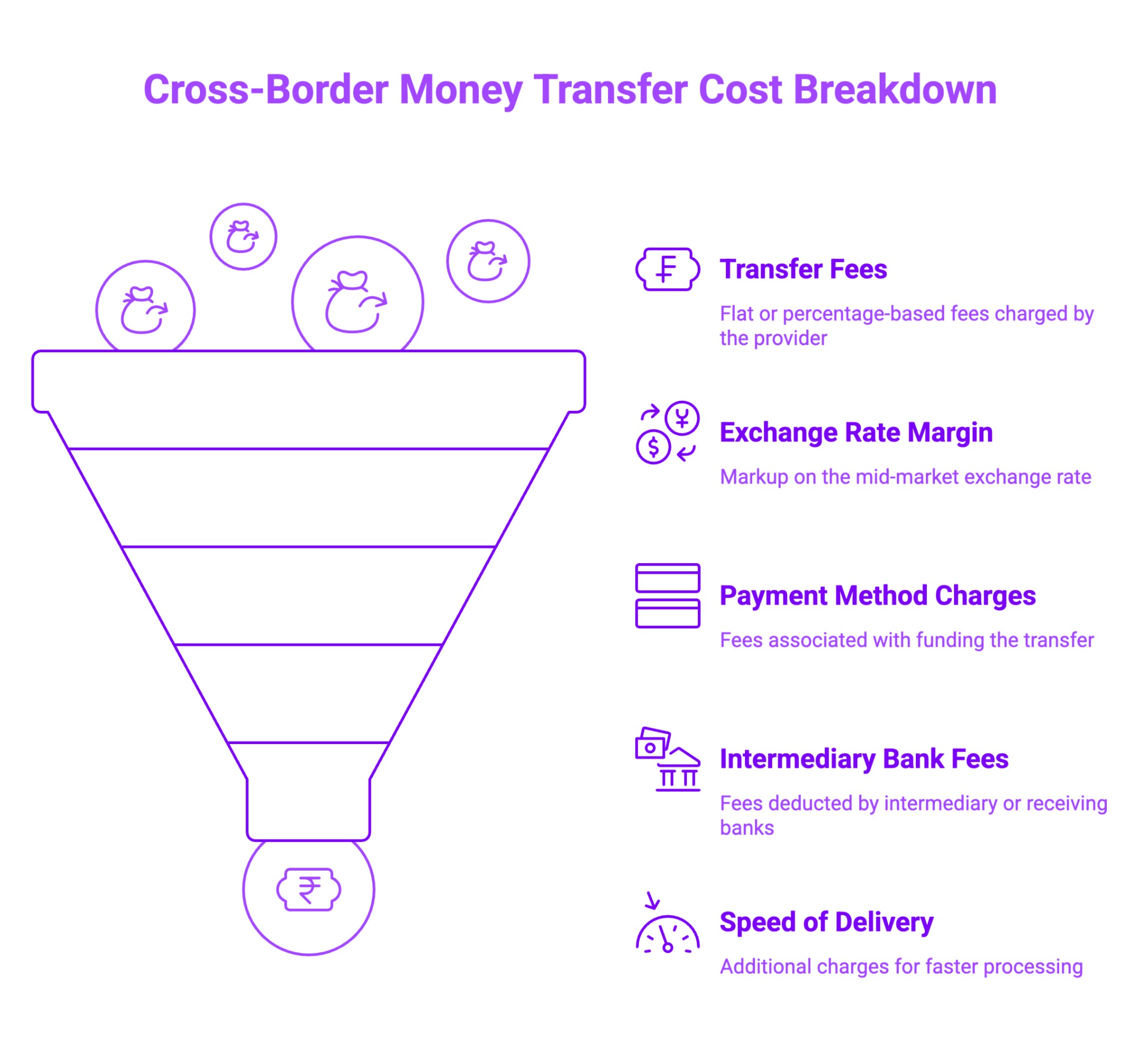
When sending money from the USA to India, the advertised fee rarely reflects the full cost. The total expense of a cross-border money transfer depends on multiple components that influence how much INR your recipient ultimately receives.
1. Transfer Fees
Some providers charge a flat fee per transaction, while others apply a percentage of the amount sent. Although these fees are visible up front, they are only part of the total cost.
Before confirming a transfer, compare how the fee structure affects smaller versus larger amounts, especially if you send money regularly.
2. Exchange Rate Margin
The exchange rate is often the biggest cost factor. Many cross-border money transfer companies apply a markup to the mid-market USD-to-INR rate. Even a small difference in rate can significantly impact the final INR payout.
Always compare the offered rate with publicly available mid-market rates and focus on the final INR amount shown before confirming.
3. Payment Method Charges
Funding a transfer through a debit or credit card may involve additional processing fees. Bank-funded transfers are often more cost-efficient but may take longer. Choosing the right funding method can reduce unnecessary charges.
4. Intermediary or Receiving Bank Fees
In traditional bank wire transfers, intermediary banks may deduct fees during processing. While this is less common with modern digital platforms, it can still occur depending on the routing method. Selecting a transparent and regulated provider helps minimize unexpected deductions.
5. Speed of Delivery
Faster transfers sometimes come at a higher cost. Some services offer expedited processing for an additional charge.
Balancing urgency with cost is important, particularly for non-urgent or recurring USA to India transfers.
Understanding these components allows you to evaluate a cross-border money transfer service based on total landed cost rather than just the advertised fee.
How to Choose an Affordable Cross-Border Money Transfer App for the USA to India?
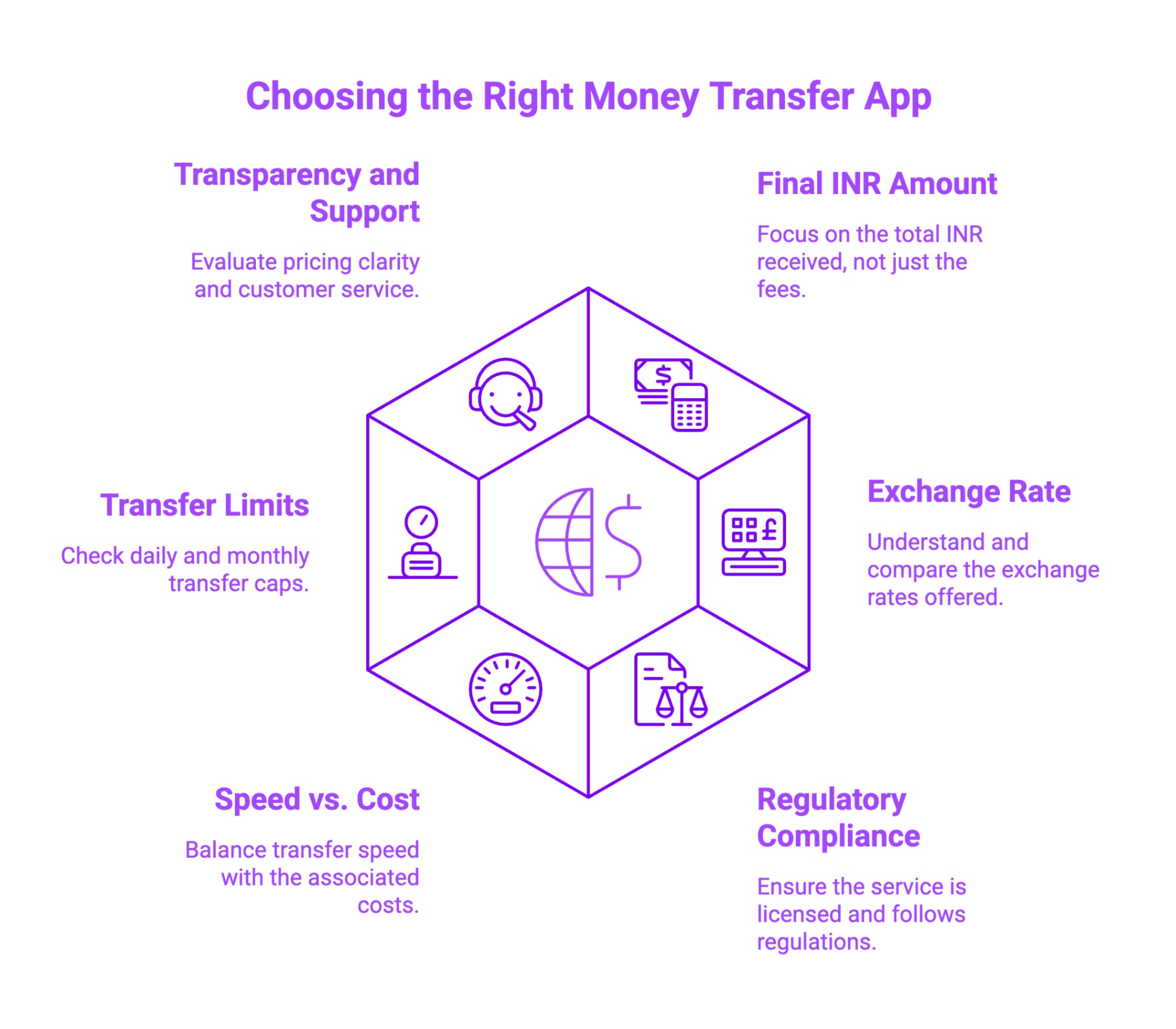
Choosing an affordable cross-border money transfer service is not about picking the lowest advertised fee. It is about identifying the platform that delivers the highest INR payout with consistent speed and regulatory reliability.
Here is what to evaluate carefully:
1. Compare the Final INR Amount, Not Just the Fee
Many cross-border money transfer companies promote low or zero transfer fees. However, the exchange rate often has a greater impact on the total cost. A slightly better USD-to-INR rate can result in significantly more money reaching the recipient.
Before confirming a transfer, compare the exact INR amount shown across platforms rather than focusing only on the service charge.
2. Understand the Exchange Rate Being Applied
Some platforms use the mid-market rate with a small transparent markup, while others widen the spread without clearly disclosing it. The difference may seem small per dollar, but it becomes substantial on larger transfers.
Always check whether the exchange rate is clearly displayed and locked in at confirmation.
3. Verify Regulatory Compliance and Licensing
Secure cross-border money transfer services follow US anti-money laundering regulations and comply with Indian remittance rules. Regulated platforms reduce the risk of transaction holds, frozen funds, or compliance-related disruptions.
Choosing a licensed provider improves both safety and processing reliability.
4. Evaluate Speed Versus Cost
Faster transfers may sometimes cost more, especially when funded via card instead of a bank transfer. At the same time, some digital platforms offer competitive pricing without sacrificing speed.
Compare delivery timelines alongside pricing to determine the best value for your needs.
5. Review Transfer Limits and Account Flexibility
If you send money frequently or in higher amounts, check daily and monthly transfer caps. Some platforms increase limits after full verification, which can be helpful for recurring USA to India transfers.
6. Assess Transparency and Support
A reliable cross-border money transfer service provides upfront pricing, clear transaction tracking, and accessible customer support. In international transfers, communication matters as much as cost.
By comparing total payout, rate transparency, compliance standards, and delivery consistency, you can choose an affordable solution that maximizes value without compromising security for USA to India transfers.
Wondering how much you can send at once? Learn about the maximum limit for money transfers from the USA to India and plan your transfers smarter.
What Makes a Cross-Border Money Transfer Service Secure?
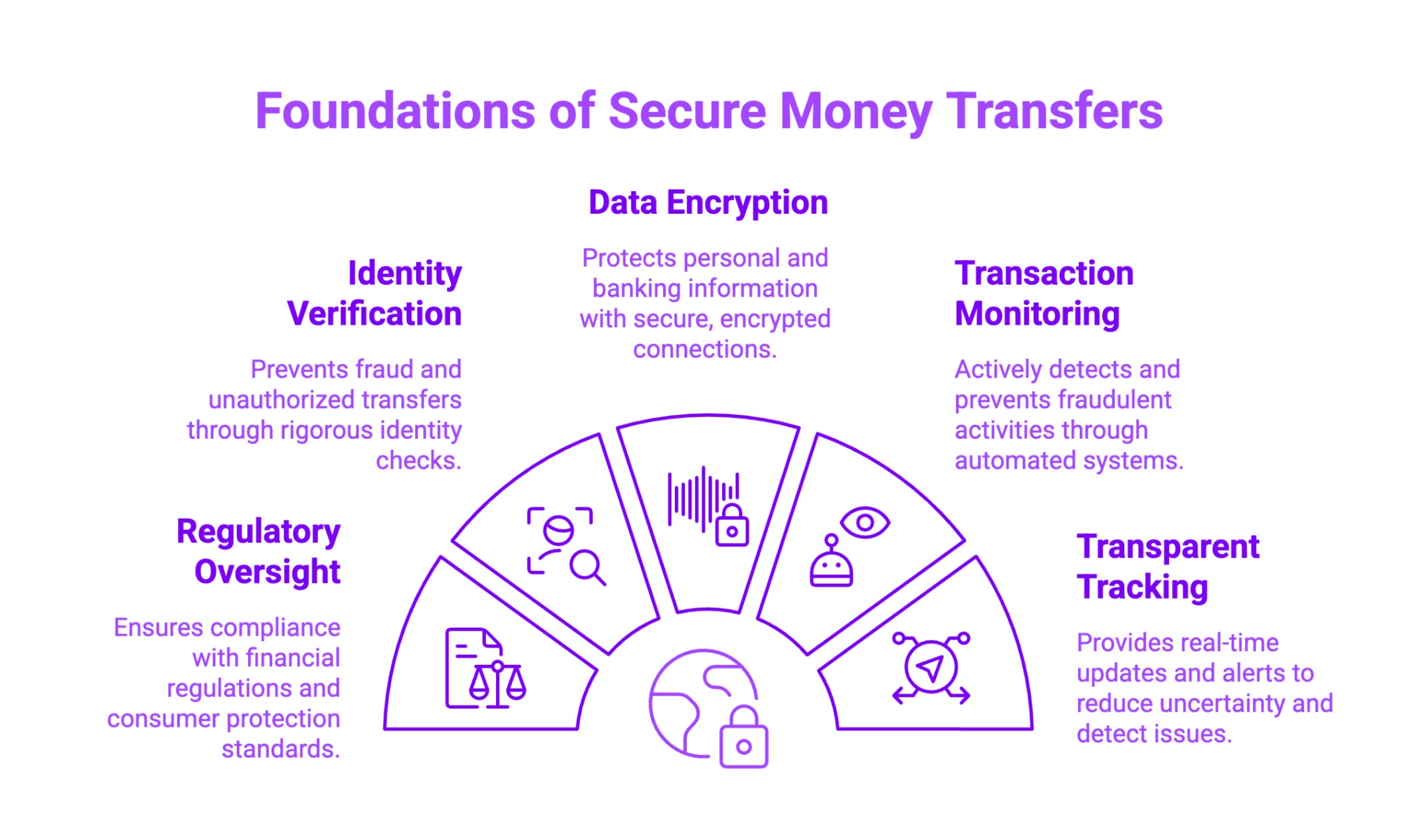
Security is one of the most important factors when sending money from the USA to India. A secure cross-border money transfer service protects your funds, personal information, and transaction data throughout the entire process.
Here are the key elements that define a secure provider:
1. Regulatory Oversight and Licensing
Secure cross-border money transfer services operate under US financial regulations and comply with Indian remittance rules. Regulatory oversight ensures the provider follows strict operational, reporting, and consumer protection standards.
Before choosing a platform, verify that it is licensed and regulated in the jurisdictions where it operates.
2. Strong Identity Verification Processes
Legitimate providers require identity verification under the Know Your Customer and anti-money laundering rules. While this may feel like an extra step, it helps prevent fraud and unauthorized transfers.
Platforms that skip proper verification increase financial risk.
3. Data Encryption and Technology Security
Secure services use encrypted connections to protect personal and banking information. This prevents unauthorized access during account login, transaction processing, and data transmission.
Look for platforms that prioritize secure login systems and transaction monitoring.
4. Transaction Monitoring and Fraud Detection
Reliable cross-border money transfer companies actively monitor transactions for suspicious activity. Automated systems flag unusual transfers to prevent fraud and financial crime.
This protects both the sender and the recipient.
5. Transparent Tracking and Notifications
A secure service keeps you informed. Real-time tracking, confirmation alerts, and clear status updates reduce uncertainty and help detect issues quickly.
Security is not only about preventing fraud. It is also about choosing a regulated and transparent platform that protects your funds while ensuring smooth USA to India transfers.
What Mistakes Should You Avoid When Sending Money from the USA to India?
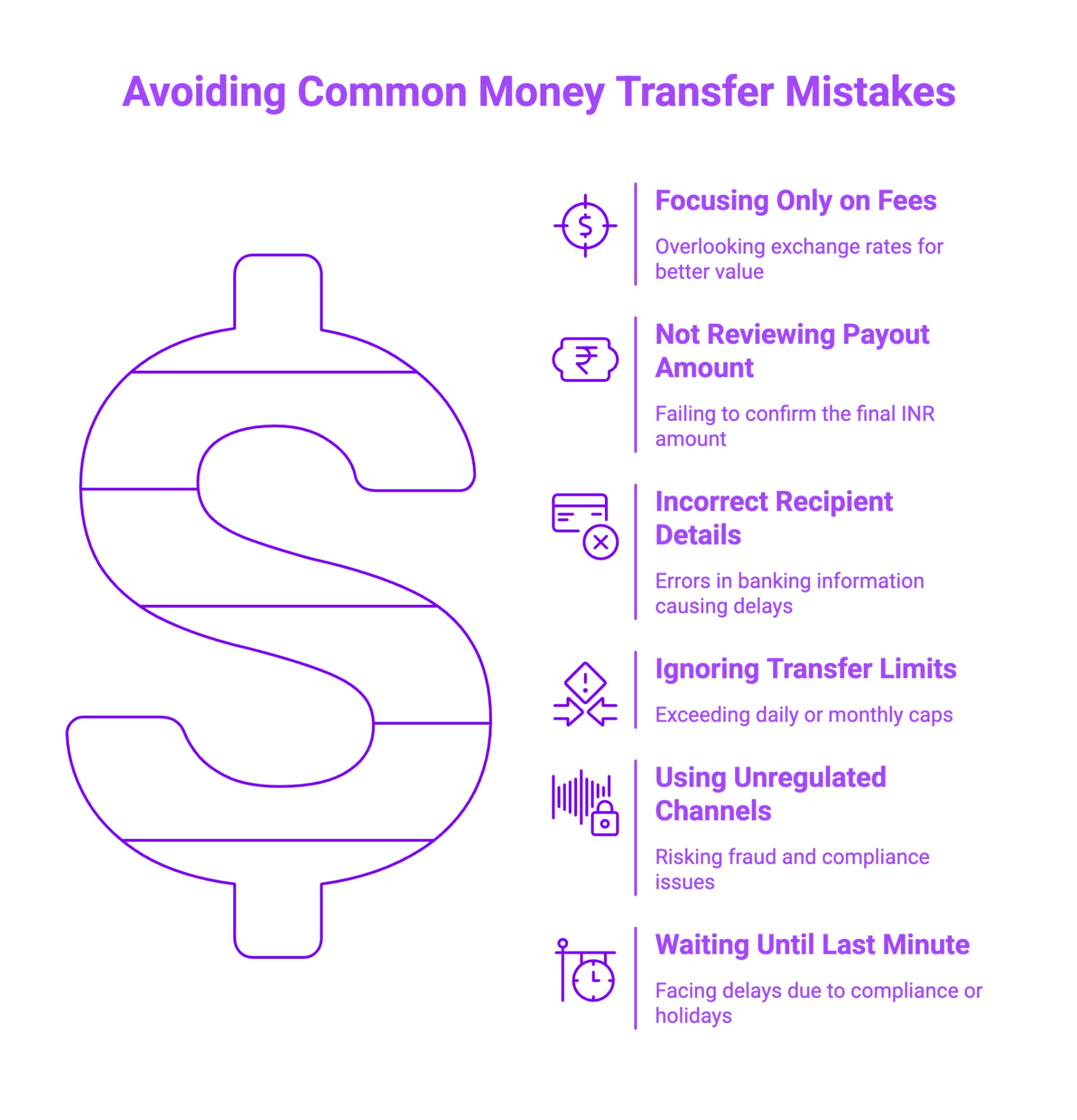
Even experienced senders can make avoidable errors when using a cross-border money transfer service. Small oversights can lead to lower payouts, delays, or compliance issues.
Here are common mistakes to avoid:
- Focusing only on advertised transfer fees: A low or zero fee does not guarantee the best value. The exchange rate applied often has a bigger impact on the final INR amount.
- Not reviewing the final payout amount: Always check the exact INR amount your recipient will receive before confirming the transaction.
- Entering incorrect recipient details: Errors in account numbers or IFSC codes can cause delays or failed transfers. Double-check banking information carefully.
- Ignoring transfer limits: Some platforms impose daily or monthly caps. Attempting to exceed limits may trigger delays or additional verification.
- Using unregulated or informal channels: Sending funds through unverified services increases the risk of fraud, frozen transactions, or compliance complications.
- Waiting until the last minute for urgent transfers: Compliance checks or bank holidays in either country can affect processing timelines.
Avoiding these mistakes helps ensure your cross-border money transfer from the USA to India is smooth, cost-efficient, and compliant.
Want tips for a smooth transfer? Check out our guide on how to send money to India from the USA without hassle for practical, step-by-step advice.
Looking for a Reliable USA-to-India Transfer Platform? Consider Frex
If you regularly send money from the United States to India, reliability and compliance matter just as much as cost. Frex is a regulated digital cross-border money transfer service built specifically for the USA–India corridor, offering a streamlined and transparent transfer experience.
Frex focuses on simplifying international remittances while maintaining strong regulatory standards. The platform is designed for NRIs, professionals, students, and families who need consistent and predictable transfers.
Here’s what sets Frex apart:
- Corridor-focused design: Optimized specifically for USA to India transfers, ensuring smoother processing and better alignment with banking systems on both sides.
- Upfront rate and payout visibility: Users can see the exchange rate and final INR amount before confirming, helping avoid unexpected deductions.
- Regulated and compliance-driven: Operates within required US and Indian regulatory frameworks, supporting secure and legitimate fund transfers.
- Digital-first convenience: Account setup, transfer initiation, and tracking are fully online, making it practical for busy professionals.
- Consistent delivery performance: Built to provide dependable settlement timelines for ongoing remittance needs.
For senders who want a secure cross-border money transfer service tailored to USA to India transactions, Frex combines regulatory strength with digital simplicity and transparent pricing.
Final Words
When you send money from the USA to India, you are not just completing a transaction. You are supporting family, funding education, managing investments, or fulfilling real financial responsibilities. That makes every exchange rate, every fee, and every processing decision important.
The smartest approach is simple. Look beyond promotional pricing. Focus on the final INR payout, delivery consistency, and regulatory reliability. A well-chosen cross-border money transfer service protects both your money and your peace of mind.
When you prioritize transparency and trust over shortcuts, every transfer becomes more predictable, more secure, and more rewarding for the people who depend on it.
Frequently Asked Questions
How cross border money transfer work?
A cross-border money transfer works by collecting funds, converting currency, performing compliance checks, and routing the transfer through international banking networks before depositing the amount into the recipient’s bank account.
Are there alternatives to SWIFT for cross-border payments, and how do they work?
Yes. Alternatives include online money transfer services, digital payments platforms, and digital currencies. These payment systems reduce reliance on traditional banking, enabling faster settlement times, lower fees, and more efficient international transactions across national borders.
How do international money transfer services like Wise and WorldRemit compare for cross-border payments?
Online money transfer services vary by total transfer cost, currency conversion fees, delivery options like cash pickup or mobile wallet, and faster processing. Some prioritize lower fees, while others focus on global reach and broader support across different countries.
What security measures do cross-border money transfer providers use to protect transactions?
Providers use encrypted computer network systems, identity verification, fraud monitoring, and compliance with central bank regulations. They protect sensitive information, personal data, and personal details to reduce identity theft, data breaches, and unauthorized financial transactions across national borders.
What is the cheapest way to send money cross-border?
The cheapest way is to compare the total transfer cost, including currency conversion fees and upfront fees. Online money transfer services often offer lower fees than traditional banking, especially for digital payments directly into local bank accounts.
Which money transfer app has the lowest fee?
No single app always has the lowest fee. It depends on the destination country, currency conversion fees, and total transfer cost. Comparing fees upfront across online money transfer services is the best way to identify lower fees.
Which are the safest international fund transfer services?
The safest services comply with central bank oversight, protect sensitive information, and use encrypted payment systems. Providers linked with financial institutions and strong identity verification reduce risks of identity theft and data breaches during international transactions.
How can I send money to another country instantly?
You can use digital payment platforms offering faster settlement times, cash pickup, or mobile wallet delivery. Instant international payments depend on the destination country’s infrastructure, payment systems, and whether local bank accounts support faster processing.




Leave a Reply