





Key Highlights
- ACH pulls money from your U.S. bank through the domestic network, while wire transfers send funds directly between banks, often through international systems.
- ACH typically costs $0–$3 to fund; wires often cost $30–$50 plus possible intermediary fees.
- ACH follows batch processing and usually takes 1–3 business days; wires can initiate the same day.
- Wires are generally final once settled; ACH may allow limited returns for unauthorized transactions.
- For USA-to-India transfers, compare the total INR delivered, not just the upfront fee.
- Frex uses a digital, ACH-based funding model to offer transparent pricing, competitive exchange rates, and fast delivery to India.
Sending money from the U.S. to India should be simple, but many people get stuck on one key question: ACH vs wire transfer, which is better? The method you choose can affect how much you pay in fees, the exchange rate you receive, and how quickly the money reaches your recipient.
Banks often recommend wire transfers for international payments, while many modern remittance platforms use ACH debit funding instead. However, the difference between wire transfer and ACH goes beyond terminology. The structure, cost, processing flow, and reversibility can vary significantly, and those differences directly impact your total transfer cost.
In this guide, we will break down ACH vs wire transfer specifically for USA to India transfers. You will get a clear comparison of speed, fees, exchange rates, and security so you can confidently choose the smarter way to send money to India.
What Is an ACH Transfer?
An ACH transfer is an electronic bank payment processed through the Automated Clearing House network in the United States. It is commonly used for payroll deposits, bill payments, and direct debits between U.S. bank accounts.
ACH transactions are governed by NACHA (National Automated Clearing House Association), which sets the rules and standards that financial institutions follow when processing ACH payments.
There are two main types of ACH transfers:
- ACH Debit: A business or payment platform pulls funds from your linked U.S. bank account after you authorize the transaction.
- ACH Credit: Funds are pushed from your bank account to another account, such as when employers send payroll deposits.
When sending money from the USA to India, ACH is often used as the funding method. The transfer provider first collects funds from your U.S. bank via ACH, then converts the amount into INR and delivers it to the recipient’s bank account in India.
What Is a Wire Transfer?
A wire transfer is a direct bank-to-bank payment that moves funds individually rather than in batches. For international transfers, wires typically travel through global messaging networks such as SWIFT, with banks coordinating the movement of funds across borders.
When you send a wire from the USA to India, your bank sends the payment instructions to the receiving bank, sometimes through intermediary banks. The funds are then credited to the recipient’s account once processed and settled.
Wire transfers are commonly used for high-value or time-sensitive international payments. Because they are processed individually and often involve multiple banks, the structure and fee model differ from other electronic payment methods.
If you’re considering the traditional bank route, here’s a detailed guide on wire transfer to India from the USA that walks through the process, fees, and timelines step by step.
What Is the Difference Between ACH and Wire Transfers for USA-to-India Transfers?
When deciding between ACH vs wire transfer, the differences become more practical when viewed side by side. While both methods move money from your U.S. bank account to India, the funding structure, cost model, and processing flow are not the same.
Here is a simplified comparison:
| Feature | ACH (Funding Method) | Wire Transfer |
|---|---|---|
| Processing Type | Batch processed | Individually processed |
| Typical Funding Cost (USA) | $0 to $3 | $15 to $45 outgoing fee |
| Intermediary Bank Fees | Usually, none at the funding stage | $10 to $30 possible (varies) |
| Exchange Rate Markup | Often lower with digital platforms | Often higher at traditional banks |
| Processing Time (USA side) | 1 to 3 business days | Same day or next business day |
| Reversibility | Sometimes reversible in case of errors or disputes | Typically irreversible once processed |
| International Support | Used mainly as a domestic funding method for transfers | Direct international bank-to-bank transfers |
| Best For | Cost-efficient remittances | Urgent or high-value transfers |
Note: Fees, exchange rate markups, and processing times can vary depending on the bank, provider, transfer amount, and routing method.
Speed Comparison: Which Is Faster for Sending Money to India?

Speed depends on how the payment is funded and how banks process it before it reaches India.
1. ACH (Funding Method)
- Processed through the U.S. domestic banking network: The money is first pulled from your U.S. bank account using the Automated Clearing House system before any international payout begins.
- Typically clears within 1 to 3 business days: Banks process ACH transactions in scheduled cycles, so funds must officially clear before conversion and transfer to India.
- Moves in batch cycles, not individually: ACH payments are grouped with other transactions and processed together, which reduces cost but can add time.
- Commonly used for planned, non-urgent remittances: Because it follows standard banking timelines, ACH funding works well when same-day delivery is not required.
2. Wire Transfer
- Sent directly from one bank to another: The sending bank transmits payment instructions specifically for your transaction rather than grouping it with others.
- Often initiated the same business day if before the cutoff: If you submit the transfer before your bank’s daily cutoff time, it is usually processed that day.
- May pass through intermediary banks internationally: For USA-to-India transfers, the wire can route through correspondent banks before reaching the recipient’s bank, which may affect final settlement timing.
- Typically chosen for urgent or high-value transfers: Because wires are processed individually, they are often used when speed is prioritized over cost.
In practical terms, wires may move faster at initiation, while ACH funding follows predictable banking cycles before the international payout is completed.
Wondering what can go wrong with cross-border transfers? Learn more about scenarios where a bank can reject a wire transfer and how to avoid delays or errors.
Which Is Cheaper for Sending Money to India: ACH or Wire Transfer?

Cost differences between ACH and wire transfers are significant, especially for international payments from the USA to India. The total expense includes bank fees, intermediary charges, and foreign exchange markups.
Here is what you can typically expect:
1. ACH-Funded Transfer Costs
- Domestic ACH debit fee: Often $0 for consumers, or very low cost
- No intermediary bank fees at the U.S. funding stage
- Service fee set by the remittance provider
- Exchange rate markup: Many digital transfer platforms apply a smaller markup and show the rate upfront
In practical terms, ACH funding is generally far cheaper at the payment initiation stage. Many modern remittance platforms also offer more transparent exchange rates, making it easier to see how much INR your recipient will receive.
2. Wire Transfer Costs (USA to India)
- Outgoing international wire fee: Commonly $30 to $50 per transfer, depending on the bank
- Possible intermediary or correspondent bank fees: Often $10 to $30 or more, depending on routing
- Potential receiving bank fee in India
- Exchange rate markup: Traditional banks often apply a larger markup to the USD to INR exchange rate, which can significantly reduce the final INR delivered
Because multiple banks may be involved in a wire transfer, the total cost can include both visible fees and hidden exchange rate spreads, meaning the final amount credited in India may be lower than expected.
Note: Fees and exchange rate markups vary by bank and provider. Always compare the total INR delivered before confirming your transfer.
Looking for ways to transfer money to India from the USA without fees and avoid high traditional bank costs? Check out this complete guide on fee-free remittance options
ACH Transfer vs Wire Transfer: Which Is More Secure?

Security differences between ACH and wire transfers come down to reversibility, fraud handling, and how payments are verified before funds move internationally.
1. ACH
- Domestic regulated network: ACH payments move through the U.S. banking system under NACHA rules.
- Return windows: Certain unauthorized or incorrect transactions may qualify for defined return or dispute windows.
- Authorization requirement: The sender must authorize the platform before funds are pulled from a U.S. bank account.
- Identity verification layers: Many remittance platforms apply KYC checks before releasing funds internationally.
- Additional validation step: Funds are verified domestically before conversion and international payout.
Because ACH funding occurs domestically first, many remittance platforms can apply layered verification checks before releasing funds internationally, which may help reduce certain fraud risks.
2. Wire Transfer
- Direct bank instruction: Wires are sent as a direct bank-to-bank payment order.
- Final settlement: Once processed and settled, wire transfers are typically final.
- Limited recovery options: Incorrect account details may make it difficult to retrieve funds.
- Intermediary routing: International wires may pass through correspondent banks during settlement.
- Common for high-value payments: Often used for large or urgent transactions.
With wire transfers, accuracy is critical. Once the funds are executed and settled, reversing the transaction is generally difficult when sending money from the USA to India.
When Should You Use ACH or Wire Transfer?

Deciding between an ACH/wire transfer depends on your priority: cost, urgency, or the nature of the payment.
1. Use ACH When:
- Recurring personal transfers: Suitable for sending regular family support.
- Cost efficiency matters: ACH funding usually keeps transfer costs lower.
- Transfers are planned: Works well when the transfer is not extremely urgent.
- Digital remittance platforms: Many services pull funds from your U.S. bank using ACH.
- Upfront INR visibility: Platforms often show the final INR amount before confirmation.
ACH funding is commonly used for personal USA to India remittances where cost efficiency and structured processing matter more than immediate same-day initiation.
2. Use Wire Transfer When:
- Urgent payments: Useful when funds need to be initiated quickly.
- Large one-time transfers: Often used for high-value transactions.
- Institutional requirements: Some banks or institutions require direct bank-to-bank wires.
- Business or property payments: Frequently used for corporate or real estate transactions.
When evaluating an ACH/wire transfer option, the decision usually comes down to whether you prioritize lower overall cost or faster initiation speed.
If you want practical steps for sending money from the USA to India without charges, this guide breaks down cost-effective methods you can use today
Why Do Many USA-to-India Remittance Platforms Prefer ACH Funding?
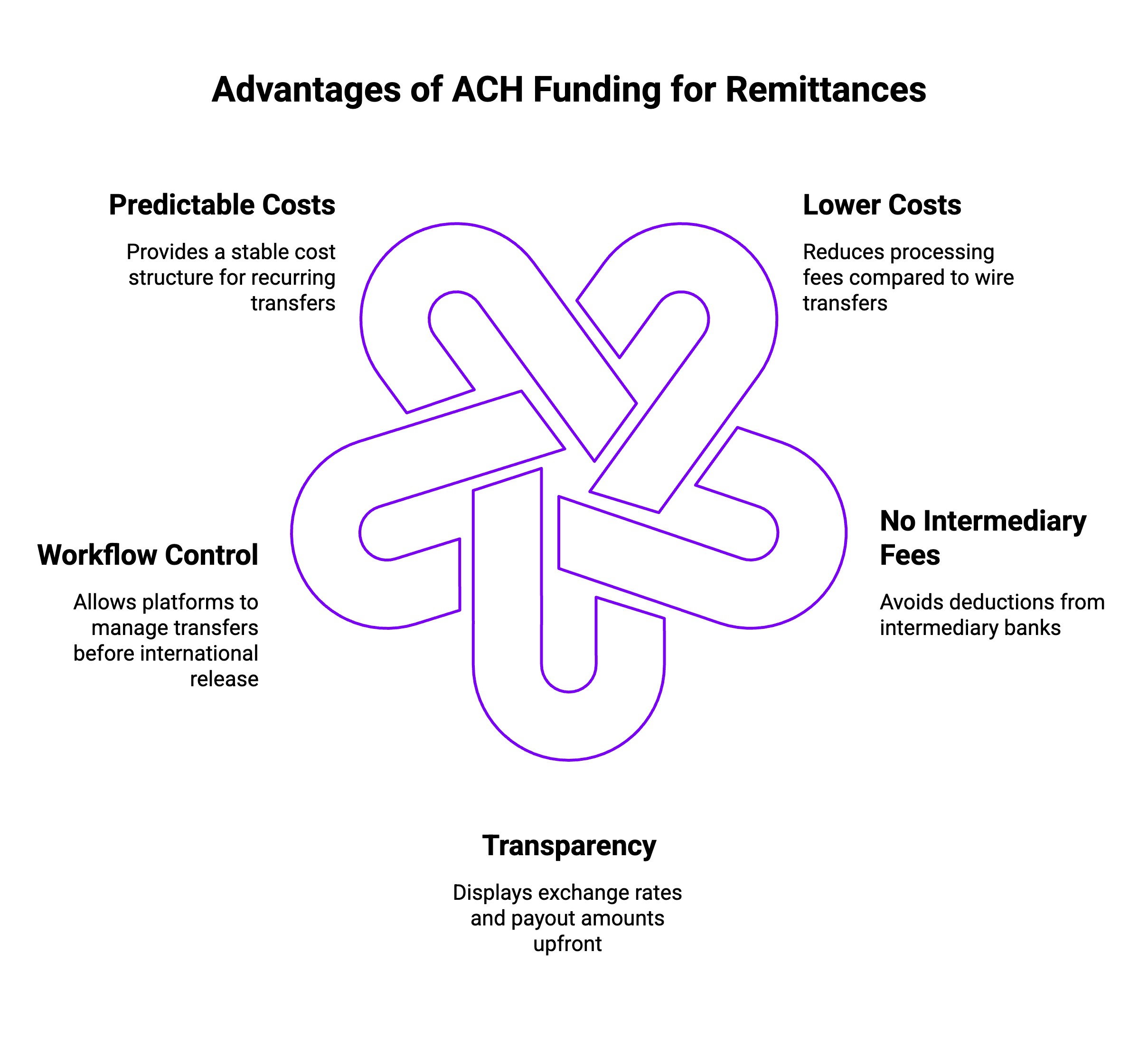
Many modern remittance platforms use ACH debit as the primary funding method instead of traditional bank wires. The reason is largely structural and cost-driven.
ACH operates within the U.S. domestic banking system, which allows platforms to collect funds at a lower processing cost compared to initiating an international wire. This lower funding expense helps providers structure more competitive pricing for cross-border transfers.
Here is why ACH funding is commonly preferred:
- Lower domestic processing costs compared to international wire fees
- No intermediary bank deductions at the U.S. funding stage
- Ability to display the exchange rate and total payout before confirmation
- Better control over the transfer workflow before releasing funds internationally
- More predictable cost structure for recurring USA to India remittances
By separating the domestic funding step from the international payout step, platforms can streamline operations and reduce unnecessary banking layers.
Why Consider Frex for USA-to-India Transfers?
If you are comparing an ACH/wire transfer for sending money to India, Frex positions itself as a modern alternative to traditional bank wires.
Instead of relying on expensive international wire instructions, Frex uses a digital-first transfer model that typically funds payments directly from your U.S. bank account. This structure can reduce unnecessary banking layers and help keep transfer costs competitive.
Here is what stands out:
- Zero transfer fees: Frex does not charge upfront transaction fees that reduce your transfer value.
- Competitive exchange rates: Transparent and competitive rates help maximize the INR payout per dollar sent.
- Fast processing: Transfers are processed quickly, helping reduce delays and potential exposure to exchange rate fluctuations.
- Upfront clarity: You see the exact exchange rate and final INR amount before confirming the transfer.
- No minimum transfer requirement: Send money based on your needs without worrying about minimum transaction limits.
- Fully digital experience: Send and track transfers easily through a web or mobile interface.
- Compliance and security: Frex follows strict regulatory standards and security protocols to help ensure safe and reliable international transfers.
For senders who prioritize cost clarity, speed, and convenience, Frex offers a practical alternative to traditional wire transfers.
Final Words
In the ACH versus wire transfer decision, the right choice depends on your priority. Wires may offer faster initiation, but they often come with higher bank fees and possible intermediary deductions. ACH-funded transfers typically focus on cost efficiency and clearer pricing.
The most important metric is not the transfer label. It is the final INR amount your recipient receives. Compare total fees, exchange rates, and delivery times before deciding.
For most personal USA to India remittances, understanding how the funding method works helps you avoid unnecessary costs and choose the smarter way to send money.
In most cases, ACH-funded transfers offer better cost efficiency, while wires are mainly used for urgent bank-to-bank transfers.
Frequently Asked Questions
Is a wire transfer the same as ACH?
No, a wire transfer is not the same as ACH. In an international ACH vs wire transfer comparison, wires move funds directly between financial institutions, often through the SWIFT network. ACH processing mainly supports domestic transfers using batch-based electronic funds systems.
Is an ACH transfer safer than a wire transfer?
ACH processing includes regulated return procedures for certain unauthorized electronic funds transactions. A domestic wire transfer is usually final once sent. ACH may offer more consumer recovery options, while wires provide faster but less reversible transfer of funds.
Do wire transfers or ACH transfers allow for international payments?
Wire transfers support international transactions through the SWIFT network and are widely used for remittance transfers. ACH is primarily designed for domestic transfers. International ACH exists but is less common than standard international bank transfers.
Does an ACH take longer than a wire?
ACH processing uses batch processing, so electronic funds typically settle in one to three business days. A domestic wire transfer can often be completed the same day, making wires faster for urgent or large transactions.
How fast are ACH transfers compared to wire transfers?
ACH processing uses batch processing, so electronic funds typically settle in one to three business days. A domestic wire transfer can often be completed the same day, making wires faster for urgent money transfers or large transaction amounts.
How are ACH transfers and wire transfers evolving?
ACH processing has expanded with faster settlement options, while wire systems continue improving speed for domestic transfers. Both types of transfers are becoming more digital, supporting online bank transfers and modern payment options for businesses and consumers.
Can businesses use both ACH and wire transfers, or should they pick one?
Business owners can use both types of transfers. ACH works well for payroll, direct payments, and managing cash flow. Wire transfers suit large transactions or urgent remittance transfers. Many financial institutions offer both payment options.
Are there differences in how long it takes for each type of transfer to be reversed or refunded?
ACH transactions may allow limited returns under defined rules if errors occur. A domestic wire transfer is generally final once the receiving institution credits the funds transfer, making reversals more difficult.




Leave a Reply